
Is National Religious Broadcasters Checkmate for the Johnson Amendment?

If they can prove standing the plaintiffs in National Religious Broadcasters and Three Churches v. Commissioner should win, despite their complaint taking a kitchen sink approach. They want a declaration that the Johnson Amendment is unconstitutional but they play a real messy game of chess — throwing in unnecessary grievance politics and whataboutisms. Eventually, they finally and legitimately state a viable cause of action. Without all the extraneous stuff, I would have expected them to announce checkmate. With better formatting, the Broadcasters and Church would now just be waiting for their opponent’s handshake. But that might take a good while because the Government (and the Court) needs to wade through a bunch of weak and distracting arguments first.
Ben’s post yesterday proves the point. He noted the plaintiffs’ discrimination arguments, and he mused that they are so factually unsupported that they are destined to lose. But Ben suggests the plaintiffs don’t bother mentioning Taxation With Representation. They do, actually, just not by name. And it’s very hard to discern, what with all the other dumb stuff in the complaint. I had to read the complaint over and over, by the way, because a reporter called for comments. The plaintiffs argue — very clumsily but with irrefutable logic eventually — that TWR’s prescription that (c)(3)s can set up a separate (c)(4) through which to engage in political speech can’t possibly work for them. I restate the full argument below.
There is some good lawyering to be discovered, first. It is hard to discern, but the complaint makes this case exclusively about the two most protected types of pure speech — religion and politics. In fact, the plaintiffs disclaim any intent to fund, endorse, or oppose a candidate, or even engage in direct or grassroots lobbying:
13. Plaintiffs do not contend that the limitation on lobbying activity violates the First Amendment. Nor do they contend that their inability to directly donate to political candidates violates their First Amendment rights. Rather, they only seek a declaratory judgment that they may use their regular means of communication to expound their views concerning political candidates who seek to represent them. Plaintiffs seek no relief from the operation of the Johnson Amendment outside of this context.
See what I mean? The plaintiffs don’t really mean to concede the case, though it almost sounds like that. We could all just go home if that’s what they meant. What they mean is they are not complaining about an inability to donate to or endorse a candidate, or even to lobby. They assert an inability to preach and teach Sunday School without worrying whether they cross the line from permitted religion into prohibited political speech. They are alleging an intolerable chilling effect that cannot be cured by TWR:
43. . . . All Plaintiffs are Christian organizations that embrace a biblical worldview, which includes the belief that every aspect of life is subject to the jurisdiction and standards of God as set forth in the Bible. There are no areas of life that are outside of God and His standards. This includes political issues. To faithfully carry out each of their respective ministries, each Plaintiff believes it has a duty before God to teach what the Word of God says about every issue of life, and to apply such teaching in practical ways rather than speaking in merely theoretical terms. In fact, the Book of James teaches that it is a sin for a person to know the right thing to do but to fail to do it. James 4:17.
See there!? The plaintiffs are saying that they can’t separate religious speech from political speech so TWR doesn’t work for churches that preach and teach. Being forced to separate religious and political speech into separate entities burdens religious speech and the free exercise of religion. Nice move, there, though it takes some re-reading to understand that the plaintiffs want this case to be exclusively about preaching and teaching. If the case were about endorsing, opposing or funding a candidate, or lobbying, TWR might provide a solution. But the plaintiffs have skillfully, if not clumsily defined the case as purely preaching and teaching. Really nice move because marrying a government prohibition with pure religious and political speech, and the free exercise creates a perfect storm.
The only catch is that making the case about preaching and teaching weakens the case for pre-enforcement standing. It’s harder to prove pre-enforcement standing for an activity that has never triggered enforcement. It’s not very likely that the Service will ever monitor Sunday morning preaching and Sunday School, and then bring an enforcement action. It could happen, its just not very likely. It is unlikely enough that a judge with an appropriately cautious judicial temperament should dismiss the case on standing.
But there is a winning argument here, assuming the Broadcasters and Churches have standing. Because other exempt charities can farm out their political speech to subsidiary organizations without diminishing or precluding their tax-exempt efforts or effect. Religious Broadcasters and Churches cannot do so because farming out political speech necessarily diminishes or even precludes the accomplishment of their preaching and teaching. If, in their sincere religious beliefs, Churches believe preaching and teaching requires preachers and teachers to talk about things in the world, including politicians who would lead God’s people astray, TWR can’t work. Farming political speech to a TWR subsidiary, destroys the parent’s preaching and teaching. That’s a winning argument, though exceedingly hard to find in the complaint.
The plaintiffs discuss another (c)(3)’s unchecked political activity as evidence of IRS bias. That’s a clearly losing argument, as I explain in another post today. All the discrimination allegations are losers, by the way. But if you look real close, beyond the losing arguments, you can make out the contours of the plaintiff’s only winnable argument. Here it is restated using the (c)(3) cited in the plaintiff’s complaint:
- The Lenfest Institute’s tax exempt purpose is supporting local journalism. It can farm out its political speech to a subsidiary and simultaneously support local journalism with undiminished effort and effect. It has done so through a complicated but legally permissible structure available just as well to Religious Broadcasters and Churches. After farming out its political speech, the Lenfest Institute can pursue and support local journalism the same as always.
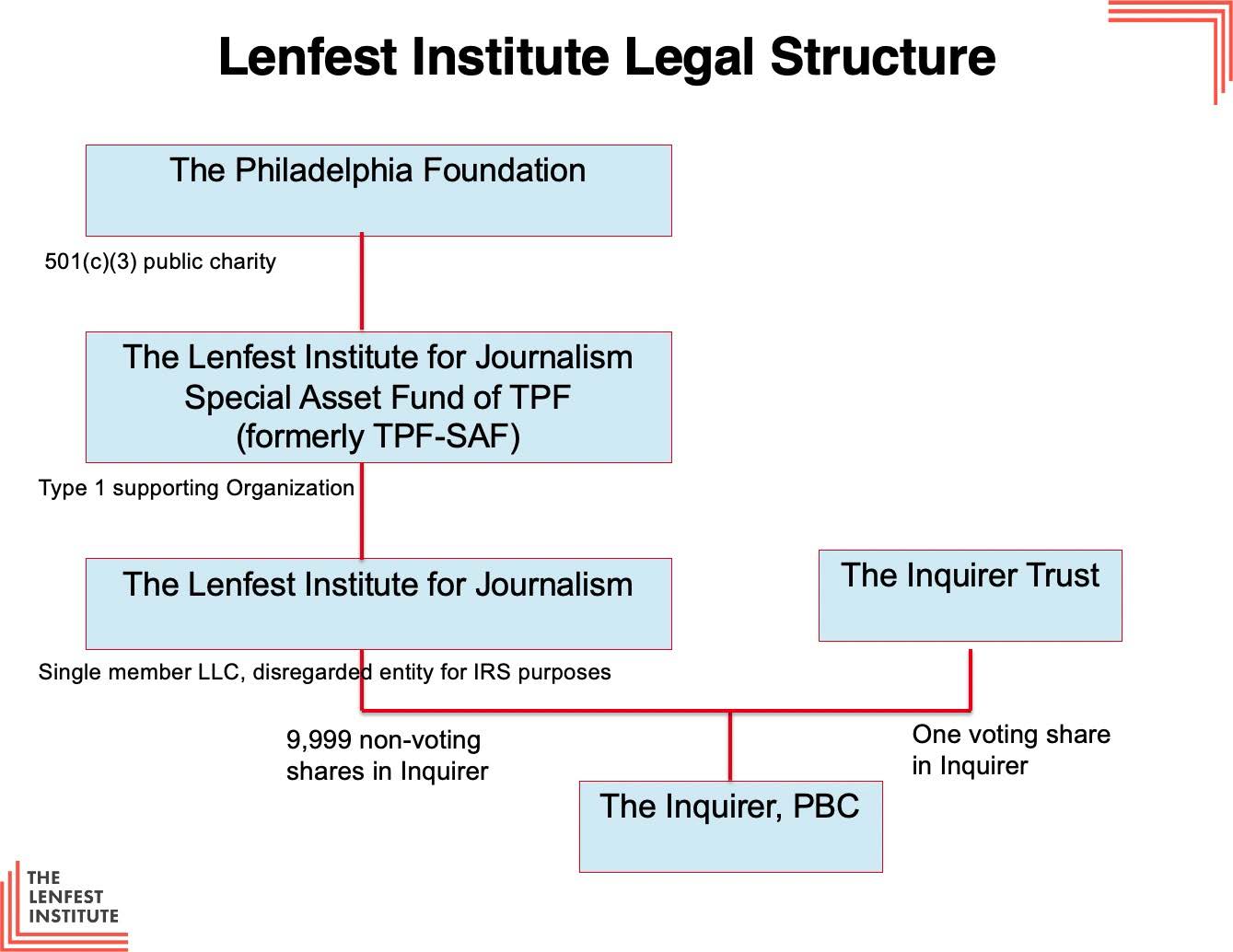
- The Broadcaster and Churches’ tax exempt purpose is preaching and teaching Christianity. They cannot farm their political speech to a subsidiary organization and simultaneously engage in teaching and preaching. Political speech is indivisibly part and parcel of preaching and teaching, the plaintiff’s argue. So by farming out their political speech, the Broadcaster and churches’ no longer preach and teach their Christian faith; preaching and teaching require discussion of politics. Unlike Lenfest and everybody else, the Broadcaster and churches cannot pursue exempt purpose and politics through separate organizations. Their exempt and (oh, by the way) constitutionally protected activity suffers if they take the TWR solution.
That seems like checkmate logic right there. Too bad the plaintiffs aren’t so good at chess etiquette.
darryll k. jones