
“Madness,” Unconstitutional Anti-Immigrant Attacks on Nonprofits, and Organizational Standing
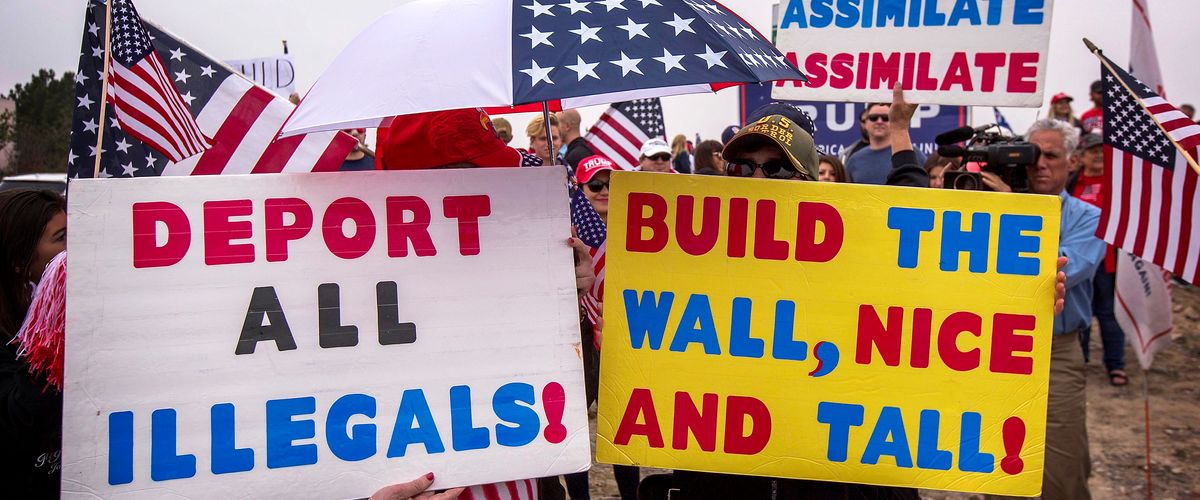
A week ago last Sunday, the Pope said this about Ken Paxton’s anti-immigrant attacks on a catholic charity:
“That is madness. Sheer madness. To close the border and leave them there, that is madness,” Francis said. “The migrant has to be received. Thereafter you see how you are going to deal with him. Maybe you have to send him back, I don’t know, but each case ought to be considered humanely, right?”
Anti-immigrant hostility towards nonprofits is rampant all over the world these days. It’s all an expression of the apparently universal belief that everything would be solved if we just kept “them” out. It is most prevalent domestically in Texas and Florida, two states trying harder than most others to be gated communities. Last Wednesday, a federal district court in Florida granted a preliminary injunction against a Florida law that criminalizes nonprofits and nonprofit workers for transporting immigrants into the state. The Court found that the state law was preempted by federal law, and that criminally prosecuting nonprofits and nonprofit workers would constitute an “irreparable injury” if not enjoined.
The NY Times reported on the law’s impact not only on nonprofits, but for-profits too:
Florida has not carried out a sweeping crackdown in recent months and the law has not been aggressively enforced, but it has nonetheless had profound effects, said Felipe Sousa-Lazaballet, executive director of Hope CommUnity Center, a nonprofit in Apopka, Fla., that provides services to immigrants. Many people pulled their children out of school and relocated to more immigrant-friendly states, because they feared being separated from their children if stopped by law enforcement, Mr. Sousa-Lazaballet said.
Geowane Freitas, a subcontractor who owned a legally registered company that installed hurricane-proof windows and doors in hospitals and commercial buildings, said that about 40 percent of his labor force vanished. They moved to Massachusetts, California and other states where they could live and work free of worry, he said. Mr. Freitas, himself an undocumented immigrant, decided to return to his home country. “I contributed and paid taxes in Florida for almost 20 years,” he said in a phone interview from Brazil. “I called it quits in September because of this law.”
Before granting the injunction, the Court provided a primer on organizational standing, a doctrine often relied upon by nonprofits advocating a cause via litigation:
- Standing:
“[A]n organization has standing to sue on its own behalf if the defendant’s illegal acts impair its ability to engage in its projects by forcing the organization to divert resources to counteract those illegal acts.” Fla. State Conference of N.A.A.C.P. v. Browning, 522 F.3d 1153, 1165 (11th Cir. 2008). In Browning, the Eleventh Circuit held that the organizational plaintiff had standing because it made a “sufficient showing” that it “will have to divert personnel and time to educating volunteers and voters on compliance with Subsection 6 and . . . [t]hese resources would otherwise be spent on registration drives and election-day education and monitoring.” 522 F.3d at 1165–66. Similarly, in Common Cause, the Circuit found that the NAACP had standing because it “divert[ed] resources from its regular activities to educate and assist [affected individuals] in complying with the [challenged] statute[.]” Common Cause/Ga. v. Billups, 554 F.3d 1340, 1350 (11th Cir. 2009). And, in Georgia Latino, the court held that the organizational plaintiffs had standing because they “diverted resources to educate their members, staff, and volunteers on the consequences of the [challenged] law.” 691 F.3d at 1260; see also ibid. (“The enactment of H.B. 87 caused [the plaintiff] [Coalition of Latino Leaders] to receive an increased number of inquiries about the law, forcing it to divert volunteer time and resources to educating affected members of the community and fielding inquiries. As a result, CLL has cancelled citizenship classes to focus on these effects. According to CLL, ‘these problems will only get worse if the bill goes into effect.’”
darryll k. jones