
DOJ and IRS are on Different Sides Regarding Tax Exemption for “Safe Injection Sites.” And DOJ Should Lose!
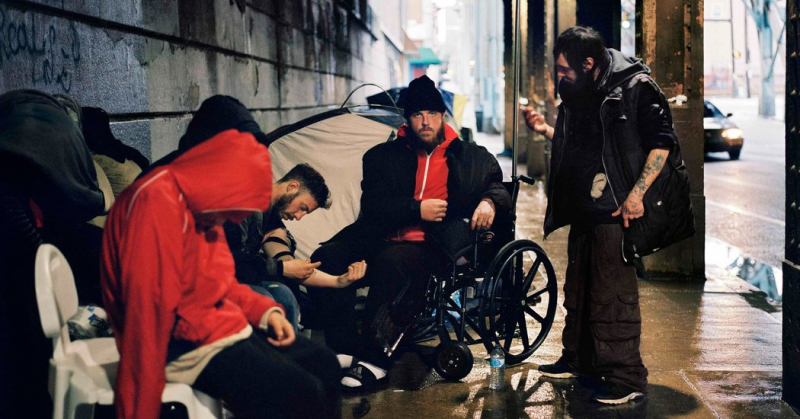
Late last year, the NY Times published an absolutely harrowing account of Kensington, described as a “Philadelphia neighborhood [that] is the largest open-air narcotics market for heroin on the East Coast.” The description makes the worst bombed out war zones sound like paradises by comparison, with hopelessly addicted poor zombie souls urinating, defecating, shooting up, and scrounging [first for another hit, then maybe food from a dumpster or trash can] all over and around the playgrounds and working class homes of families who also cannot escape. In a Forbes article two days ago, Kelly Phillips Erb reports that the Service has approved tax exempt status for an organization called Safehouse. The Philadelphia Inquirer also reports on the grant of tax exempt status. I can’t find the determination letter on the IRS website so if anybody can point me to it, I would appreciate seeing it. Safehouse does not hide its purpose and services:
What is Safehouse?
Safehouse is a privately funded, 501(c)(3) tax-exempt, Pennsylvania nonprofit corporation whose mission is to save lives by providing a range of overdose prevention services. The leaders and organizers of Safehouse are motivated by the Judeo-Christian beliefs ingrained in us from our religious schooling, our devout families and our practices of worship. At the core of our faith is the principle that preservation of human life overrides any other considerations. Safehouse is one element of a much-needed comprehensive plan to address a public health crisis. The organization seeks to open the first safe injection site in the U.S. providing a range of overdose preventions services, including safe consumption and observation rooms staffed by a medical staff prepared to administer overdose reversal if needed. Additional services would include on-site initiation of Medically Assisted Treatment (MAT), recovery counseling, education about substance use treatment, basic medical services, and referrals to support services such as housing, public benefits, and legal services. Safehouse is working with community partners to find suitable locations to deliver this unified range of services.
The “safe injection site” part of its mission is what caught the eye of DOJ (more on that below). Somehow, I don’t think the Obama, Bush II, Bush I, or even the Reagan administrations would have fought this, but this is a nonprofit tax blog run by we pseudo-journalists so I will try not to be too biased. We all have them — biases, I mean — but at least I admit mine. Anyway, a safe injection site is a place where an addict can go to shoot up safely, monitored and prevented from overdosing, and thereafter (or before) offered extensive treatment, counseling, and intervention. I just know a little about tax. But it seems to me that prohibiting safe injection sites to combat drug addiction is like outlawing fire hydrants to prevent dogs from peeing outside. Addicts are going to addict and dogs are going to pee! Anyway, here is how Safehouse describes safe injection sites:
SAFE INJECTION SITES AND HARM REDUCTION
-
- What is harm reduction?
Harm reduction in substance use treatment is aimed at decreasing the negative consequences of substance use, and it includes elements of safer use, managed use, and medication-supported treatment plans. Harm reduction is designed to address the circumstances of the addiction in addition to the addiction itself, striving to minimize the harmful effects of addiction while recognizing that drug addiction cannot be completely eliminated. Current leading scholarship establishes that a demonstrably effective approach to combating substance use disorder is to encourage treatment while providing harm reduction. - Do safe injection sites exist elsewhere?
Yes. The first government-authorized supervised consumption room opened more than 30 years ago in Switzerland. Today, more than 120 supervised consumption sites are operating in Europe, Australia, and Canada. The availability of overdose prevention services is increasing as research confirms the effectiveness and the advantages to the broader community. Currently, no such program exists in the United States.
- What is harm reduction?
The irony is that while Safehouse has been granted tax exempt status, DOJ is suing to shut it down. “Safehouse officials said gaining tax-exempt status lends the organization legitimacy from the federal government, even as another arm of the government is seeking to block it from opening. The nonprofit is facing a federal lawsuit from the Department of Justice.” Safehouse’s website points out though that DOJ is not [yet] seeking to seize property or throw anybody in jail. It just wants to outlaw a practice that nearly half the countries in Western Europe, in Canada, and in Australia already use to fight drug abuse. Those are some great guys and gals over there at DOJ but I wonder if they have read the NY Times article describing the human carnage — epidemic is way too soft a word to describe what’s going on. The complaint implicitly acknowledges Safehouse is on to something good, I think. It makes it sound like, “we been through drug crises before, this is nothing new, everybody stay calm and lets “just say no.” It almost sounds like DOJ is ashamed at what its trying to do (my bias again, probably):
While our country is in the midst of an opioid epidemic, this is not the first time we have faced a drug crisis. From crack cocaine, to methamphetamine, to heroin and fentanyl, our country has faced the challenge and tragedy of drug addiction for many years. Congress and the President have sought to address the challenges of drug addiction, abuse, and diversion with the Controlled Substances Act (“CAS”), enacted in 1970 . . . The legislation’s calculated Scheme includes the prohibition of certain conduct involving controlled substances. Most relevant to the suit at hand, the CSA provides that it is wholly unlawful to manage or control any place, regardless of compensation, for the purpose of unlawfully using a controlled substance. Defendant Safehouse seeks to disregard the law and override Congress’ carefully balanced regulatory scheme by establishing, managing, and controlling sites in Philadelphia that will allow individuals to engage in the illicit use of controlled substances, namely, heroin and fentanyl. For purposes of this action, it does not matter that Safehouse claims good intentions in fighting the opioid epidemic.
Safehouse filed an astonishingly literary answer that more seriously describes the problem and makes a strong case that it is providing medical treatment, not violating a law enacted before big pharma ever dreamed of getting rich selling heroin that looks like aspirin. Safehouse, by the way, has an impressive group of lawyers working pro bono, apparently. I betcha more than one in three people reading this blog or in any other population sample knows someone or have been personally impacted by the opioid epidemic. I wouldn’t be surprised either if, having learned of the IRS’s actions, DOJ is already demanding that the exemption be revoked. The grant of tax exemption obviously undercuts the notion that safe injection sites are illegal or against “fundamental public policy.” As for the latter rationale, we can probably safely conclude that there just is no public policy. Besides, the CSA was passed a long time before opioids were dumped on unsuspecting housewives, executives, would-be athletes, and active duty military men and women, and veterans. Sheeeesh! DOJ should get a grip! As the opioid crisis rages through every neighborhood in America — urban, suburban, rural, mountains, rich, poor, white, brown, black, whatever — we keep whistling right past the graveyard.
But I digress. I should talk about the illegality and public policy doctrines as they relate to tax exemption and why I think DOJ should lose this one. But I gotta grade some more papers now so I’ll do that tomorrow. Feel free to provide some perspectives on that in the comments.
Darryll K. Jones