
The T̶r̶u̶m̶p̶ Kennedy Center
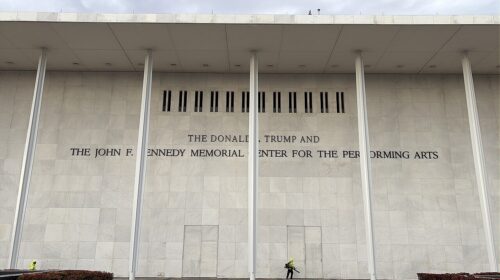
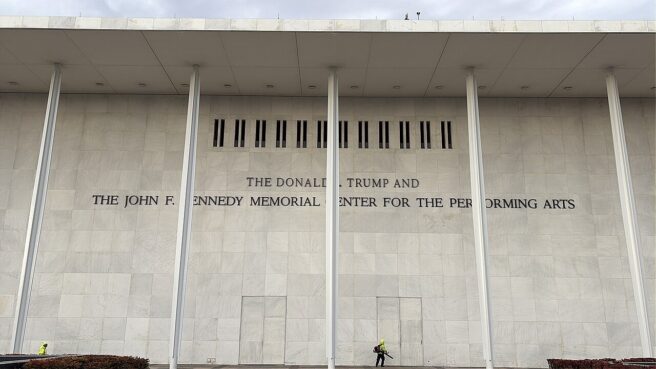
On Friday, Judge Christopher Cooper of the District Court for the District of Columbia issued a 93-page ruling in the litigation surrounding the (putative) renaming of the Kennedy Center and the announced shutdown of the Kennedy Center for two years.
The suit, brought by Rep. Joyce Beatty, isn’t precisely about nonprofits. The Kennedy Center, after all, is a bureau within the Smithsonian Institution. It is governed by a Board of Trustees made up of ex officio members who occupy certain roles in the federal government and general trustees appointed by the president. But even though it is a statutory bureau that isn’t an incorporated nonprofit, much of the court’s analysis finds comfortable analogues in the world of nonprofit governance.
Rep. Beatty’s suit encompassed several issues. The appointed board voted to remove the voting authority from ex officio members. It didn’t allow Rep. Beatty to speak in important meetings. It voted, in derogation of Congressionally-enacted statute, to change the name of the Kennedy Center. And it voted, perhaps in derogation of the enacting statute, to shut the Kennedy Center down for two years.
The court granted summary judgment on Rep. Beatty’s voting claim, her name-change claim, and her Kennedy Center shutdown claim. I hope to look at some of those issues over the next couple days (though I’m travelling for a conference, so posting time and hours may be weird).
But I wanted to highlight the closure issue today. I teach Business Organizations, and I have to say, the process the Board used to decide to shut the Kennedy Center down for two years feels like they read Smith v. Van Gorkom only they read it as a roadmap, not a cautionary tale.
In essence, according to the court, in the presentation the Board heard, they were told that the Kennedy Center “may” remain open in several respects. The minutes have no record of any discussion of the negative consequences that a closure might have, unsurprising given the committee focused on the construction aspects. There was no indication that the Board considered how it would meet its statutory mandate of “continuity of mission” while the Kennedy Center was closed.
And what about the lawyers? The court asked precisely that question. While the question was at least in part a legal question, and while the General and Associate General Counsel were present at the meeting, there was no record of their speaking at all. And the person who did speak was an expert in construction, not law.
And the information they did receive was “woefully insufficient.” There was no study, no discussion (as Trump claimed in a post) with contractors, art and music experts, and other consultants. Rather, there was a one-sided and insufficient presentation and some out-of-date materials. (The Board apparently did not receive any documents or plans about the closure until Rep. Beatty’s TRO request.)
That, said the court, was absolutely not enough information to allow the Board to make an informed decision about a move that could undermine the Kennedy Center’s statutory obligations. And thus, the court enjoined the Kennedy Center from shutting down for two years.
Photo by Dclemens1971. CC BY 4.0
