
Will the IRS Johnson Amendment Concession Lead to Politicians “Prowling the Pews”?
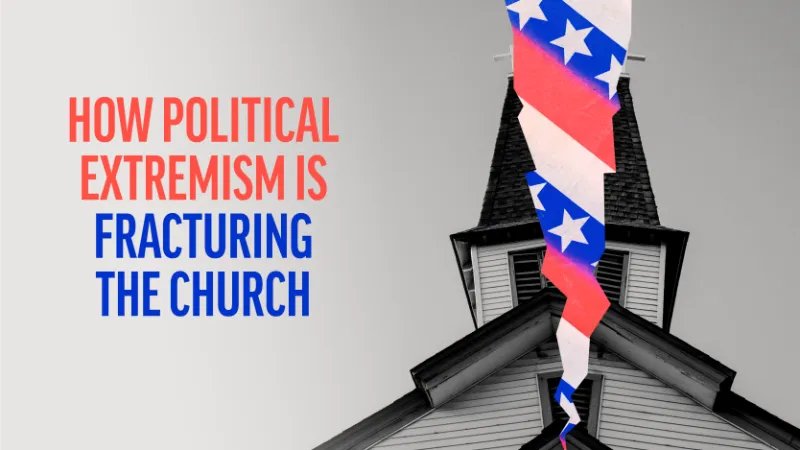
When politics becomes explicit in houses of worship, will we witness even higher levels of harmful sectarianism? I am only an amateur historian and certainly not a political science. But I bet religious sectarianism is the single biggest causes of war and strife in the world. So even if the Johnson Amendment was adopted in the dark of night, without much thought, and in a cynical effort to win an election, it seems like an accidental stroke of genius as a policy matter. We Americans often point to the Fist Amendment’s intent to keep church and state separate. We think and talk about our system with an air of superiority. Because we don’t often witness explicit sectarian violence, ours must be the better system. Compare our political environment to those plagued by shiites vs. sunnis conflict, for example.
The IRS concession last week will lead to more sectarianism — “politicians prowling the pews” according to some observers. Like Satan in a nice suit and tie pretending to worship but really just looking for wars to start and souls to steal. Ok, maybe I am being a bit dramatic. By the way, Americans United for Separation of Church and State filed a motion to intervene in the case last week. The Motion asks the court to reject the proposed consent order.
From Holly Hollman, General Counsel at Baptist Joint Committee for Religious Liberty, writing in Bloomberg Daily Tax Report this morning:
It is rare to see a government agency surrender its regulatory mandate not through legislative or regulatory amendment but by way of a linguistic sleight of hand. The IRS did just that last week. In a proposed consent decree filed in a federal district court in Texas, the IRS asserted that when clergy communicate about electoral politics with their congregations in religious services, it’s not electioneering in violation of longstanding federal law. Instead, it should be viewed as just a “family discussion.” This is not only an unorthodox legal maneuver; it’s bad advice for houses of worship.
. . .
The Johnson Amendment protects the integrity of the nonprofit sector. It applies to organizations that receive the most favorable tax treatment—those that receive tax-deductible donations, including houses of worship. Such organizations certainly have free speech rights and a wide berth for influence in public debate. It makes sense that such organizations dedicated to charitable, educational, or religious purposes are prohibited from being used to promote partisan campaigns. It is a safeguard that ensures churches and other nonprofit organizations aren’t conscripted into partisan warfare or transformed into laundering operations for campaign finance. And importantly, polls show that overwhelming majorities of pastors and parishioners alike reject pulpit endorsements. Unfortunately, if the IRS’s recent litigation position sticks, we can expect to see more political operatives prowling the pews, more congregations fractured by party lines, and more threats of charitable donations misdirected into the coffers of political campaigns.
The picture above is from Truth over Tribe. Here is a portion of that blog’s interesting take on the matter:
You used to worship alongside them every Sunday. You met up with them for small groups. You grabbed lunch with them to process work drama. You watched sports with them. Prayed with them. Did life with them. But over the last few years, you’ve noticed a growing tension in your relationship with them. Suddenly you find it harder to see them at church, trust their advice, and assume the best about their intentions and view of the world.
Who are they? Christians who don’t share your political-cultural identity. Of course, you don’t want politics to be a barrier. You don’t think it should be. But it’s as real as a concrete roadblock on a once-busy street. You aren’t alone. Increasingly, people are leaving their churches in search of Christian communities that align with their political ideology and cultural outlook. Conversely, some church communities are pushing out and demonizing those who dissent.
The best local churches were once big tents that could incorporate people across a wide political, social, racial, ethnic, and economic spectrum because they shared a theological vision and kept Jesus at the center. But everything is changing. This seems increasingly impossible.
darryll k. jones