
Does OpenAI (c)(3) Have a Duty To Accept the Highest Bid?

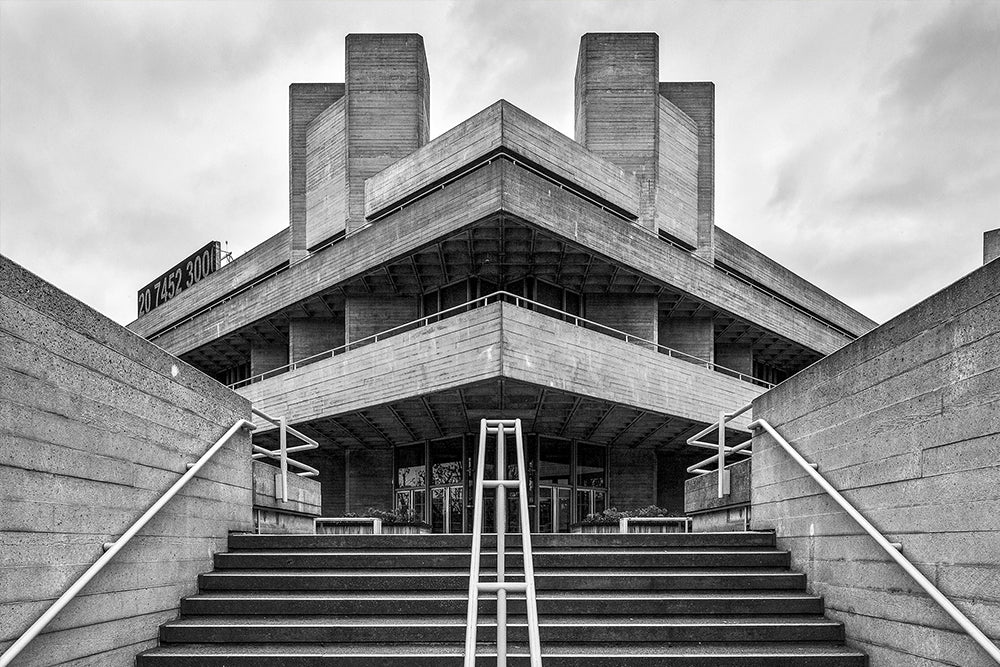
If you hired an agent to sell your beautiful and cherished Frank Lloyd Wright home, hoping to find a buyer who appreciates organic architecture and who will preserve the home after you are gone, would you be aggrieved nevertheless if your agent summarily dismissed a really big offer from someone who might just raze your beautiful old home, replacing it with a monument to Brutalism? What if the Brutalist buyer offered to beat any other offer by a substantial amount? If your answer is that you would be bothered enough to require the agent’s explanation, you should agree that OpenAI’s board has a duty to evaluate and consider Musk’s offer to buy OpenAI for $97.4 billion. Especially if the offeror credibly disclaims any intention to replace your Frank Lloyd Wright with something Brutalist. I can’t think of a good reason that the agent can just dismiss the offer with a flick of the wrist.
OpenAI (c)(3)’s tech transfer joint venture is the Frank Lloyd Wright home. OpenAI (c)(3)’s Board is the agent, and Elon Musk is the bidder disclaiming Brutalist intent. Taxpayers currently own the Frank Lloyd Wright.
Musk’s latest move in the billionaire chess match is an unsolicited offer to buy OpenAI for $97.4 billion. You can read Musk’s offer here. OpenAI (c)(3)’s Board Chairman responded, perhaps way too soon, that “OpenAI (c)(3) is not for sale.” Bullshit. Of course, it’s for sale. Undaunted, the Board’s attorney sent a letter asserting (1) that Musk’s “bid” was not a bid at all, (2) that OpenAI is not for sale, (3) that what everybody thought was a sale is instead a “potential restructuring” and (4) that the Board had unanimously rejected that which is not a bid anyway. That might be good lawyering but it can be bullshit at the same time.
Meanwhile, Sam Altman filed a response in court, asking the judge to consider the offer evidence of Musk’s Brutalist intentions:
Musk’s purported takeover bid cannot be reconciled with the charitable trust claim he is advancing in this Court, or the injunction he is seeking on the back of that claim. In this Court, Musk argues that OpenAI, Inc.’s assets cannot be “transferred away” for “private gain.” Accordingly, he seeks an injunction barring any “conversion” of OpenAI, Inc. into a “for profit enterprise,” or any effort to “achieve the same end” by “transferring any material assets, including intellectual property owned, held, or controlled by OpenAI, Inc.” But out of court, those constraints evidently do not apply, so long as Musk and his allies are the buyers. Musk would have OpenAI, Inc. transfer all of its assets to him, for his economic benefit and that of his competing AI business and hand-picked private investors. The OpenAI Defendants respectfully submit that Musk’s February 10 letter further exposes Plaintiffs’ preliminary injunction motion as [nothing more than] an improper bid to undermine a competitor.
Musk has enough money to afford the early losses he is apparently suffering in an effort to shut it all down. There is a better chance of a three month monsoon in SoCal then that Musk will get a preliminary injunction. On Tuesday Musk offered to withdraw the offer if the Board removes the “for sale” sign in front of OpenAI (c)(3). He must think that his chances of getting a preliminary injunction are zilch but that the Board will have to come up with some very good reasons for rejecting his offer.
To briefly recap, OpenAI claims it needs to sell its joint venture with Microsoft and other private investors to get more capital with which to continue its charitable mission. OpenAI (c)(3)’s mission is to develop and disseminate artificial intelligence for the good of humanity. Musk claims he is only fighting to vindicate and protect that mission, one he helped articulate and fund. Altman says Musk is trying to take over OpenAI (c)(3) for his own greed, and earlier this week Altman dismissed Musk’s offer with a snarky post on X. Altman thinks Musk is just a disguised Brutalist and that if he gets his hands on OpenAI (c)(3) he will strip it of any intention to benefit humanity. Musk is losing so far in court and there is no indication that he has garnered support from the Delaware or California attorneys general or the IRS.
Musk seems to be playing better chess now, though, and he is forcing OpenAI into some uncomfortable mental gymnastics. As mentioned earlier the Board member party line is that “OpenAI is not for sale.” The assertion defies logic and recent history, it seems to me, and is probably a legally-advised talking point designed to prevent application of the Revlon duty to “maximize shareholder value.”
Revlon and its progeny indicate that once a sale is inevitable, fiduciaries must assume the role of auctioneers focused on getting the highest price. Subsequent case law suggests that it is not necessarily the “highest” but the “best” price” that must be pursued. Still, it is probably a rare occasion that an auctioneer may reject the highest credible bid because he considers the bidder an unsuitable steward. The assertion that OpenAI (c)(3) is not for sale is only technically correct anyway. OpenAI (c)(3) is not being offered, but its tech transfer joint venture is definitely up for sale. And in a real sense, the joint venture represents all that OpenAI (c)(3) is even if the exempt org is on top of a convoluted flowchart. Let’s not split hairs. There is certainly no doubt that the joint venture is up for sale, at this point to a hand-picked buyer whose intentions the Board thinks are much more aligned with preserving the Frank Lloyd Wright architecture of it all.
I am not so sure that OpenAI (c)(3)’s board can reject a higher offer on the basis that Musk is a capitalist who will disdain the public interest if he acquires OpenAI (c)(3). The idea that OpenAI (c)(3) may accept a lower offer based on the belief that the lower bidder will better protect the public’s interest seems like a standard without any real limits. It would allow the Board to favor any buyer it prefers under the rationale that the buyer is more civic minded than another.
And whatever OpenAI (c)(3)’s charitable mission is, I doubt that OpenAI (c)(3) may or should attempt to attach that mission somehow to the buyer’s use of the purchased assets. It’s not entirely unprecedented, though. Charitable “conditions subsequent” were imposed on HCA’s acquisition of Mission Health in North Carolina. The AG approved the sale only on condition that HCA continue Mission Health’s “community benefit.” But that was health care and there wasn’t a competing offer on the table to my knowledge. The AG would not have approved the sale without Mission Health extracting theoretically enforceable promises that the for-profit buyer would act in sufficiently charitable ways. So there is hope in what must be OpenAI (c)(3)’s better argument – the one that makes more sense than that OpenAI is not up for sale. Of course, the Board can always decide not to sell at all. And that must be what Musk is banking on.
darryll k. jones