
The Quakers Sue Over Migrant-Serving Nonprofit Persecution
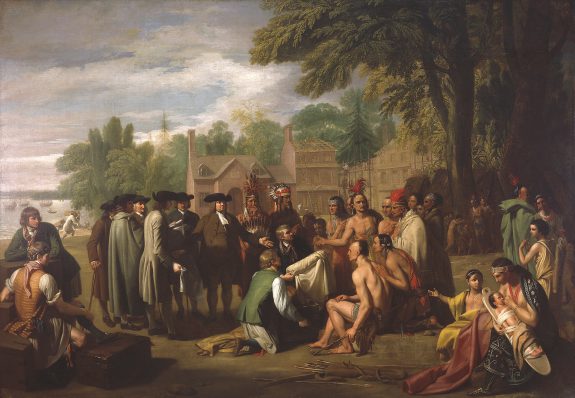
European migrants petitioning for asylum in the new world.
I’ve been on my high horse since long before the inauguration about the Lazy-Eyed Cowboy’s unholy crusade against migrant shelters. Paxton, the evangelical patriot, has been demonizing, raiding, and investigating religious folk for feeding and sheltering migrants along the southern border. The whole idea is that if it weren’t for mostly Catholic Bible thumpers, brown migrants would stay home. And all the while, the Southern Baptists and Pentecostals have been praising God and patting Paxton on the back. Without a word of protest against those who show mercy on the people Trump described as “rapists, murders, and drug dealers,” the lot of them at least.
And now the crusade is going national just like I said it would. We reported a few days ago, that the crusaders have now made it quite plain that if they need to kick down church doors and drag people into the streets to get at the ragged and dangerous migrants, with their kids and all their possessions in tow, by God that’s exactly what they will do. Hyperbole? Maybe.
One group of worshippers, The Religious Society of Friends, think enough of the threat that they have filed suit in effort to stop the madness. It remains to be seen how effective the Quakers will be and whether the big white churches will rise up and live out the true meaning of their creed. Here is a press release from Democracy Forward, the nonprofit law firm representing five Quaker “meetings:”
Greenbelt, Maryland – Today, a coalition of Quaker meetings, which includes the oldest Quaker meeting in the world, filed suit in the federal court in Maryland to block the US Department of Homeland Security (DHS) from its abrupt shift in policy that enables federal immigration enforcement officials to enter houses of worship for their immigration enforcement actions. The policy is already sowing fear within migrant friendly congregations and has led to cancellations in worship services out of fear, the complaint states. The suit alleges that the Trump policy violates the First Amendment and other protections.
Plaintiffs, represented in the legal challenge by Democracy Forward, include Philadelphia Yearly Meeting of the Religious Society of Friends, New England Yearly Meeting of the Religious Society of Friends, Baltimore Yearly Meeting of the Religious Society of Friends, Adelphi Friends Meeting of the Religious Society of Friends, and Richmond Friends Meeting of the Religious Society of Friends.
For decades, the United States has protected sensitive locations, including houses of worship, from immigration enforcement activities, out of a concern that such activities restrain people from receiving essential services and engaging in essential activities, such as worship. Despite these longstanding protections, the Trump administration’s DHS has reversed course and now immigration enforcement operations can be conducted in protected areas like churches and religious ceremonies such as weddings and funerals limited only by DHS’s instruction that they use “common sense.” The suit alleges that presence of armed government agents at or near meeting houses is disruptive to Plaintiffs’ ability to freely associate and worship. The suit also alleges that the abrupt shift in policy violates federal law’s prohibition against agencies of the federal government acting arbitrarily and capriciously.
It doesn’t take a first-year law student to understand the First Amendment implications. The complaint includes all the necessary and effective legalese so I won’t summarize. The Introduction sets the scene better than I have over the past year, especially the part in paragraph 6 about ICE agents sitting outside churches waiting and taking notes and pictures of whoever is coming or going:
1. Whether it’s to sit in expectant waiting, to deliver or receive a weekly homily, to lead or participate in Jama’ah, or to participate in religious observances requiring a minyan, communal worship is fundamental to the religious exercise of many. For Plaintiffs—Quaker congregations—communal worship is not just important, it is the very process of worship itself. And it is something that Quakers have been doing in this country for over 350 years.
2. Quaker worship is not led by an individual charged to direct services. Instead, in Quaker worship, people sit together silently and await messages from God. When anyone attending the worship receives a message from God that is meant to be shared with others, they stand and deliver that message to everyone. Quakers believe that every person, no matter their background, can be a conduit for a message from the Divine. Indeed, Quakers believe that those with varied life experiences— including immigrants—can provide unique messages from God. Being able to receive those messages is fundamental to Quaker religious exercise.
3. For over 30 years, it has been the government’s official policy to not enforce immigration laws in “protected areas,” which include houses of worship (and other religious ceremonies like weddings and funerals), absent certain extraordinary circumstances.1 Rightly so. Enforcement in protected areas like houses of worship would, in the government’s own words, “restrain people’s access to essential services or engagement in essential activities.”
4. Despite this longstanding policy, the Department of Homeland Security last week authorized agents to conduct immigration-enforcement operations in protected areas, including churches and religious ceremonies. The 2025 Policy gives agents unfettered authority to carry out enforcement in these formerly protected areas. The policy’s only attempt at limiting that authority directs agents to use their own, subjective “common sense.”
5. Within days of introducing the new policy, DHS started enforcement actions at houses of worship.
6. Allowing armed government agents wearing ICE-emblazoned jackets to park outside a religious service and monitor who enters or to interrupt the service and drag a congregant out during the middle of worship is anathema to Quaker religious exercise. The very threat of that enforcement deters congregants from attending services, especially members of immigrant communities. Losing congregants is a substantial burden on Plaintiffs’ religious exercise, especially when those congregants would bring to worship different backgrounds and life experiences. And deterring worshippers from attending services chills Plaintiffs’ First Amendment rights of association.
7. Because “attending religious services” is “at the very heart” of the “guarantee of religious liberty,” Roman Cath. Diocese of Brooklyn v. Cuomo, 592 U.S. 14, 19-20 (2020), if the government is going to impede that guarantee, it must meet the strictest of justifications. With respect to the 2025 Policy, it cannot. After all, DHS has already acknowledged that it “can accomplish [its] enforcement mission without denying or limiting individuals’ access to” protected areas, including “places of worship.”2 8. In all events, if an agency is going to upend a longstanding policy, it must follow specific procedures, which include explaining the reason for its about-face and considering alternatives. DHS’s new policy does not acknowledge that houses of worship are sacred spaces. It does not acknowledge that for many, religious exercise is an essential activity (as the previous policy did). And it does not even consider what unconstrained immigration enforcement at houses of worship would mean as a result. Instead, it treats houses of worship as nothing more than places where “criminal aliens—including murderers and rapists” go to “hide.”
8. As such, and as further explained below, this Court should declare unconstitutional any policy permitting government agents to carry out immigration enforcement activities at or near houses of worship when the policy is limited only by individual agents’ subjective “common sense,” vacate the 2025 Policy, and enjoin DHS and its constituent agencies from implementing or enforcing the policy.
darryll k. jones