
Why is Supporting Warriors a Charitable Activity? A Thought Exercise
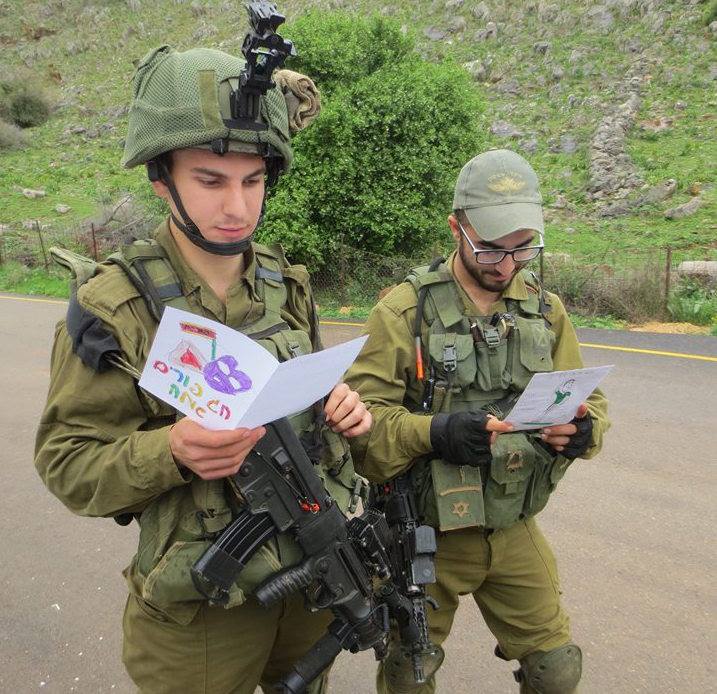
I get to teach Nonprofit Law next semester. People think it’s a niche, so it’s only offered every now and again. Since I last taught it, I’ve been thinking about how better to consider the question “what is a charity?” Usually we start way back at the Statute of Charitable Uses and then work our way through Bob Jones all the way to current law’s unsatisfying conclusion that charity is an “evolving concept.” It means different things at different times in history; but always only nice things, by historically relevant standards. I think I finally found a better thought exercise. Next semester, I will ask students to explain why sending care packages to troops in war zones is a charitable activity for which deductions and tax exemptions are granted. Students will be required to state a justification for something that seems but is not really so obvious. Something I read yesterday helps the discussion.
Yesterday, the Council on Arab-Islamic Relations issued a press release about a U.S. charity’s financial support of Israeli paratroopers fighting the war in Gaza. I’m a “five jump chump” so I have an affinity for paratroopers, by the way. CAIR was responding to an investigative report concluding that the tax exempt nonprofit Friends of Paratroop Sniper Unit 202 raised “hundreds of thousands of dollars” to send care packages to PSU 202:
A U.S. nonprofit has raised hundreds of thousands of dollars for an Israeli sniper unit for the stated purpose of buying scopes, silencers, and other equipment. The unit, which is nicknamed Rephaim, or “Ghosts,” has since been implicated in possible war crimes and killing over 100 people in Gaza and has been tied to the killing of four unarmed Palestinians in Gaza since October 7, 2023.
On October 9, 2023, the mother of unit member Daniel Raab—an Illinois native—posted on Facebook that the nonprofit, registered as “Friends of Paratrooper Sniper Unit 202,” was in need of “helmets, rain gear, barrels, vests, sniper stands, silencers, camouflage, and the list goes on.”
In its 990 filings, Friends of Paratrooper Sniper Unit 202 is described as “an organization dedicated to catering to the additional requirements and the overall welfare of soldiers serving in a specific military unit.” The description continues to say that the primary focus of the nonprofit is, “to ensure that soldiers have access to the necessary resources, support systems, and amenities that can enhance their comfort, safety, and well-being while they are actively serving their duty.”
Care packages can contain any non-lethal thing, from cookies and extra socks, artwork from elementary school kids, a bottle of Listerine carefully repackaged with rum or bourbon instead, night vision goggles, Kevlar vests, and even drones nowadays. We should assume away war crimes in CAIR’s complaint. Even the press release calls them “possible.” But implicit in CAIR’s press release is that making it easier to wage war is not charity.
It is deeply troubling that a U.S.-registered nonprofit appears to be funding sniper scopes and other military equipment for an Israeli occupation unit accused of committing war crimes against unarmed civilians in Gaza. Providing material support for terrorism is illegal, and it should be just as illegal to provide material support for genocide. Congress should ensure that our laws forbid nonprofits from sending money overseas to support a genocide.”
All war boils down to terror and genocide, let’s just be real about it. One people is trying to kill another people. That’s war. The question, whether an organization supporting warriors should be deemed charitable, is one also raised in Ukraine, according to an AP report last year:
Bulletproof vests and drones. Pickup trucks, walkie-talkies and tourniquets. These are just some of the items that individuals and nonprofits have donated to buy and ship to Ukraine, where sometimes they are then used by those fighting Russia’s invasion. “We’ve had these discussions countless times,” said Igor Markov, a director of the nonprofit Nova Ukraine, about where to draw the line between what aid is humanitarian versus that which supports the active defense — the fighting — in his home country.
His Stanford, California-based organization, which delivered some $59 million in aid to Ukraine since Russia invaded a year ago, decided ultimately not to support volunteer fighters. “We realized there’s a significant amount of money that would be ruled out,” he said, pointing to platforms that facilitate matching employee donations, like Benevity, and some companies, like Google, that require nonprofits to promise their aid does not support active fighting as a condition of receiving contributions.
Under U.S. laws, nonprofits are not allowed to donate to people in combat, said New York attorney, Daniel Kurtz, a partner at Pryor Cashman. “You can’t support war fighting, can’t support killing people, even if it’s killing the bad guys,” he said. “It’s not consistent with the law of charity.”
I’m not so sure about that last comment, by the way. CAIR bases its objection on the allegation that the Israeli paratroopers committed war crimes, but donors and the nonprofit can’t be responsible even if the accusations are true. The broader question is whether a nonprofit organized specifically to support war fighters – even if only by shipping care packages– is pursuing a charitable purpose.
Nobody ever really questions whether a nonprofit’s support for war fighters is a charitable activity. But why is it charity? Is it charity because the troops are fighting a “just” war? Which side is just? Is it charitable only if the recipients endeavor to comply with international law of war regardless of which side is just? That rationale would explain why sending care packages to Israeli paratroopers is charity but sending the same packages to Hamas and rag tag fighters is not. But if ragtag and Hamas fighters observed the law of war, would supporting them be a charitable activity? They aren’t actually fighting us. If we were fighting for our own survival, of course support to our fighters would be charity and support to our enemy’s troops would not be charity. Except that is exactly what CAIR and supporters of Hamas implicitly assert. That they are fighting for survival. Or is supporting the troops charity only as long as the recipients are fighting on the side the charity’s government supports?
Why is it charitable to support the troops when their business is the most uncharitable thing ever?
darryll k. jones