
The Public Benefit and Private Burden of Nonprofit Homeless Shelters
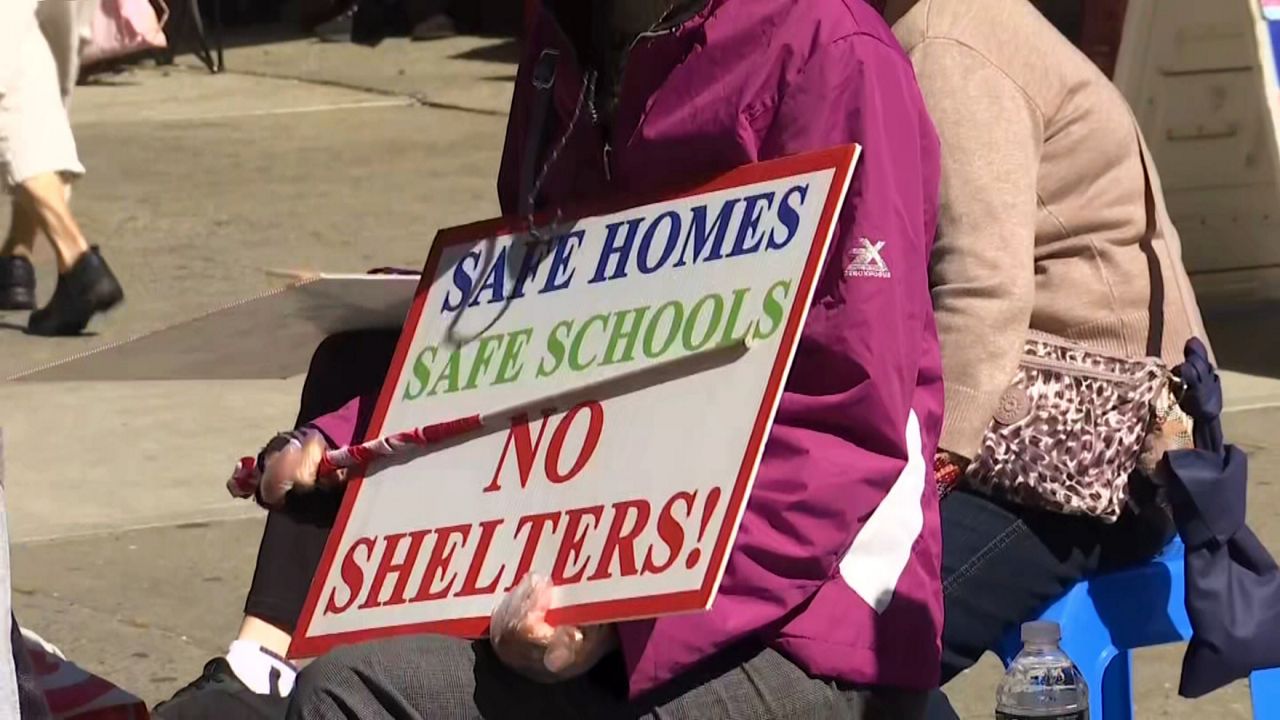
I am not much of a constitutional scholar but even I can safely predict that two lawsuits filed last week should not end well for the two state governments involved. In Ohio, a religious nonprofit organization called Nourish Our Neighbors filed a federal Complaint against Dayton, alleging that the City is trying to regulate the homeless feeding ministry out of existence through its permitting process. You can read an excerpt from the complaint below. In Texas, the Attorney General filed a state lawsuit last week seeking to shut down a church’s homeless shelter. He calls the homeless shelter a public nuisance. His description is likely correct. The Sunrise Community Church’s Homeless Navigation Center attracts too many dirty, drug-addicted, depraved and downright nasty people. You can read some of the graphic descriptions from the complaint below the fold.
Still, Nourish Our Neighbors should win in Ohio, and the Sunrise Community Church should win in Texas. Not because the homeless shelters are not responsible for attracting dirty nasty people. They are, that’s their charitable and religious purposes. But the government can’t go around shutting down religious nonprofits seeking to feed or house the poor, as commanded by their God, because the poor are so damned wretched.
Nobody disputes that feeding and housing are prototypically charitable and religious activities. We just don’t want it happening in our backyard. But feeding people is protected by the First Amendment. It is expressive conduct. Feeding and housing people is too, because they are religious activities. So our NIMBY arguments are bound to lose, as they should.
But who should pay for our principled victory? Exactly which neighborhoods should have to tolerate the sex, violence, crime, and drug abuse described in the Texas complaint? Who is comfortable with hungry people also picking up and discarding needles near the playground or park? I bet most homeless shelters and feeding places are close to neighborhoods filled with people who are barely one paycheck away from being homeless themselves. They are not usually located in middle or upper-class places. The burden of our indignation at both NIMBYism and the wretched poor is probably felt most by those who are just now generationally escaping the economic and social circumstances that cause homelessness in the first place. The legal victories in Ohio and Texas will come at the particular expense of places in which feeding and homeless shelters typically operate. It won’t feel like a victory for those people.
The answer is not to outlaw homeless nonprofits, nor even to shoo them to some other place. The answer is to recognize their benefit without imposing their costs on just one neighborhood. The nonprofit has already made a significant investment that decreases the government burden everywhere except in its particular locale. We wish it wasn’t here, but where else? To compensate for the mis-allocated burdens, government should direct additional investment into the location where the homelessness or feeding nonprofits are located. Enough so that the particular locale benefits as much as the rest of us from homeless nonprofit organizations.
Here is an excerpt from Ohio complaint suit. Note how it expertly articulates the public benefit from homeless nonprofits.
- Nourish Our Neighbors (NON) is an organization of volunteers who want to ensure that people in their community do not go hungry. But a Dayton permit scheme effectively prohibits them from engaging in such charity and from expressing their deeply held belief that both society and the government are failing the City’s homeless.
- Many people are concerned about the rising homeless population in Dayton. Nourish Our Neighbors is doing something about it. Its members partner with local barbers to offer haircuts, hand out basic hygienic products, and assist people with finding permanent housing and social services. Its most fundamental service is sharing food once a month with people who would otherwise go hungry.
- A key part of the group’s mission is leaving the places where they serve better than they found them. Its members ensure that the food they hand out is safe and that no trash is left behind.
- Yet, the City of Dayton enforces a needless and costly permit requirement that significantly impairs NON’s mission. One of its members was even put in handcuffs for handing a burrito to a homeless man without the required permit.
- Dayton’s laws violate NON’s rights to free expression and to engage in charity. They also unjustly target organizations that serve the homeless. Accordingly, they should be declared unconstitutional and enjoined under the First and Fourteenth Amendments to the United States Constitution.
Below the fold, you can read excerpts from the Texas suit. Note how it graphically describes the private burdens imposed by homeless nonprofits on just one particular neighborhood.
darryll k. jones
That Texas complaint tells a graphic story focusing on the burdens caused by homeless nonprofits:
In South Austin, a once peaceful neighborhood has been transformed by homeless drug addicts, convicted criminals, and registered sex offenders. These people do drugs in sight of children, publicly fornicate next to an elementary school, menace residents with machetes, urinate and defecate on public grounds, and generally terrorize the surrounding community. It was not always this way—one resident of almost 50 years tells how she has loved the neighborhood, but now is “no longer comfortable [even] walking” in it, and that it is “so dangerous now” that she is “not even comfortable taking [her] trash can out to the curb.”
And everyone involved knows who is responsible: Sunrise Homeless Navigation Center. Sunrise euphemistically depicts itself as a “holistic and fully integrated” homeless service facility. It “walk[s] alongside” homeless people “through their entire homeless experience ensuring there are no cracks, [and] no places to fall through.” But, as residents have explained, Sunrise is also a “magnet” for a homeless community that commits rampant crimes in the area. And Sunrise enables and facilitates this criminality. It permits a syringe distributor to come to its facility on a weekly basis and give needles to the homeless in order to inject drugs. It permits this drug use on and around its surrounding property. And it then permits the homeless to linger in and around the community even if they are in an unstable state. In Sunrise’s own words, Sunrise has converted the area into a “steady home base” for this dangerous, drug-addled homeless population. The result is predictable, and devastating for the local community.