
NAPA Legal Institute: State Burdens and Benefits on Religious Nonprofits
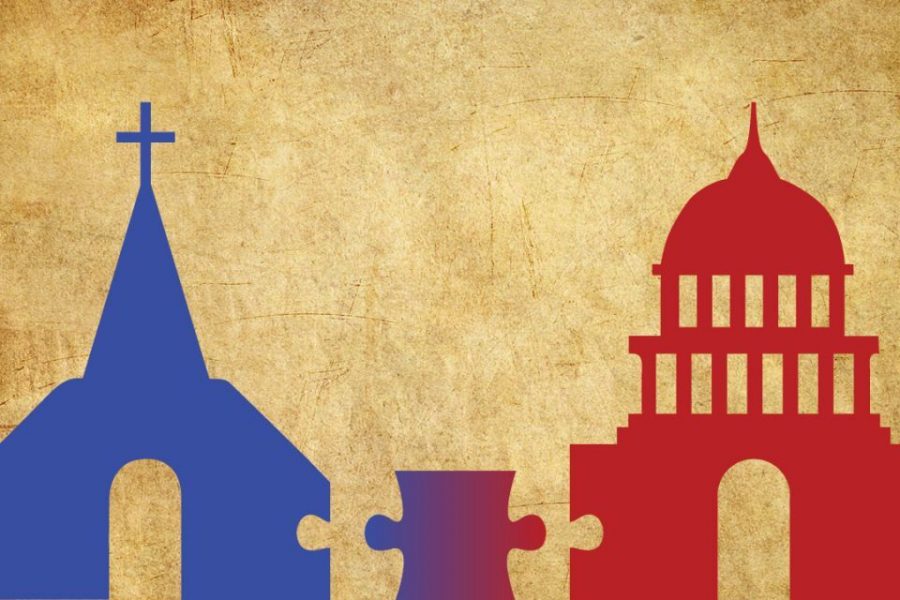
One thing I’ve noticed is that First Amendment adherents can be divided into two groups insofar as Church and State are concerned. One group, the “freedom from religion” side, invariably views any legal protection or accommodation of religious activity as a “law respecting an establishment of religion.” That group wants government to ignore religion entirely. Groups that insist on unrestrained worship, the “freedom of religion side,” view any legal imposition affecting spirituality as a law “prohibiting the free exercise thereof.” That group wants government to be God’s personal valet. Most interested people are in one group or another but hardly ever in between. When conflict arises, the problem is that both sides point to the exact same evidence to support their opposite assertions. That was the underlying problem in Walz v. Tax Comm’n of the City of New York where the Supreme Court had to navigate a path between establishing religion by tax exemption and prohibiting religion by taxation.
If your practice or scholarship focuses on religious nonprofits, there is a brand-new report out that you should download. NAPA Legal is tax exempt legal organization that focuses on legal policy as it relates to faith-based nonprofits. Its wealthy and influential stakeholders include billionaire Leonard Leo, widely credited with reshaping the Supreme Court, and Stephen Payne, Dean of the Columbus School of Law at Catholic University. But that’s ok, just keep your thinking cap on while considering the groups’ thoughts and ideas. As we ought to do in every case. I am talking to myself, mostly, right here. We might could even learn something. NAPA Legal does not litigate, by the way. It focuses on compliance and policy. Here is a brief description:
Securing religious liberty is a proactive activity, as most legal battles are already won or lost outside the courtroom. We educate leaders on the steps they must take now in order to ensure their nonprofits can avoid litigation, compliance-focused attacks, and unforced errors in the public square. By providing corporate, tax, philanthropic, and other strategic education, we equip nonprofits with the tools and resources they need so they can protect their organizations and achieve their missions.
Last week, NAPA Legal issued what appears to be a very comprehensive report regarding state regulation of religious nonprofit organizations. From the press release:
WASHINGTON, D.C. – Today, Napa Legal Institute released its 2024 Faith and Freedom Index and urged Americans not to rely on federal law and policy alone – especially as we face uncertainty about how committed or hostile to religious freedom the incoming administration will be. State laws play a huge role in determining whether local institutions like churches, religious schools and charities are able to form, operate, and thrive.
The Index scores state laws that affect faith-based, federally tax-exempt nonprofits based on consistent benchmarks for comparison across all 50 states and Washington, DC. Many states burden and hinder these organizations, rather than protecting and supporting them. The second annual Faith and Freedom Index reveals that many states including Massachusetts, Michigan, and Washington over-burden and are even hostile towards faith-based nonprofits. Conversely, states like Alabama and Indiana have robust protections for faith-based nonprofits that their less-free neighbors could learn from. Encouragingly, many states have made progress since the Index launched in 2023 and improved their friendliness to religious organizations by passing better laws.
“Faith-based nonprofits fulfill a critical role in a healthy society,” notes Napa Legal’s Counsel Frank DeVito, “[a] state’s constitution, religious freedom laws, ‘nondiscrimination’ laws related to public accommodations and employment, state of emergency laws, charitable registration laws, and tax laws determine whether a religious organization will be free to accomplish its mission or will be hindered by burdensome laws and regulations.” To evaluate how well the laws of the various states empower faith-based nonprofits, Napa Legal created the Faith and Freedom Index.
The Index evaluates 14 types of state laws that affect faith-based nonprofits, rates the laws of all 50 states (plus Washington, DC), and provides scores for each state. The highest overall scores went to Alabama and Indiana. While no state is perfect, these states protect religious freedom while also setting up nonprofits for success through straightforward corporate, tax, and fundraising regimes. The lowest overall scores went to Massachusetts, Michigan, and Washington because the states feature both complicated regulatory regimes and only minimal protections for faith-based nonprofits.
The Faith & Freedom Index Whitepaper is 208 single spaced pages and generally takes the second view that laws impacting religious activities invariably prohibit, to varying degrees, the free exercise of religion. It categorizes state laws impacting religious nonprofits as either “friendly” or “unfriendly.” The Report is a prodigiously helpful piece of work even if religious nonprofits are not your thing or you are of the freedom from religion mindset. I have not read it yet so my characterization is necessarily incomplete. But I can tell it’s a deep dive into state laws regarding religious nonprofits, complete with links to every state allowing readers to instantly see that state’s ranking on the friendly/unfriendly scale and why.
darryll k. jones