
OpenAI’s 501(c)(3) Exit Strategy is Coming Into Focus
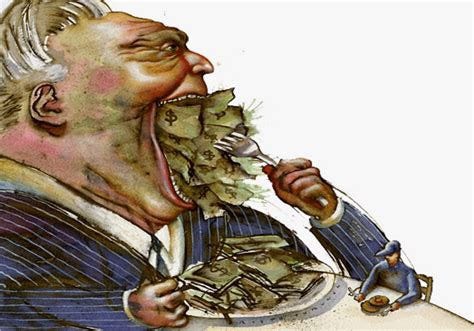
Three weeks ago, I speculated about how Microsoft and the other salivating investors in the OpenAI/Microsoft joint venture could pick OpenAI (c)(3) clean of its infinitesimally valuable assets, and then redeploy those assets in a public benefit corporation, the profits from which would be freely distributable. The basic problem is that OpenAI (c)(3) can’t transfer its tax subsidized know-how for less than fair market value. That fact generates valuation and arms-length bargaining problems, especially if the OpenAI (c)(3) fiduciaries expect to cash in via new OpenAI Public Benefit Corporation.
Another round of media reports yesterday confirm OpenAI (c)(3)’s planned conversion to a public benefit corporation. We are only awaiting the paperwork, really. A PBC is just a profit-maker with a good marketing campaign, let’s just be honest about it. It can do good stuff if it feels like it but it does not have to feel like it. As a PBC, former OpenAI (c)(3) fiduciaries can assert good intentions while doing away with any limitation on profit distributions even for themselves. We have seen this coming since Altman was reinstalled in a bloodless coup. But yesterday’s reports add two new juicy details. First, after the conversion OpenAI (c)(3) will continue to exist as a charity with a minority interest in the public benefit corporation. And second, Sam Altman — Mr. Effective Altruism, himself — will take an equity position in OpenAI PBC. I don’t have much more to say about Sam Altman. It is probably enough to admit that Elon told us Sam was only looking to get paid.
Why go through all this trouble? Well somebody must have crunched the numbers and found that the value of unlimited capital investment (U) plus the value of denying capital to competitors (C) is more than the tax rate (T) multiplied by infinitesimal profits (P). (U + C) > TP. We include the value of depriving competitors on the left side because this is hardly about charity anymore. Its cutthroat competition aided by tax exemption. If all the investors waiting in line don’t get in on OpenAI (c)(3)’s profits soon, they will go elsewhere. Open AI doesn’t really need them, it has Microsoft. But OpenAI (c)(3) does not want capital empowering its rivals either. So like Shaq in the low post, OpenAI is boxing out the competition and cannot do so effectively with a tax exemption ball and chain. This ain’t checkers.
I noted the basic proposition that OpenAI (c)(3) can’t just give tax subsidized infinitesimally valuable intellectual property rights to new OpenAI Inc., PBC. It has to sell itself at fair market value. A potentially infinitesimal valuation presents a significant challenge to say the least. The solution, I bet, is not to trigger the requirement to sell the assets at FMV. Leave those assets in the new, very docile and obedient OpenAI (c)(3) and through various licenses, use agreements, and capital contributions, give OpenAI PBC exclusive rights not just to existing knowledge but any future advancements. There is one rule in tax exemption jurisprudence especially conducive to the plan. As a scientific research organization, a docile and obedient OpenAI (c)(3) may enter into sponsored research contracts giving sponsors exclusive license to the resulting intellectual property:
In addition, although one person is granted the exclusive right to the use of a patent, copyright, process, or formula, such patent, copyright, process, or formula shall be considered as made available to the public if the granting of such exclusive right is the only practicable manner in which the patent, copyright, process, or formula can be utilized to benefit the public. In such a case, however, the research from which the patent, copyright, process, or formula resulted will be regarded as carried on in the public interest (within the meaning of subdivision (iii) of this subparagraph) only if it is carried on for a person described in subdivision (iii)(b) of this subparagraph or if it is scientific research described in subdivision (iii)(c) of this subparagraph.
So by leaving the assets in strictly controlled and very obedient new OpenAI (c)(3), Microsoft and the other investors don’t have to worry about those thorny valuation and arms-length bargaining problems. Or the five year look-back rule pertaining to Sam Altman’s disqualified person status. That equity interest he’s taking might not be such a big problem anymore. It’s gonna take a lot of form over substance, but through skillful agreements relying on the regulation’s blessing of exclusive access to tax subsidized IP, Microsoft and the other investors can gain all but outright ownership of OpenAI (c)(3)’s tax subsidized wealth.
Napalm in the morning, baby.
darryll k. jones