
House Republicans Attack Earmarks for Nonprofits Serving LGBTQ
In a remarkably brazen act of bigotry, House Republicans eliminated earmarking for nonprofits as a strategy to thwart funding for nonprofits serving LGBTQ people. From the Ohio Capital Journal:
U.S. House lawmakers will no longer be able to request earmarked funding for some nonprofits under a change in eligibility made by the Republican chairman of the Appropriations Committee this past Thursday. The alteration is related to an uproar during last year’s annual government funding process, when House Republicans, who are in the majority, included three LGBTQ projects in one of their spending bills and then stripped that funding during a tense public markup. The change to eligibility in the House affects nonprofits that fall under the Economic Development Initiative account within the Transportation-HUD spending bill, one of the dozen funding bills that are written by congressional appropriators. The new guidance laid out by Chairman Tom Cole doesn’t apply to House lawmakers seeking funding for nonprofits in the other accounts eligible for earmark requests.
It also doesn’t affect how the earmark process will work on the Senate side. That means there is another avenue for lawmakers to secure funding for LGBTQ projects if they decide to make those requests and the Senate spending panel chooses to include it in its version of the bill. “Similar to previous reforms made in this Congress, this change aims to ensure projects are consistent with the community development goals of the federal program,” Cole wrote in a “Dear Colleague” letter.
Cole, an Oklahoma Republican, became chairman of the powerful spending panel earlier this month after the former chairwoman, Kay Granger of Texas, decided to leave that leadership post early. Connecticut Democratic Rep. Rosa DeLauro, ranking member on the committee, released a written statement, saying the change “is a seismic shift, as nearly half of all the 2024 House-funded EDI projects were directed to non-profit recipients.” “In order to accommodate the extreme Republican wing, Republicans are trying to root out any help for the LGBTQ+ community,” DeLauro wrote. “They are willing to hurt their own religious organizations, seniors, and veterans.” The eligibility change, she wrote, would exclude House lawmakers from requesting funding for “YMCAs, Boys & Girls Clubs, and other groups vital to our communities.”
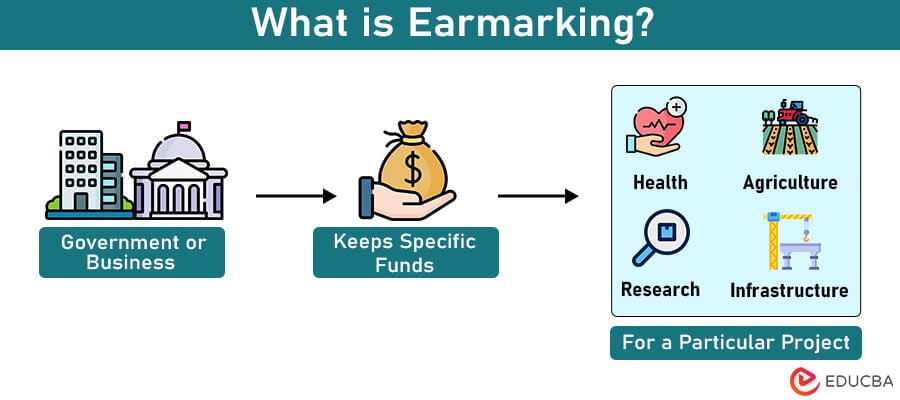
Earmarking is a derided practice allowing representatives to attach funding riders to a bill to support or fund a particular constituent back home. Usually the rider has nothing to do with the bill to which it is attached and is usually adopted outside of the normal legislative process by which bills are vetted, scored, scrutinized and voted upon. Nobody objects because everybody does it. Congresspersons have allowed each other that little bit of pork-barreling for decades. Political scientist know that earmarking is an illegitimate practice, but one that no member of Congress is willing to curtail.
Raiding the federal treasury to bring home the bacon has been a long-practiced Washington tradition. Year after year, lawmakers debase the political process by directing chunks of the federal budget back to their home districts and states in order to promote their re-election and reward special interests. The Constitution grants to Congress the power to spend. Article I, Section 9, Clause 7 reads, “No money shall be drawn from the Treasury but by consequence of Appropriations made by Law.”
Washington insiders have espoused this power of the purse to validate Congress’s appetite for earmarks. Over the years, numerous members of Congress have argued that ending the practice equated to an unconstitutional delegation of spending discretion to the executive branch. On May 6, 2014, the late Senator Harry Reid (D-Nev.) even went as far as to say that the country has been using earmarks “for more than 200 years.”
Until now. Now, House Republicans have determined that use of the perk to benefit LGBTQ-serving nonprofits is intolerable. Democrats are expressing shock that Republicans would cut off the use of earmarks that fund activities from scouting to little league and Meals on Wheels just to starve LGBTQ-serving nonprofits. For their part, Republicans are remarkably candid about their motivations, according to an article in The Hill:
House Republicans on Thursday announced changes to the annual process in which members apply for funding for community projects back home, after conservatives strongly opposed Democrat-backed earmarks over issues related to abortion and LGBTQ services earlier this year. The House Appropriations Committee said Thursday that nonprofits would no longer be eligible for “Community Project Funding in the Economic Development Initiative (EDI) account.”
The change, the committee said, is part of a larger effort aimed at ensuring “projects are consistent with the community development goals of the federal program.” Newly minted Appropriations Chair Tom Cole (R-Okla.) told reporters earlier this month that members would be discussing potential changes to the earmarks process, while noting that some requests created “political problems” for people. “That’s just the reality of it, and I shouldn’t have to have a political problem in my district because I voted for a bill that had your earmarks in it,” he explained at the time, while arguing it’s an issue that members on both sides of the aisle share.
By the way, here is how one organization defines the anti-democratic practice of earmarks:
An earmark is a line item in an appropriations bill that designates funds for a specific purpose in circumvention of normal budget procedures. In order to identify earmarks, Citizens Against Government Waste (CAGW) adopted seven criteria in conjunction with the bipartisan Congressional Porkbusters Coalition, and used them for the first time in its 1991 Congressional Pig Book. To qualify as an earmark, a project must meet at least one of the following, but most satisfy at least two:
-
- Requested by only one chamber of Congress;
- Not specifically authorized;
- Not competitively awarded;
- Not requested by the President;
- Greatly exceeds the President’s budget request or the previous year’s funding;
- Not the subject of congressional hearings; or
- Serves only a local or special interest.
So it’s pretty clear that earmarks are an affront to the the democratic process. But attacking that 200+ year old pork barrel practice to cut off funding for nonprofits that serve LGBTQ people only proves there is neither honor nor shame amongst thieves.
darryll k. jones