
Gaza and Charities at War: Tax Exemption and Civil Disobedience
Last week the Service released Private_Letter_Ruling 202417022. It’s heavily redacted but after reading it a few times, I figured out that the Service denied exemption to an organization advocating legalized marijuana use nationwide. The organization planned to engage in civil disobedience to support its advocacy. The group seeks the complete legalization of indica or sativa (depending on whether you want that full body “stop worrying” high, or that energetic “I gotta write some blog posts” high). The organization intends to sponsor festivals with libations, entertainment and educational events in support of legalized marijuana use. And wafting over the entire weekend events will be the distinctive smell of THC. Because at the festivals, apparently, the organization intends to encourage the use of bud in open disobedience to any federal restrictions. The Service, citing its “civil disobedience” revenue ruling, said this (I have added a few made up details to make the quote easier to understand):
Rev. Rul. 75-384 , 1975-2 C.B. 204, holds that a nonprofit organization, whose purpose was to promote world peace, disarmament, and nonviolent direct action, did not qualify for exemption under Section 501(c)(3) or (c)(4). The organization’s primary activity was to sponsor antiwar protest demonstrations in which demonstrators were urged to violate local ordinances and commit acts of civil disobedience.
While the organization described in Revenue Ruling 75-384 had the goal of educating the public on the benefits of topics such as world peace and disarmament, its primary means of meeting their goals precluded them from receiving exemption under section 501(c)(3). Their activities were deemed to induce or encourage the commission of criminal acts by means of civil disobedience by planning or sponsoring these events intentionally. As the ruling states, highlighting the law of trusts, all charitable trusts (and by implication all charitable organizations) are subject to the requirement that their purposes may not be illegal or contrary to public policy. While weed may currently be legal in Florida, it is currently not recognized as legal by federal law. Current federal law prohibits the use of weed except in limited circumstances; those limited circumstances do not include its use for recreation or to assist in writing blog posts. The fact that Florida legalized distribution of weed to a limited extent is not determinative because under federal law, distribution of weed is illegal. Because you advocate and engage in activities that contravene federal law, you serve a substantial nonexempt purpose. Despite any educational or charitable purposes you may plan to achieve through your Festival activities, you promote an illegal activity under federal law.
An organization can advocate for the legalization of weed all it wants, but it cannot engage in or encourage others to engage in open disobedience to civil law. It can advocate against wars and condemn armies for starving people. But it cannot intentionally violate even zoning laws to help make the point. If it does, it forfeits tax exemption.
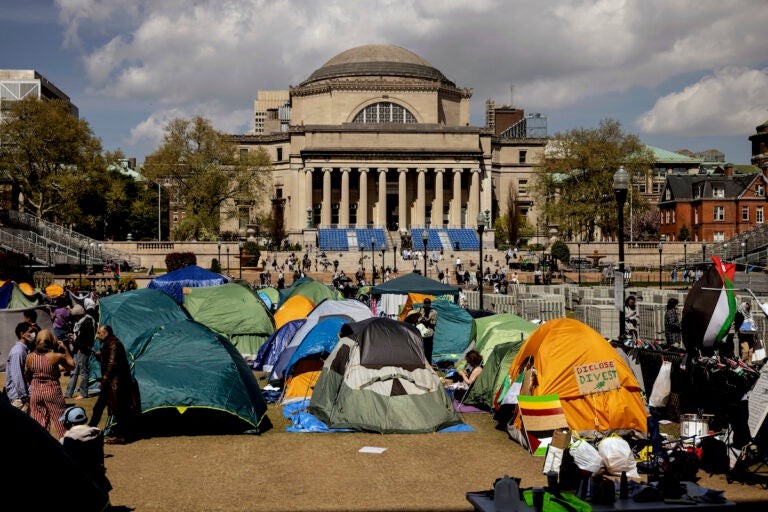
The Stanford Encyclopedia of Philosophy has an informative entry on civil disobedience. It explains that civil disobedience involves the open and nonviolent violation of law. When people intentionally violate the law that is considered immoral – two people might marry in violation of a law prohibiting same sex marriage — they engage in direct civil disobedience. Indirect civil disobedience happens when people violate a law that regulates activity having nothing to do with another immorality imposed or supported by a law. For example, living in tents on a college quad, in open trespass to protest legally protected support of an increasingly unpopular war is indirect civil disobedience. In either case, the disobedience must be open and is intended to force the government to enforce the violated law, thereby drawing attention and condemnation of the law to which the civil disobedient objects.
Civil disobedients are standardly expected to take responsibility for, and accept the legal consequences of, their lawbreaking. Their evading punishment would make their acts ordinary crimes or acts of rebellion; their willingness to invite punishment is supposed to demonstrate their endorsement of the legal system’s legitimacy and their “intense concern over the issue at hand” (C. Cohen 1966, 6; see also Brownlee 2012 ch. 1; Tai 2017, 146). Non-evasion is an essential correlate of the conscientiousness and non-violence of civil disobedience: submitting to law enforcement is part of the dramatic display of suffering required by non-violence. That said, theorists have fleshed out this requirement of non-evasion in different ways, arguing variously that the agent must (i) willingly submit to arrest and prosecution, (ii) plead guilty in court, (iii) not try to defend her crime, and/or (iv) not complain about the punishment received (Delmas 2019, arguing that only (i) is necessarily entailed by non-evasion). Some theorists reject (ii) and (iii), proposing instead that agents plead ‘not guilty’ in court, so as to deny the state’s characterization of the civil disobedient act as a public wrong (in this view, disobedients should either deny responsibility of having committed the action as alleged by the prosecutor or admit responsibility but deny criminal liability) (Moraro 2019, 143–7).
A lot of people, including people in Congress and even on the Ways and Means Committee argue that colleges and universities should lose their tax exemptions if they don’t take strong actions against student protestors camped out and demanding divestment from Israel. That’s pretty stupid, though, because it’s not the University engaging in civil disobedience, it’s the students.
Still, the Presidents are doing this all wrong. They think having students arrested for civil disobedience would be the same as having them arrested for speech accompanying civil disobedience. Even though that is untrue, it is the effect intended by the students. Intentionally provoking arrest while speaking truth to power is the precisely intended effect because only mass arrests draw massive attention to the underlying injustice. Being ignored while sitting in Black skin at a lunch counter is not as effective as being arrested while sitting in Black skin at a lunch counter. The message is lost or distorted without arrests. Either nobody cares, or everybody forgets or distorts the underlying motivation in their condemnation of the unchecked disobedience.
So to play their role effectively, the Presidents must order the arrest of the students. There needs to be plenty of negotiation regarding the means of arrest, so students and police are not unintentionally set against each other in violent confrontation. The administration needs to tell the student leaders exactly when the arrest will take place and the students must agree not to resist. “UPD is coming over at noon, have your members gather their stuff and be ready to get in the paddy wagons.” The students should submit to the arrests, go downtown and be given court dates. In the meantime, another group of students steps up to take the place of the previously arrested group. As each group is arrested and released they return to the venue for another round of civil disobedience to which the presidents are supposed to respond again accordingly.
The Presidents just make matters much worse by not engineering the speedy peaceful arrest of students. Not for their speech, but for their intentional acts of civil disobedience. Without the escalating effect of arrests, nothing will happen except people will get sick of presidents and students, alike. That bombs are dropping, bullets flying and people are starving will be a relative afterthought.
darryll k. jones