
Exemption for Accountable Care Organizations: Primary Purpose or Substantial non-exempt Activity?
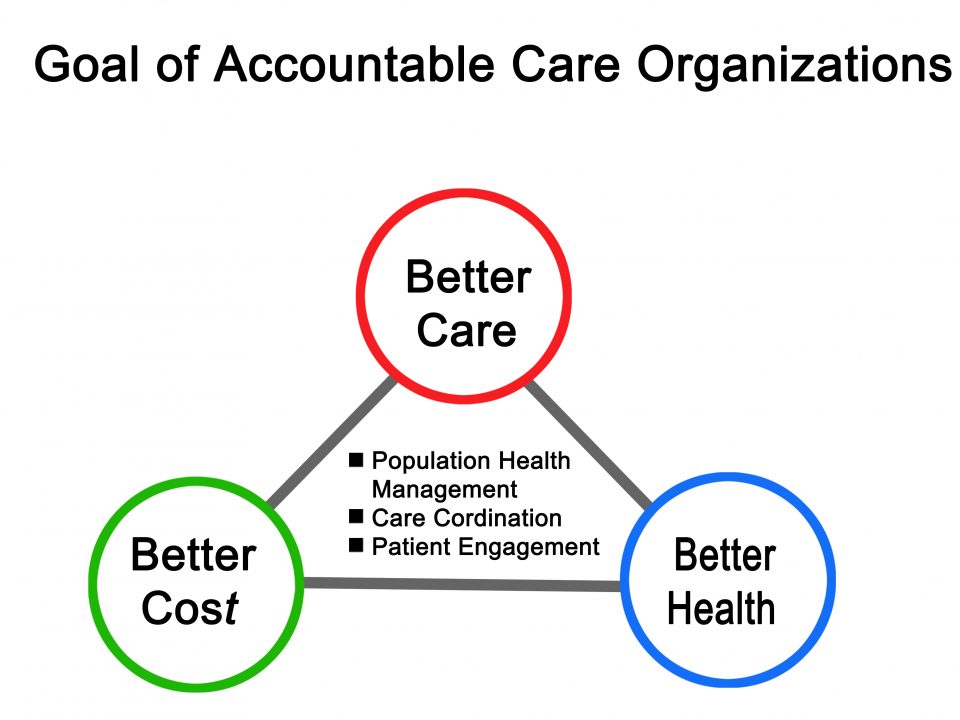
When last we checked in on Memorial Hermann Accountable Care, it was licking its wound from a Tax Court Opinion upholding the Service’s kinda silly denial of 501(c)(4) status because of private benefit and a “substantial non-exempt activity.” An accountable care organization is a creature of Obamacare, having been created and sanctioned to improve patient care and reduce costs by encouraging different healthcare providers to collaborate. The Medicare Share Savings Program provides rebates for demonstrated savings and increased health care. Sounds good. Memorial Hermann shares those rebates with hospitals and private physicians, just as Obamacare envisioned. In effect, the rebates serve to incentivize hospitals and physicians to avoid unnecessary expenses without sacrificing quality of care. Sounds real good, we should get behind the effort. Memorial applied for 501(c)(4 status, but the Service denied the application and the Tax Court upheld the denial:
Petitioner fails to qualify as an organization described by section 501(c)(4) because its non-MSSP activities primarily benefit its commercial payor and healthcare provider participants, rather than the public, and therefore constitute a substantial nonexempt purpose. While petitioner’s stated goal of providing affordable healthcare to patients is an admirable one, the provision of healthcare alone is insufficient to qualify for recognition of exemption under section 501(c)(4). Petitioner’s non-MSSP activities benefit primarily the commercial payors and healthcare providers with which it contracts. To that end, petitioner contravenes the requirements of section 501 by conducting business with the public in a manner similar to a for-profit business. See Treas. Reg. § 1.501(c)(4)-1(a)(2)(ii).
Last week, Memorial filed its [well-written ] brief on appeal to the 5th Circuit. Here is a sample:
Among the numerous reasons for the United States having the most expensive health care in the world is the lack of communication and coordination between providers throughout the patient’s care continuum, as well as, the prevalence of the FFS payment and delivery model among insurers and medical providers. Under this payment model, medical providers are compensated for each medical procedure or service, resulting in the incentive to offer and perform as many medical procedures as possible. This often leads to unnecessary health care spending and the waste of medical resources.
Under a VBP model, on the other hand, medical providers are paid an overall sum for the patient’s care rather than being paid for each additional treatment or procedure performed for the patient. The VBP model removes the incentive to perform as many procedures as possible and rewards the providers through payment arrangements such as a shared-savings arrangement for providing efficient care.
To illustrate a shared-savings arrangement, the insurance payor, either Medicare or a private insurer, establishes a benchmark for the cost of care for its patients. ROA.178-186. When the ACO successfully works with the medical providers to provide quality care at a cost lower than the established benchmark, the difference between the benchmark and the actual cost is cost savings, which the insurer will then pay a portion of to the medical provider as compensation for
delivering care at lower costs. ROA.185-190. The result of this share-savings arrangement is lowered health care costs due to the provider being incentivized to provide efficient care to the patient and receive a share of the savings, as opposed to
being incentivized to include as many procedures and treatment expenditures as possible in the course of the patient’s care under FFS.
Though it is indeed very well written, I think the brief gets too caught up in the word games we play. It argues that the Tax Court applied the wrong standard when it concluded that the ACO has a “substantial non-exempt purpose” and that it should have applied the primary purpose test. Seems like two $5.00 phrases trying to get at the same thing: What is the organization’s raison d’etre? Once it gets beyond what it refers to as “lip service,” appellants argue that its interactions with hospitals and physicians not in the MSSP does not make its participation within the program insubstantial or prove that its activities within the program are not its primary purpose. That is the better argument and I hope appellants win.
darryll k. jones