
Hackney Gives Sage Advice on Politics and Exempt Orgs
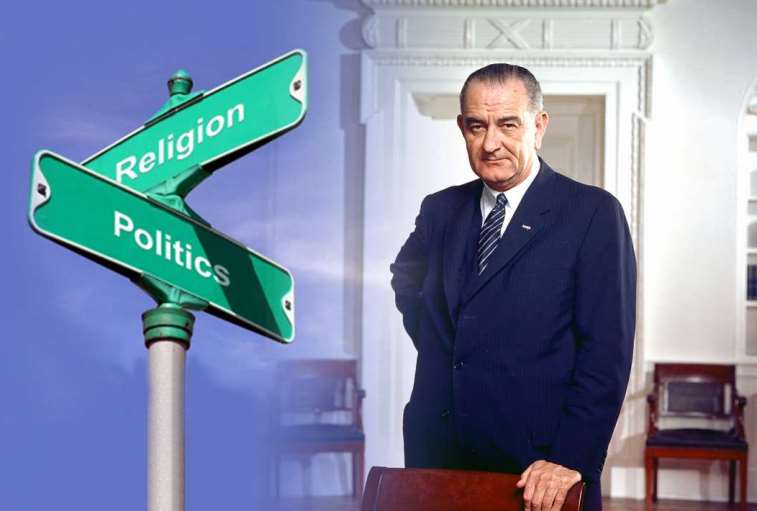
Here is part of an op-ed our resident expert Phil Hackney published recently in the Chronicle of Philanthropy:
U.S. charities aren’t allowed to campaign for or against specific political candidates. But they can legally engage in nonpartisan voter education and candidate-neutral efforts to get out the vote, as well as voter registration drives. I’m an expert on charitable tax law who used to work at the Internal Revenue Service. While testifying before a House subcommittee in December 2023, I explained that these electoral-related activities are consistent with a healthy democracy and don’t violate any U.S. laws. Some nonprofits like the League of Women Voters have engaged in these nonpartisan efforts for decades. Others, like Nonprofit Vote and Rock the Vote, seek to motivate people of color and young voters to cast their ballots. It’s hard to find data on how much charitable money funds these causes. But there’s no shortage of conjecture about its possible impact. The Republican Party has long seen nonpartisan voter registration and get-out-the-vote campaigns as being somehow tied to the Democratic Party or more helpful for turning out votes for Democratic candidates than Republican hopefuls. As far back as the 1960s, Republican representatives accused the Ford Foundation of using voter registration in what they alleged was a partisan manner. Today, Republican objections and concerns are getting louder. There are GOP efforts underway to make some of these donations illegal.
. . .
This restriction, on the books since 1954, is known as the Johnson amendment because of Lyndon B. Johnson’s insistence on its passage when he was serving in Congress. Former President Donald Trump tried and failed to get rid of the Johnson amendment for churches and other houses of worship, which the U.S. government lumps together with all other charities. House Speaker Mike Johnson and other Republican lawmakers would like to go even further than Trump’s proposed change. They have backed the Free Speech Fairness Act, which would practically eliminate restrictions on politicking for not just churches but all charities. Some conservative preachers, meanwhile, have been flouting the Johnson amendment without eliciting much of a response from the IRS.
Here is the best part:
As I advised House lawmakers, I believe that drafting any restrictions on the nonprofit sector requires proceeding with great care. Charities make up a part of civil society — a place outside of government and business — where we all have an opportunity to generate important information, develop our opinions and share those with government representatives. In my view, Congress needs to assess whether any cure it seeks to implement will be better or worse than the disease that it thinks afflicts the U.S. electoral system. Clamping down on nonpartisan voter registration and get-out-the-vote efforts seems to me to be misguided at best.
Congress can, if it wishes to take action, appropriate more funds to ensure that all local and state authorities have the money they need for a well-run election system. That could eliminate the need for donors to step in. In any case, Congress can help by supporting increases in the IRS budget, especially for the tax agency’s capacity to enforce compliance with the laws pertaining to tax-exempt organizations.
darryll k. jones