
Hate Groups and Unconstitutional Conditions
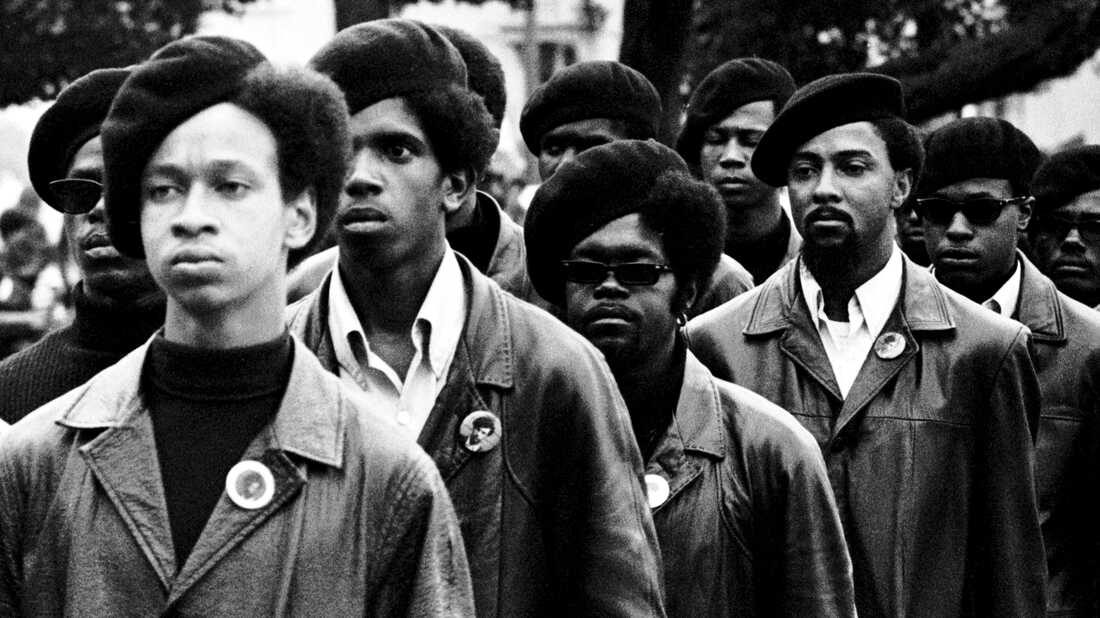
The Black Panther Party was not a “hate group” by any legal definition that should have precluded tax exempt status. Hate groups should and may be denied tax exemption, but our definition of hate group must be careful so as not to deny tax exemption on the basis of speech or ideas. This post is about the necessity of careful precision.
In the Haight-Ashbury section of idyllic St. Petersburg, Florida, there is a revolutionary black liberation group called the African People’s Socialist Party. It is a descendant of the Black Panther Party and its constitution is enough to wake J. Edgar Hoover. Here are its constitutional aims:
3.1 The aims and objectives of the APSP-USA are to lead the struggle of the African working class and oppressed masses against U.S. capitalist-colonialist domination and all the manifestations of oppression and exploitation that result from this relationship. The Party recognizes that the particular character of the oppression of African people within U.S. borders is domestic or internal colonialism. Leading the struggle to end the system of domestic colonialism and smash the U.S. capitalist-colonialist state is the immediate task of the African People’s Socialist Party-USA and the African working class in the U.S.
3.2 The Party aims to advance the genuine liberation and unification of Africa and African people through its work as the U.S. Front of the worldwide African Revolution, and from this political vantage point fight for the creation of a single All-African Socialist State which will advance the development of a classless, communist society organized around the principle of, from each according to her or his ability and to each according to her or his needs.
3.3 The Party works for the emancipation of the laboring masses of the world in every country in the contest against national oppression and capitalist exploitation and to advance the solidarity of all peoples in the relentless battle against imperialism and for the victory of world socialism.
3.4 The Party aims to establish a formidable working alliance with progressive parties or forums that subscribe to the goals of the liberation and unification of Africa and African people under the leadership of the African working class and the toiling masses in general.
The group’s 82-year-old leader and Black Panther Party holdover, Omali Yeshitela, is currently under indictment alleging he and his organization acted as unregistered agents for a Russian spy trying to gin up support for Russia’s annexation of Ukraine. From the DOJ press release:
Moreover, from at least November 2014 until July 2022, Ionov [the Russian spy] allegedly engaged in a years-long foreign malign influence campaign targeting the United States. As a part of the campaign, Ionov allegedly recruited members of political groups within the United States, including the African People’s Socialist Party and the Uhuru Movement (collectively, the APSP) in Florida, Black Hammer in Georgia and a political group in California (referred to in the superseding indictment as U.S. Political Group 3), to participate in the influence campaign and act as agents of Russia in the United States.
His attorneys have filed a pretty good motion to dismiss, though it doesn’t appear to address whether Yeshitela was actually acting on behalf of a foreign government. Instead, it asserts that his speech apparently in support of Russian views is protected speech.
The government here is using a federal criminal statute to prosecute members of an activist group for political speech and activism in opposition to U.S. foreign policy. In so doing, this prosecution strikes at the heart of the First Amendment.
This is the first case in which the government has used the statute that criminalizes unregistered foreign agents (18 USC §951) to target political or dissenting speech. This indictment attempts to criminalize public criticism of U.S. policy with respect to Russia and Ukraine. The Supreme Court has made clear that political speech is the core value protected by the 1st Amendment. See e.g., NAACP v. Button, 371 U.S. 415, 431 (1963); Buckley v. Valeo, 424 U.S. 1, 40 (1976). The government is permitted to restrict political speech only when it creates a “grave and immediate danger.” W. Va. State Bd. of Educ. v. Barnette, 319 U.S. 624, 639 (1943).
I’m not sure that really is the issue, though. FARA’s registration requirement must surely have already been upheld as imposing no impermissible burden on speech. The indictment necessarily charges the failure to register not speech, even it the obligation is triggered by speech. Should be an interesting case. One last hurrah for an old revolutionary.
More interesting is what happened last week. The African People’s Socialist Party sued Pinellas County. It is pretty clear from publicly available text, email messages, and public statements quoted in the complaint that Pinellas County has cut off federal covid funding because it considers APSP a hate group. Said one Commissioner:
I think that in Pinellas County, part of our values should be that we don’t give tax money to antisemitic nationalist groups, regardless of what side of the aisle they fall on,” Latvala said during the workshop. Latvala raised the issue again during the County Commission’s formal meeting the following week. Though it was not on the meeting agenda — Latvala brought it up during time set aside for commissioners to discuss new business — the commission voted to revoke the funding.
APSP asserts that Pinellas County is violating the unconstitutional conditions doctrine. Pinellas County is arguing that it is not legally required to fund a hate group. Both sides make valid arguments, though only one side can wind. Government can’t condition a discretionary benefit on the recipient’s protected speech. But, Government need not provide an otherwise generally available benefit to a group whose product – whatever its speech – is discrimination and denial of human rights. Government can define education and charity, and then limit its funding to things that meet those definitions. Education may be defined by process as an objective search for truth and anything constituting its opposite – indoctrination – can be defunded. Government may define charity as all good things, specifically excluding the perpetuation of discrimination and denial of human rights. And then defund groups who seek discrimination and denial of human rights. Government naturally has a very difficult definitional burden, otherwise it could punish speech under the guise of its spending power. It’s all right here in my paper.
I don’t think Pinellas County can meet that burden in this case. ASPS is not a hate group by any enforceable legal definition.
darryll k. jones