
“The Attack on Nonprofit Free Speech Continues”
I am not without bias. If you want news without bias, go to FOX, MSNBC or CNN.
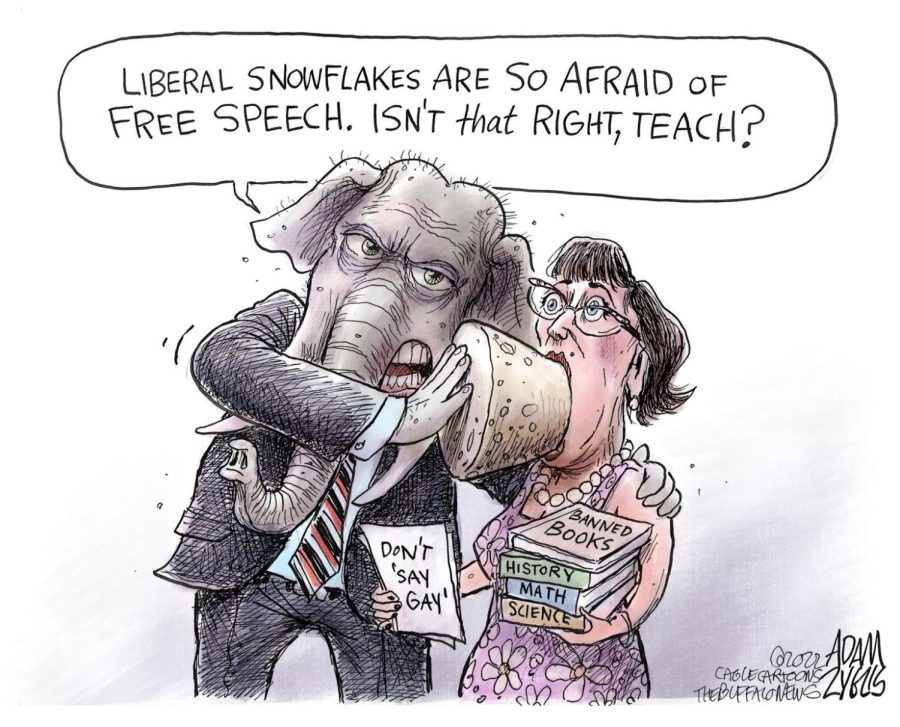
Everybody is in favor of free speech, unless you are saying something they don’t want to hear and don’t want you telling anybody else either. One side, I won’t say which, cites NAACP v. Alabama like the Eleventh Commandment to protect donor speech and association. But at the same time, it rewards Florida Mussolini’s efforts to shut everybody up and keep everybody (i.e., everybody brown and black) out.
Case in point from the National Review, July 2, 2023:
Is free speech finally safe from state attacks? That was the hope two years ago on July 1, 2021, when the Supreme Court struck down a California law forcing nonprofits and non-partisan charities to hand over lists of their major supporters. The decision in Americans for Prosperity Foundation v. Bonta was supposed to stop states from subjecting people to speech-chilling threats of intimidation and violence, yet after a short-term lull, the assault on the First Amendment has returned with a vengeance. The 2022 state legislative season — the first since the Bonta decision — saw multiple states end donor-disclosure mandates. Yet in the first six months of 2023, no fewer than 19 states have considered legislation that would compel diverse and even apolitical organizations to share private supporter information. They range from blue states to purple states to red states, with at least eight bills still pending. That includes a bill in California — the state at the heart of Bonta — mandating disclosure of people who help fund ballot initiatives.
The furthest along is Arizona, which put free speech on the ballot last fall. Proposition 211 passed, requiring any group which spends more than $25,000 on a local issue or $50,000 on a state issue to list its supporters’ identities and addresses. This mandate goes beyond donations to political campaigns, which must be disclosed under long-standing federal law. Instead, it applies to groups that advocate for policies — everything from immigration to school choice to tax cuts to abortion, either for or against. The same is true of virtually every bill under consideration nationwide.
The threat to free speech is obvious. When someone is outed in the public square, including their addresses and employers, their opponents have a golden opportunity for intimidation. They can protest outside a family’s home, pressure companies to punish people, and engage in other menacing activities. The Supreme Court highlighted the dangers in Bonta, including a threat to “slit his throat” as well as “bomb threats . . . stalking, and physical violence.” Faced with such threats to life and limb, many Americans would rather stay silent than give to a cause that’s controversial, even if it’s a charitable one. This campaign endangers both their safety and the viability of the groups they support, hurting many vulnerable Americans who rely on the generosity of such organizations.
. . .
darryll k. jones