
Nonprofit Bail Funds
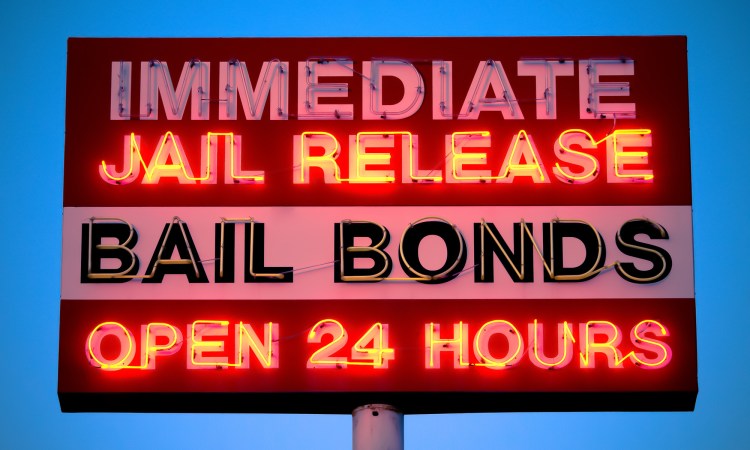
The ACLU characterizes the cash bail system in the United States as wealth-based incarceration industry:
After an arrest — wrongful or not — a person’s ability to leave jail and return home to fight the charges typically depends on access to money. That’s because, in virtually all jurisdictions, people are required to pay cash bail in order to secure their freedom. Originally, bail was designed to ensure people return to court to face charges against them. Now we know that simple solutions like court reminders often can achieve that purpose. And, the money bail system has morphed into one that perpetuates widespread wealth-based incarceration. The pretrial incarceration caused by unaffordable bail is the single greatest driver of convictions, and is responsible for the ballooning of our nation’s jail and prison populations. Poorer Americans and people of color often can’t afford to come up with money for bail, leaving them incarcerated in jail awaiting trial, sometimes for months or even years. Meanwhile, wealthy people accused of the same crime can buy their freedom and return home.
And now, according to the Chronicle of Philanthropy, nonprofit bail funds are under attack, legislatively and actually, by death and bomb threats, for allegedly facilitating the release of dangerous criminals awaiting trial. Problem is, the dangerous criminals are awaiting trial and have not been found dangerous or criminal yet. They languish in jail — innocent until proven guilty but severely punished already — sometimes for years. Meanwhile, there is no telling what Jeffrey Epstein was doing when he was out on bail he paid from a few pennies lying around.
The rather phenomenal success of nonprofit organizations operated to pay low income arrestee’s cash bonds has unleased the boogey-man caricature — the usually poor, usually black predatory criminal out on bond victimizing more victims perpetually. So states are beginning to push back by prohibiting nonprofits from paying those bonds.
Ok, first (as my daughter would say, hand on hip), I don’t understand and in fact I seriously doubt that a legislature can constitutionally enact such a prohibition. My head is exploding with the word, “unconstitutional,” though it could take me months to understand why. Second, I just think its somehow unfair for a legislature to outlaw a nonprofit’s legal activity solely because the activity might be counter-majoritarian. Nonprofits, to a more than modest extent, exist to be counter majoritarian.
But I guess that’s sort of what happened in Bob Jones, an instance where a supermajority declared discrimination absolutely beyond charity, even if charity is imbued with counter-majoritarian grass roots conceptions (like maintaining the separation of races). I can settle for a supermajority determining that something is beyond charity. But a mere majority should not be entitled to define charity by government fiat. That cuts against the whole purpose of civil society.
Here are a few snippets from a very interesting read:
The act of organizing to post other peoples’ bonds dates back to at least the 1920s, according to Jocelyn Simonson, a professor at Brooklyn Law School. But over the past eight years, she says, the number of nonprofit bail funds has exploded. That growth was fueled by the Black Lives Matter movement’s rise after the murder of Michael Brown in 2014 and greater awareness of injustices in the criminal-justice system.
One of the most influential has been the Bronx Freedom Fund, co-founded in 2007 by Robin Steinberg, who drew on her experience as a public defender in the South Bronx. Steinberg has said her clients often pled guilty for crimes they did not commit because they did not have money for bail and wanted to go home.
In 2017, Steinberg founded a larger effort called the Bail Project to pay bail for low-income people and “disrupt the money bail system — one person at a time.” It soon became the largest bail fund working on a national level, thanks to a $30 million grant in 2018 from the Audacious Project, which is housed under TED and aims to bolster “jaw-dropping ideas with the potential to spark change.” The grant enabled the Bail Project to expand to more than 20 sites.
Backlash Against Bail Funds
While legislation to end cash bail did pass in Illinois, efforts to limit use of cash bail in several other states have floundered amid concerns about rising violent crime.
New York State rolled back its bail laws for a third time in April, after passing a law in 2019 that eliminated bail for most misdemeanors and nonviolent felonies. Hawaii Gov. David Ige vetoed a bill that would remove bail for nonviolent misdemeanors for certain felonies last year. Ohio voters also approved a constitutional amendment giving judges more power to consider public safety when setting bail, a measure opposed by groups like the Bail Project.
Public safety concerns have also led several states, including Kentucky, Minnesota, and Pennsylvania, to introduce bills that would limit nonprofit bail funds’ ability to post bond. Indiana adopted a law last year that stopped charitable bail funds from bailing out people accused of violent crimes and banned them from receiving local and state government funds. The Bail Project has sued the state over the law, while pausing operations there.
darryll jones