
No Health Care for the Poor
Anybody know the back story of Revenue Ruling 69-545? Revenue Rulings go through several layers of review, debate, discussion and reconsideration at Treasury. I’d like to hear the war stories of IRS attorneys sitting around a conference table discussing whether to make relief of poverty optional for tax exempt purposes. It was Treasury not Congress or the judiciary in Eastern Kentucky Welfare Rights Organization that decided that the largest tax exempt sector in the nation need not serve the poor. Why? What made the executive branch do it? No congressional committee ever even thought about making charity for poor people optional before then, far as I can tell. I understand theoretically — by that I mean way back to the Statute of Charitable Uses — that there has been debate about whether charity can exist without relief of poverty, but whose idea was it in this country to explicitly excuse nonprofit hospitals from treating the poor? Did somebody just wake up one day and decide to make poor people optional?
The Times is running another one of its exposes on voracious nonprofit hospitals. This one about Allina Health System which, according to the report, not only disdains poor people but will actually cut any patient off, forever, if the patient hits a debt ceiling at any of its more than 90 clinics:
Allina has an explicit policy for cutting off patients who owe money for services they received at the health system’s 90 clinics. A 12-page document reviewed by The Times instructs Allina’s staff on how to cancel appointments for patients with at least $4,500 of unpaid debt. The policy walks through how to lock their electronic health records so that staff cannot schedule future appointments.
“These are the poorest patients who have the most severe medical problems,” said Matt Hoffman, an Allina primary care doctor in Vadnais Heights, Minn. “These are the patients that need our care the most.”
Allina Health said it has a robust financial assistance program that in an average year helps over 12,000 of its 1.9 million patients with medical bills. The hospital system cuts off patients only if they have racked up at least $1,500 of unpaid debt three separate times. It contacts them by phone and with repeated letters that include information about applying for financial help, said Conny Bergerson, a hospital spokeswoman.
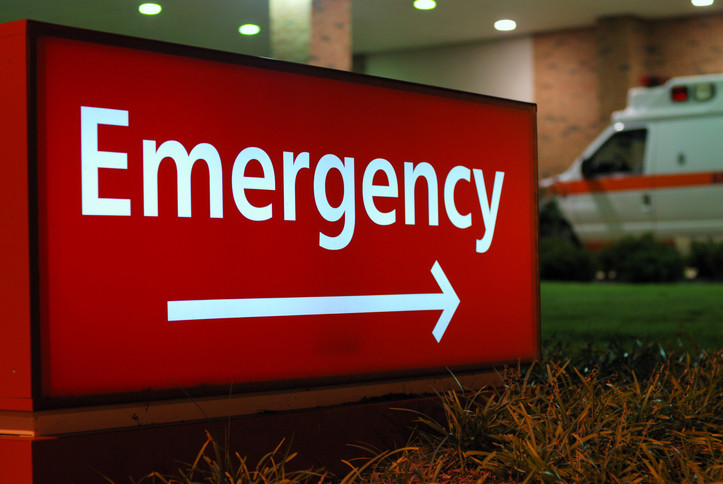
Health care is complicated machinery in the United States so its hard to generalize about cause and effect. I wonder how a rule requiring nonprofit hospitals to only accept all patients at their emergency rooms — if they even have one — can be justified as efficient. Seems to me, shunning poor into an ad hoc emergency room health care system would cost a whole lot more to everybody. Not only that, it pretty much guarantees that poor people will just not get treated until the last minute or the pain is unbearable. I am fully insured and I will go the emergency room only with one foot on a banana peel. Its cold, its dark, and I know I’m gonna be sitting there for hours. We oughta at least get a theoretical promise of minimal charity care, even from the boutique nonprofit hospitals.
darryll jones