
Hospice Is a Profitable Business, but Nonprofits Mostly Do a Better Job
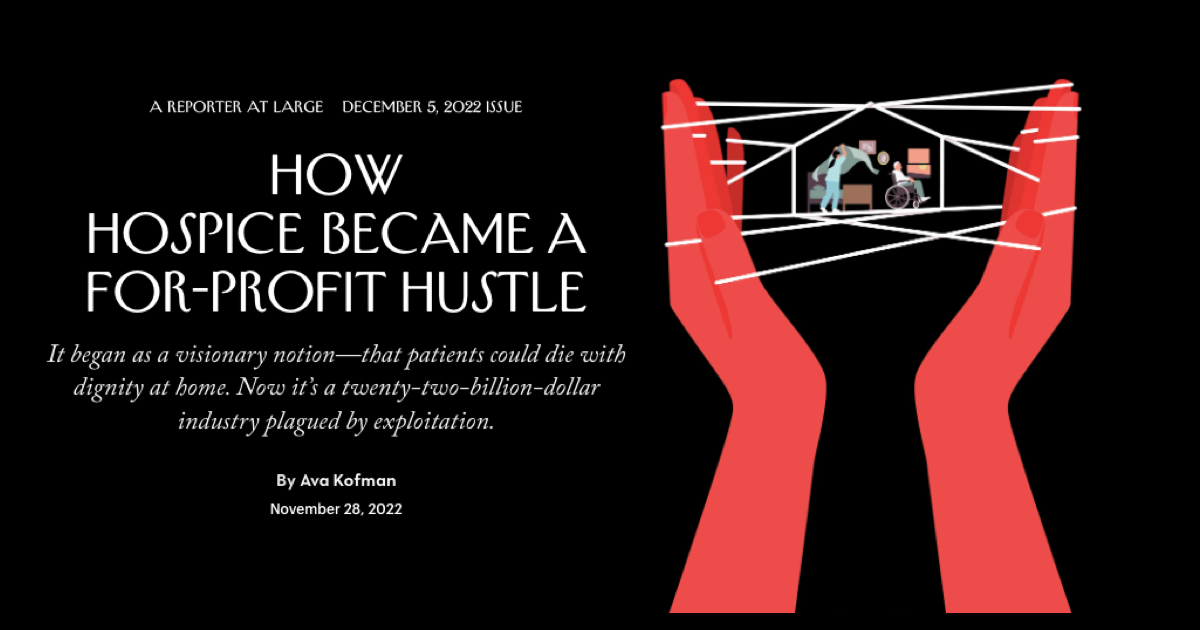
From the NY Times, June 10, 2023:
. . .
Researchers have for years reported that there are, indeed, substantial differences overall between for-profit and nonprofit hospices; a new study based on family caregivers’ experiences provides additional evidence. Medicare began covering hospice care four decades ago, when most hospices were nonprofit community organizations relying heavily on volunteers. It has since become a growth industry dominated by for-profit businesses. In 2001, 1,185 nonprofit hospices and just 800 for-profits provided care for Americans with terminal illnesses who were expected to die within six months. Twenty years later, almost three-quarters of the nation’s 5,000-plus hospices were for-profits, many affiliated with regional or national chains.
“The growth of for-profit providers is largely responding to growing need,” Mr. Marcantonio said. “It’s evolved within a health care system that not only accepts but encourages for-profit providers. To think hospice would be exempt from that forever probably wasn’t realistic.” Yet the proliferation of for-profit hospices has stoked fears that dying patients and their families are being shortchanged to improve companies’ bottom lines.
Numerous studies have documented that as a group, nonprofits provide better care. All hospices within a geographic area receive the same daily payment per Medicare beneficiary, but patients enrolled in nonprofits receive more visits from nurses, social workers and therapists, according to a 2019 study by the consulting firm Milliman. For-profits are more likely to discharge patients before they die, a particularly distressing experience for families. “It violates the implicit contract hospice makes, to care for patients through the end of life,” Dr. Atkins said.
darryll k. jones