
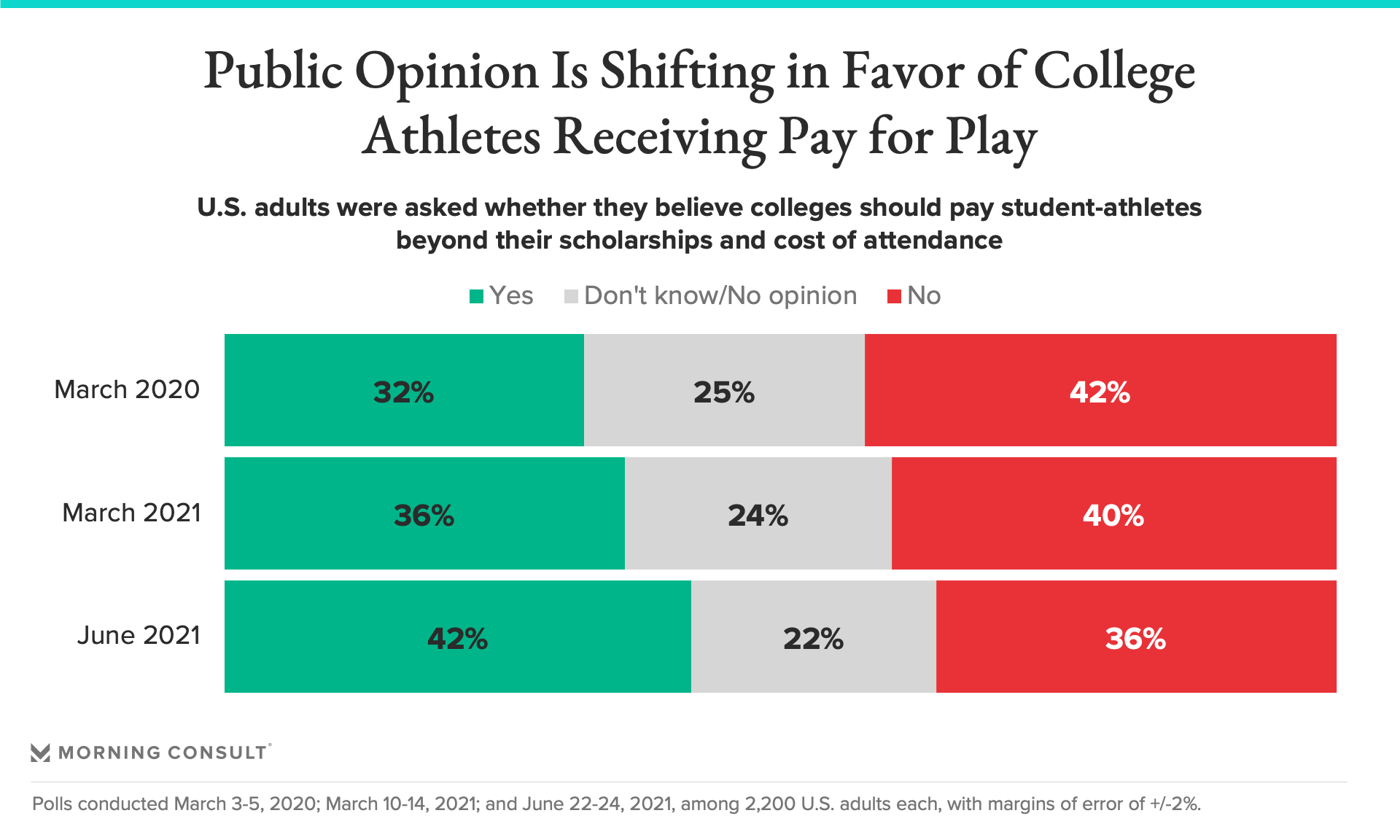
The NCAA takes the position that student-athletes shouldn’t be paid minimum wage for the hours they spend on the field because playing sports has long been part of the educational experience, so they aren’t covered by the Fair Labor Standards Act. In the NCAA’s view, sports teams are more like the glee club, the marching band or other student groups. This comes just two years after the Supreme Court pitched a 9-0 shutout against the NCAA in a case regarding compensation for college athletes, ruling that the organization can’t limit education-related benefits.
Opinion Page: The NCAA’s position on not paying athletes is worse than tone deaf
. . .
But for today’s student-athletes, the definition of a fair deal might change if the National Collegiate Athletic Association (NCAA) loses a case now jogging its way toward the Supreme Court by way of the U.S. Court of Appeals for the 3rd Circuit. Although the appeals court will settle a technical point, the larger issue in Johnson v. NCAA is whether student-athletes should get hourly pay for their labor, just like a work-study student who clerks at the library.
College administrators argue that if even more dollars shift to revenue-generating athletes in football and basketball from revenue-consuming athletes in soccer, track and especially women’s sports, something will have to give to balance the books. “If colleges and universities are forced to pay their student-athletes, it is inevitable that many schools will simply eliminate athletic teams, with nonrevenue sports teams the most likely to be on the chopping block,” warned an amicus brief filed in support of the NCAA by the American Council on Education and a dozen other higher education organizations. Or, as a friend emailed: “There goes another wrestling team.”
The NCAA is citing case law, specifically a case called Vanskike v. Peters, as an example of an exempted class of workers. That exemption is contained in the 13th Amendment, the one that outlawed slavery, with the exception of prison labor. The condensed version of the NCAA’s argument is thus: College athletes are like prison laborers.
darryll jones