
Mansplaining Unconstitutional Conditions
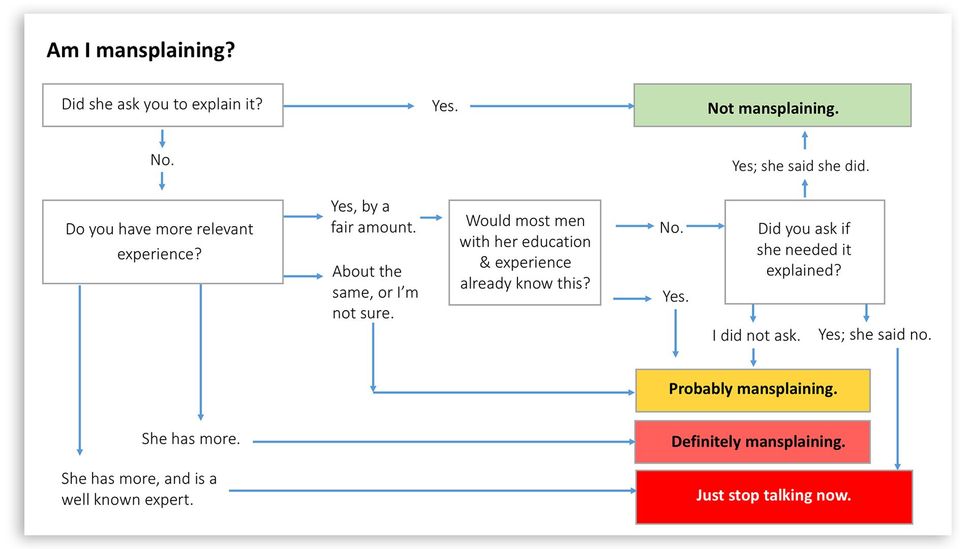 I might be mansplaining
UC is a limit on government, not the grant of a whole new constitutional right. The difference is subtle but important. DeSantis may not deny even a discretionary benefit — like the right of Disney to set its own property tax rates — because Mickey Mouse said “don’t say gay” is a stupid law that should never have been enacted. But UC doesn’t give Mickey Mouse the right to a special governing district in the first place. The State might decide to do away with the special district for reasons unrelated to speech.
It follows that in denying funding to those who seek outcomes prohibited to government, government is necessarily acting constitutionally. Hate groups don’t have an independent constitutional right to tax exemption. Nobody does. Everybody has the right to tax exemption, if made available, without regard to speech. But nobody has an independent constitutional right to demand that government fund an outcome, even one accomplished by speech, that government could not itself pursue. However you want to characterize it, UC is relevant to whether hate groups are entitled to tax exemption only insofar as it limits tax exemption to outcomes the government is permitted to pursue directly. In denying exemption to those who seek hate, as a noun not as a verb (“to speak”), government acts in accordance with, not in violation of UC. It may not perpetuate hate directly so UC says it may not do so indirectly. Either Volokh doesn’t know what he’s talking about, or he hasn’t thought long and hard enough about this thing. Because if he were a woman he would understand this already and I wouldn’t be standing here mansplaining.
The Hugh and Hazel Darling Foundation Religious Liberty Clinic at Pepperdine has only been around for about year and it has already helped win some pretty big UC cases. Like in Kennedy v. Bremerton School District where the Clinic’s amicus brief helped vindicate a football coach’s right to pray on the field after the game. All football coaches need to pray, by the way. They do so much cussin’ and spitting during the game, and you can read their lips when they are using the F word right there on TV.
The students in the Clinic understand UC clearly enough and are heading towards another win in their case against Morris County, NJ. The County excluded two churches from historical preservation funding available to all non-religious nonprofits. The denial is based on the County’s erroneous view — one nevertheless confirmed by the NJ Supreme Court — that funding may not be granted to religious organizations.
On first impression, it might appear that UC actually precludes government from subsidizing a church or religious nonprofit and therefore the County is safe. But that would be false because the First Amendment essentially says government may neither establish nor disestablish religion. Taxing does one, exemption does the other, the Court suggested in Walz. I’m no expert but the cases show that discrimination on the basis of religion is disestablishment. Thus, denying a government benefit because the applicant is religious violates UC. Denial accomplishes indirectly what government could not do directly. The opposite need not be true in this case. Subsidy doesn’t have to be establishment. Allowing government to subsidize secular activities, even those performed by worship houses, is ok because the government can fund secular activities directly. It all boils down to the UC as limitation on government not an independent right for people. Subtle but important difference.
Anyway Pepperdine’s clients — two New Jersey Churches denied generally available historic preservation funds because they were churches — will win easily. Here is what three U.S. Supremes said when the Court denied cert. in response to the NJ Supremes’ upholding the denial of funding:
To be clear, this is not a case like Lee v. Weisman, 505 U. S. 577 (1992); Marsh v. Chambers, 463 U. S. 783 (1983); or County of Allegheny v. American Civil Liberties Union, Greater Pittsburgh Chapter, 492 U. S. 573 (1989), where the government itself is engaging in religious speech, such as a government-sponsored prayer or a government sponsored religious display. Nor is this a case like Burwell v. Hobby Lobby Stores, Inc., 573 U. S. 682 (2014), or Smith, 494 U. S. 872, where a religious group or person is asking for an accommodation or exemption from a generally applicable law. Under the Court’s precedents, both of those categories of cases can pose difficult questions. This kind of case, by contrast, should not be as difficult: Barring religious organizations because they are religious from a general historic preservation grants program is pure discrimination against religion.
Pepperdine [et. al.]’s nicely drafted federal complaint revises the UC issue and even labels the controversy an “easy case,” quite correctly. Here are a few excerpts:”
109. The “unconstitutional conditions doctrine . . . vindicates the Constitution’s enumerated rights by preventing the government from coercing people into giving them up.” Koontz v. St. Johns River Water Mgmt. Dist., 570 U.S. 595, 604 (2013).
110. Under this doctrine, even if the plaintiff seeks only a “discretionary benefit,” or “privilege,” state actors may not “condition[] receipt of [that] benefit or privilege on the relinquishment of a constitutional right.” Bourgeois v. Peters, 387 F.3d 1303, 1324–25 (11th Cir. 2004).
darryll jones