
A Taxpayer Right to Sue Letter for Exempt Organizations
Citizens for Responsibility and Ethics in Washington (CREW) is at it again, this time with an expose of sorts about a Trojan Horse style nonprofit called “United for Clean Power.” Trojan Horse, according to CREW, because while it appears to support clean energy policies favored by Democrats, it is actually funded by dark money Republicans trying to sow dissension in the ranks of Democrats supporting Biden’s clean energy policies. According to CREW’s report:
“United for Clean Power is organized under section 501(c)(4) of the tax code, which means it can spend money influencing elections without disclosing its donors but it cannot have politics as its primary activity. Although the IRS has not formally defined the “primary activity” standard, it is generally understood that groups like United for Clean Power may not dedicate more than 50% of their total spending to political activities.”
CREW goes on to assert that the offending organization spends 53.7% of its revenue influencing elections and therefore should not be a (c)(4). The report digs into the weeds but I’m not sure it makes much of a case, which might explain why CREW hasn’t filed an official complaint. Trust me, CREW is not shy about doing so.
These complaint, it seems to me, hardly ever go anywhere. Maybe because the Service doesn’t have the budget to follow-up. Or maybe because the Service has to treat complaints based in politics very carefully lest it be accused of bias. Even if we assumed all complaints — they come from left and right, by the way — were valid, the TE/GE can reasonably pursue less than 1% probably. Most violations of tax exemption laws go unpunished, I’m sure. And (c)(4)’s probably provide the most refuge for violators.
I thought about this because having written that the government need not and may not grant tax exemption to hate groups, I am now faced with the second order problem of who has standing to challenge the grant of tax exemption to such entities. The first order problem is proving the Service even has the authority to deny exemption to hate groups. That being proven, the ideal solution is that the Service deny or revoke exemption of its own accord. When it it doesn’t, can a taxpayer bring suit to require the Service to deny exemption to hate groups?
I can think of three viable arguments I hope to develop for future publication. First, African Americans, in particular, and other protected groups generally, have standing under Brown and Bob Jones to force denial or revocation to hate groups. Litigants in cases leading up to Bob Jones demanded Service deny tax exemption to racially discriminatory schools and the courts obliged without ever addressing standing. The courts simply assumed standing, some say in haste to strike a blow against interposition and nullification. Those cases were probably products of a certain time and place in history; they were without explained and justifiable basis but they were consistent with a fairly universal imperative to stamp out discrimination in education by all three branches of government.
Second, narrow exceptions to the general rule against taxpayer standing allow taxpayers to enjoin an unconstitutional expenditure, though the exception has recently been rejected rather consistently in cases challenging local governments’ maintenance of confederate statues and monuments. Those rulings, too, might be products of reactionary motives against woke, and a feeling that “we’ve done enough to eradicate discrimination, we ain’t doing anymore.” A court could rely on either Brown/Bob Jones standing, or recognize taxpayer standing notwithstanding the confederate statute cases, but neither route is sufficiently definite to predict that taxpayers have standing to force denial or revocation of exemption for hate groups. Standing in either cases ultimately depends on judicial sympathy to the underlying cause.
The third basis, one that is related to CREW’s complaint, involves Congressionally granted standing, the Equal Employment Opportunity Act and Chevron deference. Here’s my pitch. Whenever a (c)(3) or (c)(4) acts in violation of law, taxpayers should, as CREW demonstrates is already the case, be entitled to file a complaint with the Service. There can be rules of procedure such that complainants trigger no standing rights unless the complaint is well founded, as confirmed by reasonably objective rules designed to weed out unmeritorious complaints.
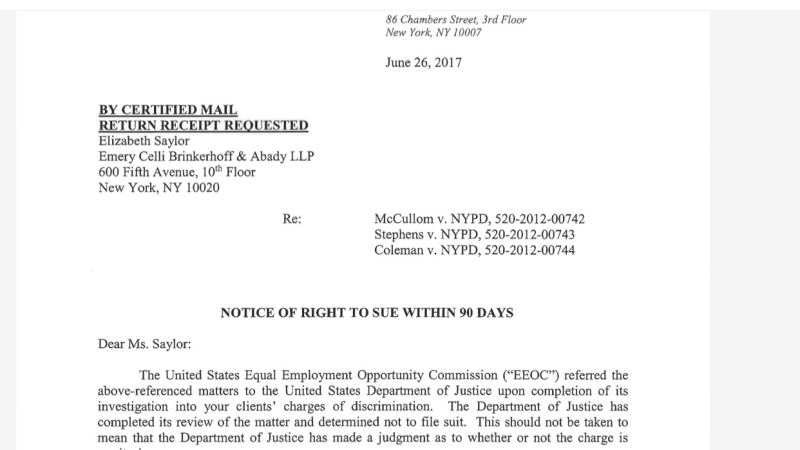
The Service, as with the EEOC, should be granted a reasonable amount of time to investigate, mediate, conciliate and even vacillate. After 180 days, the complainant should be entitled to a right to sue letter, which letter would not preclude the Service from intervening in a subsequent suit on either side. Perhaps to facilitate voluntary corrective action, and assuming no irreparable harm, time might be extended by request of any party. Once time expires, however, the complainant would be entitled to sue to revoke exemption. Where the Service has found no violation, its decision should support summary dismissal unless the complainant can show the Service’s decision to be an entirely unreasonable application of law. This is where Chevron deference would come into play (though some think Chevron too might be jettisoned next term). The Service need not intervene but private parties should be allowed to intervene liberally to preclude collusive suits.
In the CREW complaint, one that will likely amount to nothing under current law despite its apparent though perhaps arguable merit, the Service might decline to take action. CREW would be entitled to sue, the Service would have a right to intervene, private party intervenors could take a position for or against CREW. The argument would be whether 53.7% of resources proved United For Clean Power operated “primarily” for political purposes. The Service might argue for or against such a rule, and only its position would be subject to Chevron deference. It could file a motion to dismiss in the event it favored the organization. Failing that, it might litigate the merits for or against the complainant.
The proposal needs a lot more fleshing out, I admit. But nobody can doubt that state and federal enforcement of nonprofit and tax exemption laws, respectively, is woefully lacking. Its almost true to say that enforcement is nonexistent as a practical matter. A private right of action, properly structured to prevent abuse, would improve tax exemption jurisprudence.
darryll jones