
Will Reparations Violate Bob Jones Public Policy After Students for Fair Admissions?
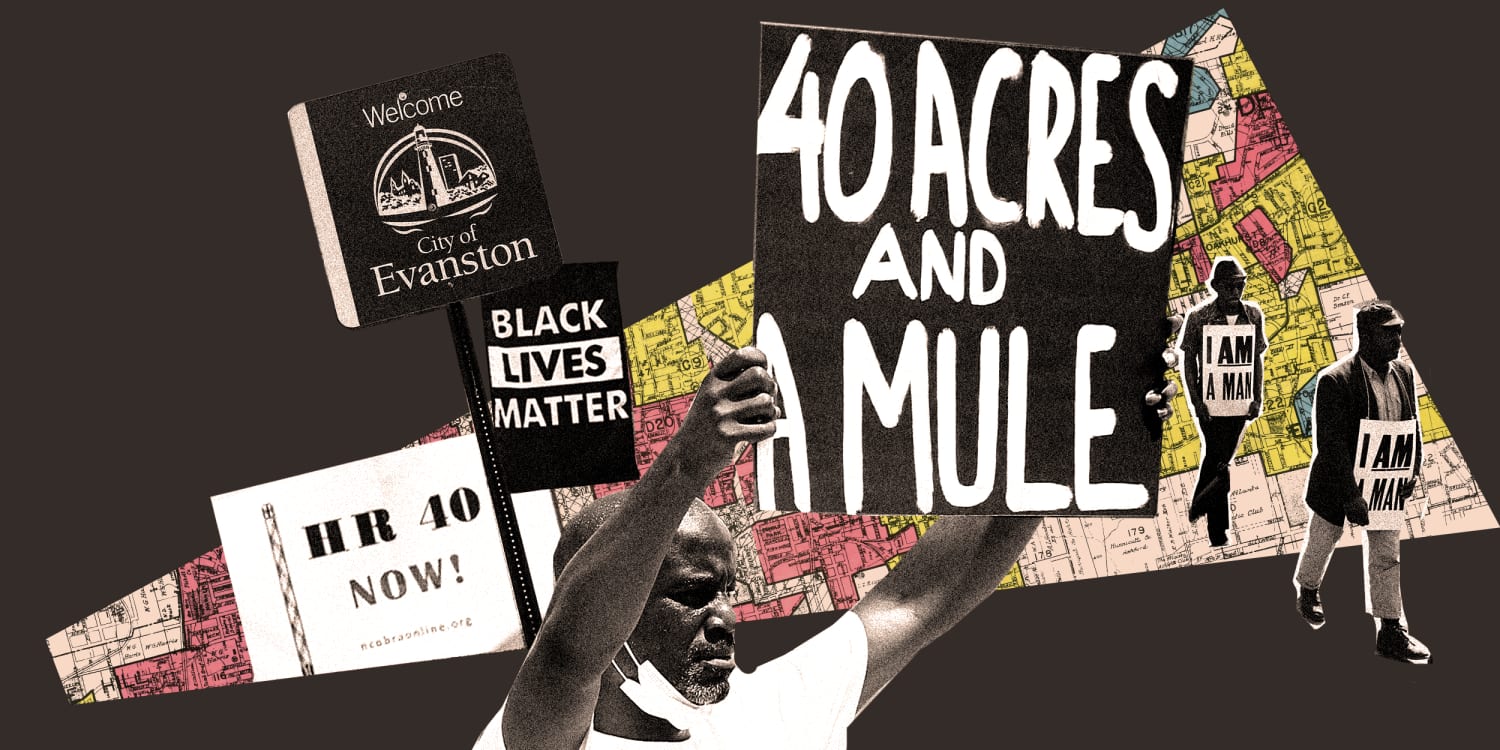
In Chicagoland, Evanston enlisted the aid of an exempt organization to make reparations. Here is what the National League of Cities says:
In November 2019, the City of Evanston, Illinois, established a reparations fund of $10 million from the city’s tax on the sale of recreational marijuana. Through a community process, the city concluded that the strongest case for reparations came from evidence showing the most significant harm to African Americans was the role the city played in housing discrimination resulting from zoning ordinances in place from 1919 till 1969.
The City of Evanston created the Restorative Housing Fund in 2021 as the first initiative of their reparations work. The fund received an initial budget of $400,000 to support down payment/closing costs assistance to purchase property, repair, improve or modernize the property, or funds to pay down mortgage principal, interest, or late penalties for real property located within the city. Sixteen eligible Black residents were selected to receive $25,000 via a local non-profit facilitating the payments and providing free housing counseling services. The city plans to continue to work through the list of eligible residents that have already been vetted to receive additional funds.
Other cities, including St. Louis, MOProvidence, RIAsheville, NCBoston, MA
It looks like Al has published a lot of downloaded stuff about reparations so if you want deeper reading, its probably safe to start with this article, and this one too. From the first of the two, this:
Now that reparations talk is being taken seriously, it is time to address reparations plans more fully. After discussing why reparations talk has become popular, the paper turns to conceptual problems associated with claims for reparations for slavery: whether courts are the appropriate place to look and whether American law is even equipped to deal with such claims. It addresses three problems in particular: the use of unjust enrichment analogies in reparations talk; the constitutionality of race-based remedies, such as reparationsreparations talk into the context of the cultural war over redistribution of property on the basis of race.
I’ve not read Al’s work but I expect it is entirely dispassionate, as scholars should be most often. I also haven’t read William Kirsten’s Book From Here to Equality: Reparations for Black Americans in the 21st Century, but I suspect, because at least one author is African American, that it contains passion as useful as Al’s dispassion. Passion from personal interest is why we have standing rules. We don’t want dispassionate litigants in court because they are invariably dispassionate, though they may have something valuable to offer to the debate.
Al mentions the constitutionality of reparations, presumably because in the most popular sense, reparations means government payments based on race. David has written about the impact of Bob Jones on exempt entities who take up the affirmative action strategy, affirmative action being just one form of reparations I think. Here is what he says about whether an exempt organization might forfeit tax exemption by making reparations exclusive to African Americans:
The Essay further concludes that the IRS is not necessarily bound to continue viewing constitutional law as determinative of what is, and is not, established public policy. Indeed, the IRS may consider factors that do not stem from constitutional jurisprudence when determining if a particular charity’s race-conscious affirmative action violates the public policy limitation. Conceptually, the public policy limitation does not need to be co-extensive with the totality of constitutional jurisprudence. Thus, the IRS might properly conclude that the type of affirmative action the Court invalidated in Gratz as unconstitutional might still be consistent with established public policy if engaged in by a non-governmental private tax-exempt actor. Based on such an approach, the IRS could determine that, even though public universities are prohibited from using race as a deciding factor of admission, private universities are not necessarily prohibited from using race in this way. Such an approach would be entirely consistent with Justice Powell’s view of tax-exempt charities as contributing to a vigorous, pluralistic society and not acting on behalf of Government in carrying out governmentally approved policies.
Evanston recently renewed a contract enlisting Community Partners for Affordable Housing, a 501(c)(3), to administer reparation payments to African Americans.
In January 2022, the committee first approved CPAH to help reparations recipients manage and spend their $25,000 housing grants. So far, 16 residents have received the money. Only those in the program’s “Ancestor” category — Black residents who lived in Evanston between 1919 and 1969 — are currently receiving payments. The grant can go toward a down payment on a home purchase, mortgage payments or home renovation. 106 people in the Ancestor category remain on the waiting list.
Here is another good article about Evanston’s program if you are interested. Reparations presupposes government payments to an “ancestor category” as Evanston calls it. And it is true that affirmative action, an indirect means of token reparations I think, is under severe attack and may even be on its death bed if the Supremes have anything to say about it. But if the Supremes declare affirmative action or DEI unconstitutional, will nonprofits like CPAH be in violation of “clearly defined public policy” such that they should forfeit tax exemption? I thought maybe the recent overruling of Roe might provide an answer. Though the Supreme Court determined that there is no constitutional right to an abortion, it would be impossible to say that the ruling established a clear public policy. Only that there is no clear public policy — after 50 years, believe it or not — regarding abortion. The ruling didn’t prohibit abortions. The same could not be said if the Supremes rule affirmative action and DEI unconstitutional in Students for Fair Admissions. That would appear to express a mandatory, not just clearly defined, public policy against affirmative action, DEI, and other forms of financial and in-kind reparations however those efforts might be labeled.
darryll jones