
NGO Survival Instinct
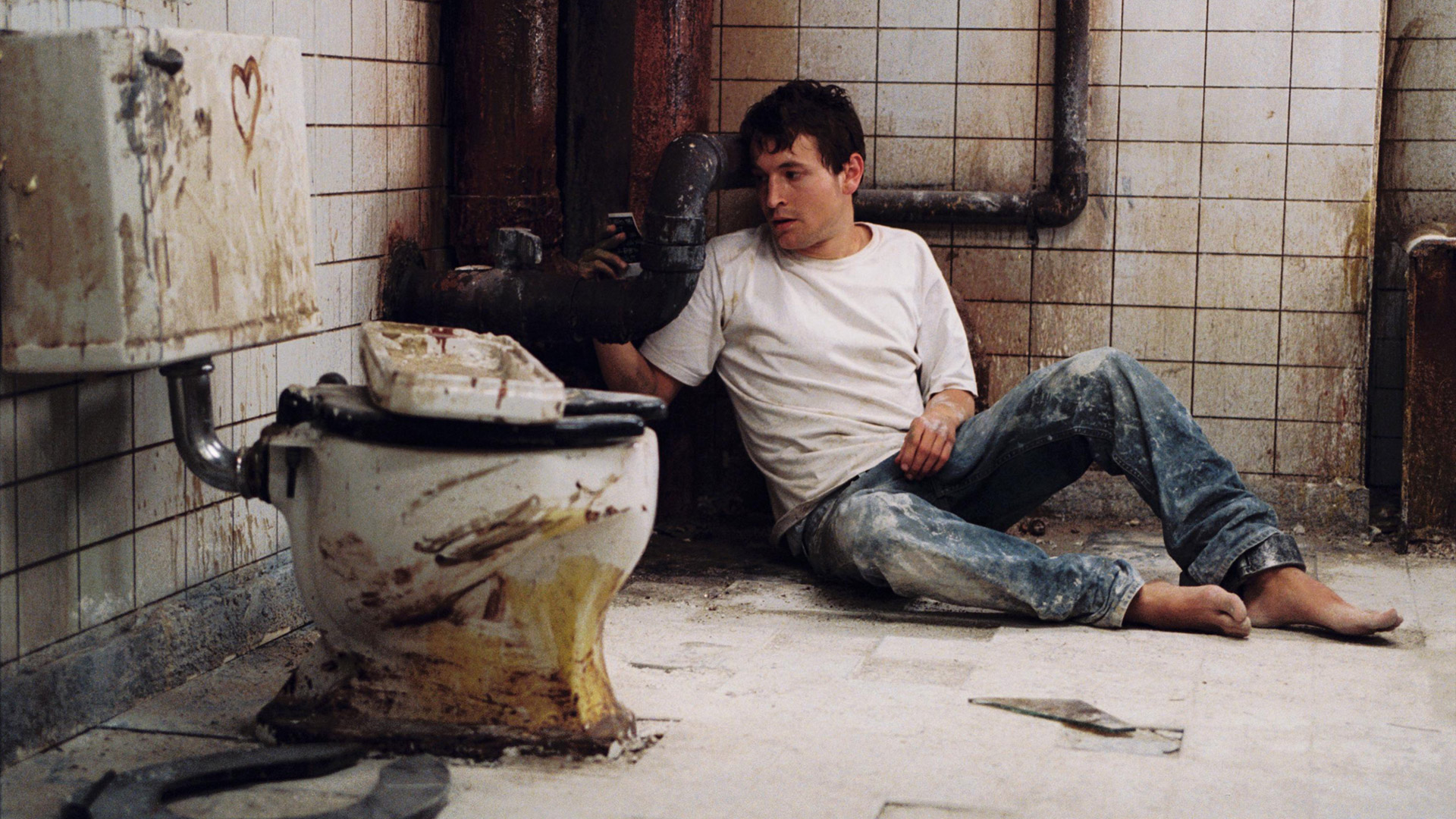
In Saw, a 2004 movie, a man chained by the ankle in a bathroom will do anything to anybody else or himself to survive.
In this post: “More than 50 women have accused Ebola aid workers from the World Health Organization and leading NGOs of sexual exploitation and abuse in the Democratic Republic of Congo, an investigation by The New Humanitarian and the Thomson Reuters Foundation revealed.” NGO survival instincts kick in to the detriment of public good.
There is a troubling story from the Congo, nevertheless providing for a sad teachable moment. The New Humanitarian, a nonprofit newspaper that “reports from the heart of conflicts and disasters to inform prevention and response,” uncovered patterns of sexual abuse perpetrated on charitable beneficiaries and local aid workers by employees and agents of prominent international NGOs, including the World Health Organization, UNICEF, and the International Committee of the Red Cross (ICRC):
Dozens more women have come forward to accuse workers for the World Health Organization and other aid groups of sexual abuse and exploitation during the 2018-2020 Ebola outbreak in the Democratic Republic of the Congo – testimonies that suggest the scale of the scandal is even larger than previously reported.
The New Humanitarian and the Thomson Reuters Foundation first uncovered the scandal in 2020. That investigation prompted WHO to appoint an independent commission, which in 2021 confirmed that WHO personnel and other aid workers had lured women into sex-for-work schemes during the outbreak. The 34 new allegations were discovered in late September 2022 as part of follow-up reporting on what assistance had been given to more than 100 victims.
Of the 34 women who recently came forward, 27 said they were abused or exploited by men who said they worked for WHO; five accused staff from UNICEF, and one each accused workers from World Vision and the International Committee of the Red Cross (ICRC).
UNICEF asked The New Humanitarian to “encourage these five women to provide us with the information we need to provide them with support and to investigate”.
“We take such allegations very seriously, and if they report we will be able to offer invaluable victim support,” said UNICEF spokesperson Christopher de Bono, adding that the UN agency only reports back on the outcomes of cases, not investigations.
Other NGOs facing accusations include Alima medical charity, International Organization for Migration, Médecins Sans Frontières, Oxfam, and World Vision. The European Commission, a major donor to NGOs named in the reports, demanded the organizations investigate and explain. The organizations sent a batch of documents, but now they are facing consternation because of efforts to block the release of materials gathered in the investigation, including apparently incriminating emails:
Major Western NGOs, including UNICEF and the International Organisation for Migration (IOM), are blocking the public release of files sent to the EU Commission regarding an investigation into the abuse of women and children in the Congo in a sex-for-work scandal, EUobserver reports. . . Aid workers are accused of a litany of sex crimes, including soliciting vulnerable women in exchange for temporary work contracts. Among the crimes being investigated is the rape of a thirteen-year-old girl who was subsequently forced to get an abortion, alongside twenty-six other women and children impregnated by aid workers in total.
The Christian aid agency World Vision Network cited a risk to “commercial interests” as a reason to stonewall the release of information, with UNICEF invoking the organisation’s “privileges and immunities.”
This from another media source:
They say it could harm their reputations and make it more difficult to raise funding. . . World Vision Network, a Christian humanitarian organisation, evoked the protection of its commercial interests in it refusal to release four of the 25 documents. “Releasing the emails, even in partial form, will undermine the protection of [our] commercial interests,” they told the European Commission.
“By ‘commercial’ we define our activities and reputation as a non-profit humanitarian organisation,” they added. They say disclosure “might in return affect our ability to raise funds in the public.” It also said that they had not received any EU commission funding for its Ebola response in the DRC. The IOM made similar arguments and refused to allow the commission to disclose one document.
They say disclosure would put at risk “survivors of sexual exploitation and abuse” as well as IOM staff, contractors, government and consular authorities in the DRC. “This information is treated as sensitive confidential information since the lives of the migrants, staff and partners are IOM’s highest priority’,” they told the European Commission.
Did you see that? World Vision is like, “we are gonna lose money . . . and oh yeah, disclosure might hurt the women we have victimized by sexual abuse.” Alright then, let’s just keep this amongst ourselves, shall we?
This all makes me think of a situation depicted in the movie, “Saw“? It got a lot of bad reviews but it spun off 9 sequels and counting so far. Anyway, its really a study of first instincts, portraying our willingness to do anything — lie, cheat, steal, kill, or cut off our own foot — if survival requires. Our first instinct is survival and when push comes to shove, we will jettison all other pretense. Organizational sociologist agree, too, that organizations are human collectives and their first instinct is survival. Business, government, and even nonprofit organizations. Above all else is the instinct to survive, the hell with doing good if its you or me. On the other hand, men have flung themselves onto grenades, but only because the instinct for self-preservation was trained or brainwashed away. Other- at the expense of self-preservation is so rare that we give medals when it happens. Here is how the principle is thought to play out in nonprofit organizational form:
All governmental organizations and NGOs are founded by well-meaning actors with good intentions. However, corruption inevitably sets in as the “good intentions” are gradually eclipsed by the inevitable organizational impulse to survive and self-perpetuate. Institutions, like organisms, seek survival for themselves and their descendants. They survive, reproduce, replace, predate, evolve, alter, consume and grow. And when a sufficient number of institutions coexist, they function like an ecosystem [nonprofit hospitals anyone?].
The instinct of self-preservation is in the DNA of all living organisms and exaggerated in human organizations. “Ship, shipmate, self. I’ve always found this refrain from the Navy to be powerful… On any high-performing team I’ve been a part of, putting mission first, and team before self, was always key to collective success. The worst behaviors in organizations, in my experience, are those that get this approach backwards. When the collective mentality of any organization is self and self-preservation first, it’s a sure sign of pending doom.”
The self-preservation instinct often manifests itself in efforts to retain institutional legitimacy, since that is typically all an NGO has to trade on:
Legitimacy is a key asset for actors in global politics, especially for international non-governmental organizations (INGOs) which are still largely based in wealthier nations in the Global North. Compared to corporations or states, INGOs have fewer coercive means (no military or significant financial resources), and since INGOs typically lack formal status in global affairs, they can rarely assert authority without some form of legitimation conferred to them by others (Koppell, 2008). INGOs typically obtain authority by convincing multiple audiences that they act appropriately, advance the public’s interest, and are guided by moral principles (Stroup & Wong, 2017).
I think survival is what these otherwise highly regarded NGOs are pursuing more than anything right now. They would rather keep quiet about the crimes some of their agents have perpetrated, than risk the legitimacy upon which their survival depends. Here is the lesson for me as it relates to Civil Society. At some point, every nonprofit’s instinct to survive and eat will take precedence over public good and charity will suffer in the short run. The NGOs in the report would probably argue that survival is self-regarding, but in the long term more beneficiaries will be helped than those harmed in the short run. Does the survival instinct explain nonprofit hospitals?
Survival is the instinct of humans and human organizations, altruistic or otherwise, and it might be that even NGO organizations will lie, cheat, kill or cut off their own feet off if survival requires. So our laws, tax or otherwise, should be designed to rein in our base instincts as they are inevitably expressed in Civil Society.
darryll jones