
Churches Can Do Whatever They Want with Tax Exemption: Iowaska vs. United States
Have I ever mentioned that churches can do whatever they want with their tax exemption? Last week, the Iowaska Church of Healing lost its bid for tax exemption because its main function is the Ancient Sacrament of Ayahuasca. Dude, its a ceremony involving drinking tea made from a vine and a plant and getting seriously fried. We need to get real spiritual in a hurry, bro, this is perfect! But that Iowaska lost only proves what I have been saying. Yes, you can even get high AF at church if that’s your thing and nobody can yank your charitable tax exemption. Iowaska’s loss only means the church got some bad advice and then wasted a whole lotta time and money suing the wrong agency. Judge Howell, of the District Court for the District of Columbia — she went to Bryn Mawr so she might remember a little about feeling good on a Friday night — acknowledged binding U.S. Supreme Court precedent holding that DEA’s refusal to recognize a religious exemption for “hoasca,” as the tea is called, violated the Religious Freedom Restoration Act and, by implication at least, the First Amendment right to free exercise of religion. 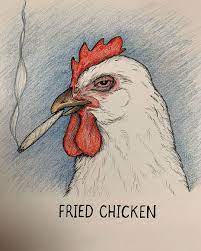
I tell my students all the time that for the most part, applying for tax exemption is decidedly non-adversarial. If something is missing or wrong in the application, you won’t get a “no,” until after someone tells you what’s wrong and how to fix it. Its not like there are a buncha bureaucrats sitting around waiting to deny applications, right leaning opinions to the contrary notwithstanding. The cost of mistakes is usually just time and money, but sometimes the cost is still too high. Iowaska is experiencing that in spades because it bothered to ask the IRS in the first place. TE/GE told them exactly what was wrong. “Until you get your permit, your use of hoasca is illegal and you are, only for lack of a permit that you can easily get, precluded from tax exemption. Go get your permit, there is no way DEA can deny it because the Supremes said so.” Did these buzzed worshippers listen. “Naw, dude, we don’t want that hassle, we just want to worship. You can burn in hell all you want, but we are gonna get good and fried well before the rapture whether you like it or not.”
Ok, don’t cancel me. My satire applies only to the recent Hollywood converts who swear by hoasca. The ancient sacrament is a legitimate religious ceremony practiced by people for thousands of years. If you are interested, here is the religion’s bible. Here is how researchers describe it:
Psychedelic plant medicines, such as psilocybin-containing mushrooms, mescaline-containing San Pedro and Peyote cacti, and N-N-dimethyltryptamine (DMT) decoctions collectively termed ayahuasca, have been used for thousands of years as ritual sacraments. Recently, there’s been renewed interest in psychedelics as a treatment for psychiatric illnesses, including depression and substance use disorders. Ayahuasca is used in shamanic ceremonies by indigenous peoples of the Amazon. Ceremonies are conducted at night and outlast the psychedelic effects of ayahuasca by a few hours. They are led by a shaman who provides the brew for each participant to drink and spiritual support. One to 2 drinks are typically offered per evening, and rituals may be conducted a few evenings in a row. A person’s baseline mindset a priori to drug ingestion as well as the physical surroundings to the drug experience are thought to be crucial to minimizing harm and maximizing potential for benefit. These parameters are described in psychedelic literature as “set and setting.” In ritual context, the user prepares and approaches the experience with intention along with ingesting in a supportive, supervised, and spiritual setting, which is hypothesized to augment any potential benefits. Ayahuasca drinkers are primarily seeking a vehicle of self-development or healing, including treatment of psychiatric illness. Although the psychedelic effects of the ayahuasca attract the most attention in the literature and media, both preparation and integration phases pre- and post-ceremony are integral components to ritual ayahuasca use.
The Santo Daime and União do Vegetal (UDV) are two of the largest modern-day ayahuasca churches. Church membership has expanded to every inhabited continent. N-N-dimethyltryptamine is currently a schedule I controlled substance in the United States although the right to ritual drinking of ayahuasca for members of the UDV has been upheld by the Supreme Court under the Religious Freedom Restoration Act. Consumption in native areas of the Amazon as well as non-sanctioned ritual use in the West is also growing. The legal status of DMT poses a considerable barrier to adequate research of ayahuasca in the treatment of psychiatric illness.

Credit…Scott Roth/Invision/AP; Mike Marsland/WireImage; Dimitrios Kambouris/Getty Images; Robert Wright for The New York Times; Frazer Harrison/Getty Images
Banhart kinda looks like he got the cup last and there was hardly a sip left. Long story short, since Iowaska didn’t have the permit that it has a slam dunk right to have, it ran right into the illegality doctrine. If anything, Iowaska should have been suing for an order requiring DEA to issue the permit. This whole thing started four years ago. Its DEA that seems to be dragging their feet on this one. Why they sued the Service is beyond my comprehension. And to add insult to injury, by suing the Service, they lost on a second, procedural, grounds pertaining to justiciability. They should have sued the DEA alone, or along with the IRS. Somebody needs to pass them the doobie.
darryll jones