
Dark Money Moral Hazard After the High Tech Lynching of Lois Lerner
I think Lois Lerner Had an Inkling of “the Scale of Corruption” Wrought by Social Welfare Organizations
It’s really too bad nobody bothered to ask what caused Lois Lerner to stumble into the role of Hannibal Lector in the tax saga regarding social welfare organizations years ago. The answer is pretty simple. Her people in Cincinnati had the job of reviewing 501(c)(4) exemption applications applying the standard, “social welfare can do charity but not too much politics.” “Well, what’s too much politics?” she asked. “I need to tell my people.” To which Congress responded, “just do your damn job woman, stop asking so many stupid questions!” We all know how that turned out. It resulted in an attempted high tech lynching because LL tried to do her job, even if imperfectly, and asked questions. And in the aftermath of everybody else asking the wrong questions, Citizens United, and anti-donor disclosure First Amendment protections, we have given birth to racketeers disguised as social welfare organizations. That’s not me talking, that’s DOJ in this RICO indictment of former Ohio State Representative Larry Householder. The video above explains that the alleged $60 million gangsterism is the largest corruption scandal in Ohio history. Closing arguments happened yesterday, and the criminal trial is about to go to verdict. Its a pretty good bet Householder is going where Lois Lerner has never gone before, I’ll tell you that much.
LL should sip champagne, I think, even if the cost was too high. The only thing she did was admit that “hey maybe we should look at these organizations. Its our job, what Congress pays us for.” Turns out she was right all along. The final absurdity of it all occurred just a few months ago when litigants finally gained access to LL’s sinisterly described “secret depositions.” All along they had said the sealed depositions would be the smoking gun, the final nail in Lois Lector’s coffin. The records were unsealed and yeah we got crickets. LL’s deposition begins on page 135, by the way. Somewhere in the deposition, there is a reference to LL’s snarky comment that “Lincoln should have let the south go.” But that’s about it. Yep. Sip champagne and write that book LL.
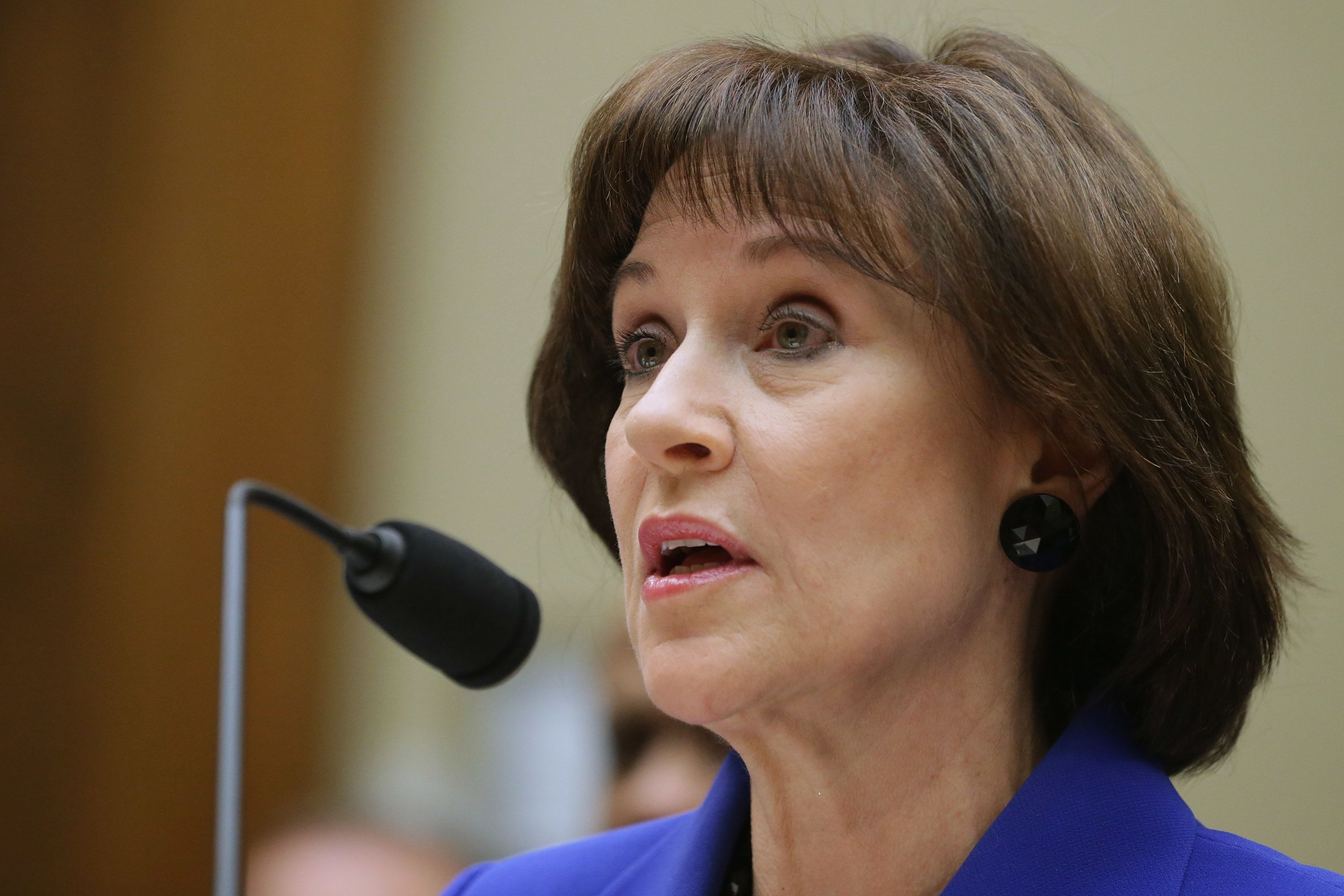 Lois Lerner
The phrase “moral hazard” derives from the insurance industry and was first used as far back as the 1600s. As best I can tell, moral hazard refers to circumstances in which an actor is incentivized to engage in high risk behavior because the costs of the risk’s fruition probably won’t be visited upon the actor. Anyway, that’s how I am using the phrase here to describe the convergence of circumstances arising from Citizens United, donor anonymity, social welfare organizations, and dark money. Those circumstances continue to incentivize boneheaderie as bad actors roll the dice. No doubt many get away with it but others crap out spectacularly. The Wall Street Journal published an interesting story about Householder yesterday. The article is entitled: “Supreme Court’s ‘Dark Money’ Rulings Anchor Defense in Ohio Corruption Trial.” Here are lots of snippets from what I thought was a real good read:
CINCINNATI—An Ohio jury is about to decide whether politicians enlisted by an energy company to seek a $1.3 billion state bailout of its two failing nuclear plants pushed the bounds of campaign spending too far. Akron-based FirstEnergy Corp. secretly spent more than $60 million beginning in 2018 to help then-Republican state Rep. Larry Householder win the Ohio House speakership and secure the bailout. Federal prosecutors called the arrangement an illegal pay-to-play bribery scheme.
Much of the company’s donations flowed through an organization called Generation Now and other nonprofit groups organized under 501(c) (4) of the tax code that aren’t required to disclose their donors. FirstEnergy admitted as part of a deferred prosecution agreement that it used nonprofit groups “to conceal payments for the benefit of public officials and in return for official action.” The company paid a $230 million fine and agreed to cooperate with investigators.
Supreme Court decisions, including in the 2010 Citizens United case, have allowed companies, trade groups and unions to spend unlimited sums supporting political candidates. That has meant more big money in politics, including through nonprofits that aren’t legally required to disclose their donors. Supporters of politically active nonprofits contend that the privacy of donors should be protected so that they don’t face the risk of retaliation from people who don’t agree with them.
Generation Now described its mission in tax documents as promoting energy independence and economic development. The group, which was led by Mr. Householder’s top political aide, pleaded guilty and acknowledged its real purpose was to take undisclosed donations from FirstEnergy and use them to benefit Mr. Householder and others. California tried to counter the flow of dark money by requiring political nonprofit groups to share their big-donor information with the state attorney general. But in a 2021 case brought by Americans for Prosperity, a nonprofit that was for years steered by industrialists Charles and David Koch, the Supreme Court shot down that effort, saying it violated the right to freedom of association protected by the First Amendment.
The Federal Election Commission and the Internal Revenue Service can enforce rules that require groups whose “major purpose” involves federal campaign activity to report their donors publicly. By law, groups organized under section 501(c) (4) of the tax code—a designation for social-welfare groups—can’t have electoral politics as their primary activity. However, those agencies have seldom reprimanded nonprofits, in part because the definitions make it hard to pin down possible violations.
David DeVillers, the former U.S. Attorney for the Southern District of Ohio who brought charges against Mr. Householder and others, called politically active nonprofits “the perfect money-laundering mechanism.” “There’s a zero percent chance Householder and FirstEnergy would have been able to do what they did without a 501(c) (4),” said Mr. DeVillers, who was appointed by former President Donald Trump.
You really can’t make this stuff up.
darryll jones