
A Rule Against [Charitable Naming] Perpetuities
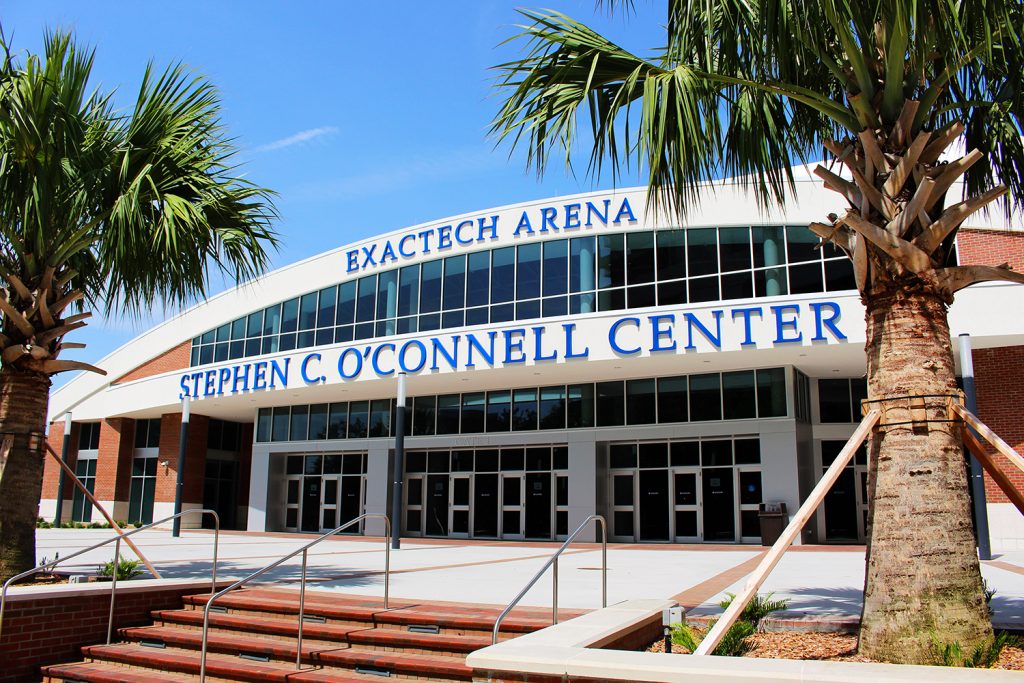
The O’Connell Center at the University of Florida. O’Connell disavowed his racist beliefs in 1971 but some still push for his name’s removal.
The word “slavery” when used to describe forced and uncompensated labor is unconscionably antiseptic. It allows us to talk about the systematic robbery, kidnapping, rape, murder — genocide, really — of the enslaved without acknowledging the crimes. Acknowledgement brings into focus the absurdity of naming a charity or public place after people who engaged in or perpetuated robbery, kidnapping, rape, and murder. What could be more unlike charity or unworthy of commemoration? So it makes sense that DOD has finally ordered that nine military installations, named after Confederate generals, be renamed:
Nine southern Army bases are named for treasonous Confederate generals who fought against the United States to preserve slavery and white supremacy. All nine will soon have new names. A commission established by Congress recommended a list of distinguished Army heroes for the new base names, and Defense Secretary Lloyd J. Austin III recently ordered the changes by the end of 2023. The bases were originally named as part of a movement to glorify the Confederacy and advance the Lost Cause myth that the Civil War was fought over “states’ rights” and not slavery.
I had some great times at some of those places by the way. As a kid I played pee wee football at Ft. Rucker, Alabama. After law school, I suffered through Jump School at Ft. Benning.
Colleges and universities are following suit, acknowledging crimes against humanity by renaming buildings or programs. Its the least that can be done actually. But in Virginia, the University of Richmond’s decision to remove a benefactor’s name from its law school has prompted an heir to demand the return of the benefactor’s donation — made possible, ironically, from the labor of those he enslaved:
A Virginia lawyer is demanding the University of Richmond pay his family more than $3 billion after the school changed the name of its law school, which was named after his relative. T.C. Williams Law School was named after a tobacco business owner who owned 25 to 40 enslaved people, according to the university, which changed the name of the school last year after hundreds of students and faculty protested.
The heir’s demand letter goes on an unmitigated rant, referring to those supporting and conceding the change as “low IQ woke ingrates,” and “carpet bagging leftist weasels . . . who must be destroyed.” The heir is a Richmond Law grad, by the way, and also of Virginia and Cambridge, where he honed his advocacy and persuasion skills, obviously.
So I sniffed around for awhile trying to find the law relating to perpetual naming transactions. When a donor transfers money to a charity in explicit or implicit exchange for naming rights, is the charity bound forever to be named after the donor? I found John’s very thorough article on the topic. And there are all sorts of shorter media reports and discussions available online — John’s masterpiece is obviously pre-tenure because it is 100 pages and 400 footnotes uncovering every nook and cranny of the issue. I’ve done the same, admittedly. To get quicker reads, Google “perpetual naming rights”. I don’t have the time to read John’s article at the moment. But from a word search and light skimming, I bet he agrees with my tax based rationale against naming rights perpetuities:
If the transfer of perpetual naming rights in exchange for a deductible charitable contribution creates a contract, every taxpayer is a party to that contract with a right of enforcement and novation, allowing taxpayers to demand or waive enforcement of any such perpetual naming obligation. Donor’s entitlement to a charitable contribution deduction means all of us contributed to the charity and therefore are just as much parties to the contract. Taxpayers and donors together may demand enforcement, but either party alone can waive enforcement.
That’s just a thought, inspired by the instinct we all have to disfavor perpetuities. I gotta think it through.
darryll jones