
All the Lawyers First, Then the Nonprofits
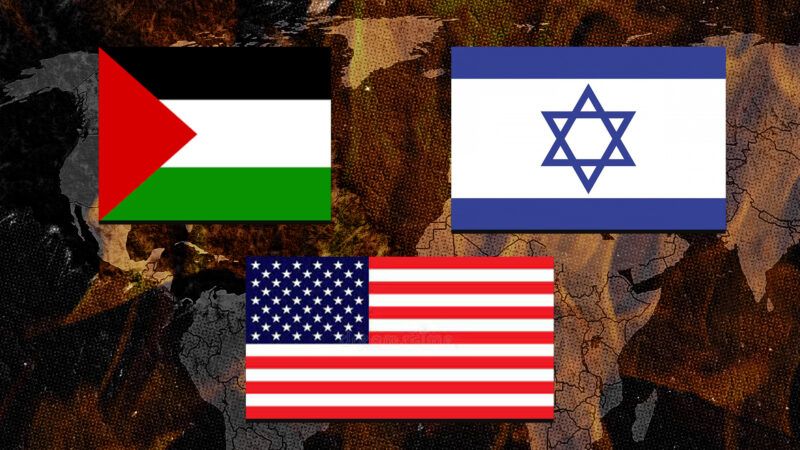
Click on the picture for an analysis of America’s involvement in the conflict
The best way to undermine a society, after killing off all the lawyers, might be to starve all the nonprofits. Under the highest ideal, lawyers are the “guardians of the rule of law who stand in the way of a fanatical mob.” Under another high ideal, nonprofits are conscientious objectors to war and human suffering, remaining neutral to profits or geopolitics, ideally. Groups like ICRC, Oxfam International and Red Crescent all exist as nonpartisan noncombatants concerned only with alleviating the suffering caused by humankind’s proclivity to inflict violence on itself. About a year ago, Suparna, a promising young scholar at Lewis & Clark’s Department of International Affairs, published what looks like a terrific book exploring NGOs in nations under threat. Here is what she said in the abstract:
Nongovernmental organizations are central to contemporary global governance, and their numbers and influence have grown dramatically since the middle of the twentieth century. However, in the last three decades more than 130 states have repressed these groups, suggesting that a broad range of states perceive them as costly. When they choose to repress NGOs, under what conditions do states use violent strategies versus administrative means? The choice depends on two main factors: the nature of the threat posed by these groups, and the consequences of cracking down on them. Violent crackdown is useful in the face of immediate domestic threats, such as protests. However, violence may increase the state’s criminal liability, reduce its legitimacy, violate human rights treaties, and further intensify mobilization against the regime. Therefore, states are more likely to use administrative crackdown, especially in dealing with long-term threats, such as when NGOs influence electoral politics. I test this theory using an original data set of administrative crackdowns on NGOs, as well as violent crackdown on NGO activists, across all countries from 1990 to 2013. To shed light on the strategic decision between violent or administrative crackdown, and how states may perceive threats from domestic and international NGOs differently, I provide a case study from India. I conclude by discussing the implications of this crackdown for the use of civil society actors by the international community, as well as donors and citizens in the global South.
As we previously blogged, the United States is not immune from protective instincts that make us look sideways at nonprofits not explicitly on our side in times of national peril. And nonprofits are not always without fault; this WSJ book review explains how the Red Cross, before it championed the law of war, might have helped Hitler:
Much of “Humanitarians at War” re-treads the ICRC’s missteps in those dark years, rightly laying most of the blame on Switzerland’s Carl Jacob Burckhardt. With the ICRC’s moralistic Christian president, Max Huber, elderly and often ill during the 1930s, it was Burckhardt, his second in command, who made major decisions regarding relations with Adolf Hitler’s government. A diplomat and known careerist, Burckhardt harbored a traditional anti-Semitism and such hatred of communism that he regarded German Nazism as a bulwark of civilization and a necessary evil. As early as April 1933, the ICRC was receiving desperate letters from inmates of German concentration camps, including one from Dachau pleading: “‘I beg you again in the name of the prisoners—Help! Help!’” Yet as Mr. Steinacher writes, during this period Burckhardt was given an inspection tour “and officially lauded the commandant of Dachau for his discipline and decency.”
George W. Bush famously warned the whole world after 9/11 that “either you are with us, or you are with the terrorists.” I bet it was intentional that he said that, instead of “you are with us or against us.” Nonprofits can be against us and not for terrorism. But Bush ignored or entirely eliminated that middle ground. There is no middle ground when stuff hits the fan I guess. That sentiment continues to dominate at home and abroad. Two days ago, the Washington Times reported:
A major left-wing charity is unable to accept credit card donations for itself or the 140 groups that it fiscally sponsors following several Washington Examiner reports on how the nonprofit group is linked to Palestinian terrorism. Lawyers and charity experts have continued to raise concerns over how the Arizona-based Alliance for Global Justice has fundraised for Collectif Palestine Vaincra, a French partner of the Popular Front for the Liberation of Palestine, a U.S.-designated terror group. On the heels of a pro-Israel group calling for banks to cut ties with AfGJ, the charity is now revealing that it cannot process credit card donations.
Last month, the pro-Trump and pro-Israeli group, Zionist Organization of America, issued a public warning:
“Any group breaking the law by funding terrorist groups must be prosecuted and shut down,” Morton A. Klein, president of Zionist Organization of America, the oldest pro-Israel American nonprofit group, told the Washington Examiner. “This is not the first front group trying to raise money for Palestinian terrorists, and it won’t be the last. The enemies of Israel and the Jewish people are determined, which is why we have to stay vigilant and strong in our defense.” Under 18 U.S. Code § 2339B(2), payment processors need to freeze funds raised for the PFLP’s agents, and report the transactions to the U.S. Secretary of the Treasury,” added Klein, referring to a law surrounding U.S. groups providing “material support” to terrorism. “Payment processors should expand these closures to organizations that raise funds for PFLP agents CPV and Samidoun.”
And then barely a month later, the unidentified bank expressed its angst, no questions asked, by shutting down AfGJ’s ability to accept donations by credit card.
Most recently, the Washington Examiner, a far-right rag known for its love of all things Trump, accused AfGJ of providing material support to terrorists, which is a federal crime. They claimed that having an organization called Samidoun as a fiscally sponsored project is supporting terrorism. Samidoun is an international organization that supports the thousands of Palestinians unlawfully imprisoned by the far-right Israeli government. Hundreds of these prisoners are children under the age of 12. The right wing has tried to shut Samidoun down previously but the organization has successfully defended the legality of its work. This attack on AFGJ is also another attempt to damage work in defense of Palestinian human rights.
This time, they succeeded. As of this writing AfGJ cannot accept credit donations – and neither can the 140 organizations that rely on us to provide them with fiscal sponsorship, which includes handling their accounting and providing them with nonprofit status. From people bringing clean water to the Apache reservation, to programs that mentor LGBTQiA kids and teach them to use art as a means of self-expression, to bail funds that shell out money to carceral systems that lock up people for demonstrating to demand an end to police murders of BIPOC people, our fiscally sponsored projects are laboring to create a more sane, sustainable and just world.
I don’t know whose right or whose wrong. Or whether AfGJ is just collateral damage. It does not appear that their bank wasted any time trying to find out. And the group that that sounded the initial alarm leading to the action against AfGJ claims that Donald Trump was the “greatest President Ever for Israel.” I don’t know. I am pretty sure Ronald Reagan never broke bread with the rapper formerly known as Kanye, or the WWII holocaust denier Nick Fuentes, but hey, its a free country.
darryll jones