
Exempt Hospital’s Ambulatory Surgical Center Does Not Qualify for Exemption, Pennsylvania Court Rules
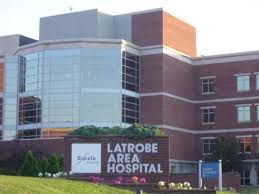
An interesting state property tax opinion released last week. In Latrobe, Pennsylvania, the Latrobe Area Hospital, a tax exempt entity, performs outpatient surgery procedures. Some are performed in the hospital, which enjoys state property tax exemption for the same reason it is tax exempt under IRC 501(c)(3). It also owns an outpatient ambulatory surgical center (ASC) 7 miles from the main hospital. The ASC performs the same surgical procedures as those performed in the hospital under the same policies applicable to the in house surgical center. Still, a Pennsylvania appellate court ruled that the separate outpatient surgical center is not entitled to property tax exemption even though, presumably, the ambulatory surgical center qualifies for federal tax exemption under IRC 501(c)(3) if not on its own, than under the integral part doctrine. What I found really curious about the opinion though is the Court’s reliance on a rather counter-intuitive (IMHO) definition of “hospital.” To enjoy property tax exemption under Pennsylvania law, the provision of health care must be from a “hospital” but the authorizing statute does not define “hospital” so the court fashioned one:
The Law does not define “hospital.” The general rule is that when a statute does not define a term, Section 1903(a) of the Statutory Construction Act, 1 Pa. C.S. §1903(a), requires it to be construed according to its common and approved usage. Mosaica Education, Inc. v. Pennsylvania Prevailing Wage Act, 925 A.2d 176, 183 n.13 (Pa. Cmwlth. 2007). Additionally, where the words of a statute are not explicit, the General Assembly’s intent may be ascertained by considering other statutes concerning the same or similar subjects. See Section 1921(c)(5) of the Statutory Construction Act of 1972, 1 Pa. C.S. §1921(c)(5); Worobec v. Unemployment Compensation Board of Review, 536 A.2d 467 (Pa. Cmwlth. 1986) (considering the definitions in Section 903 of the Agricultural Area Security Law, Act of June 30, 1981, P.L. 128, as amended, 3 P.S. §903, to determine that the term “agricultural labor” includes working with horses). Webster’s Third New International Dictionary 1033 (1986) (emphasis added) defines “hospital” as: “a charitable institution for the needy, aged, infirm, or young” and “an institution or place where sick or injured persons are given medical or surgical care[.]” Stedman’s Medical Dictionary 726 (25th ed. 1990) defines “hospital” as an “institution for the treatment, care, and cure of the sick and wounded, for the study of disease, and for the training of physicians, nurses, and allied health personnel.” As the Board previously noted, Section 802.1 of the Health Care Facilities Act, 35 P.S. §448.802a (emphasis added), defines “hospital” as an “institution . . . established for the purpose of providing to inpatients . . . diagnostic and therapeutic services for the care of persons who are injured, disabled, pregnant, diseased, sick or mentally ill . . . .” Each of these sources defines hospital as an institution providing more than ambulatory outpatient surgery. Furthermore, while we agree with the trial court that the provisions of the Health Care Facilities Act are not dispositive, we must acknowledge that its definition of hospital is consistent with the word’s common and approved usage. As the term is commonly understood, a hospital’s distinguishing features include the availability of medical care around the clock, seven days a week, 365 days a year. Another distinctive feature is the existence of multiple departments; common examples include emergency medicine, critical care, medical laboratory, diagnostic imaging, general surgery, outpatient surgery, oncology, maternity, cardiology, neurology, occupational therapy, pharmacy, admissions, records, and housekeeping.
I’d say its pretty clear that state courts, especially in Pennsylvania, are tangling themselves into knots in an effort to reel in the spread of tax exemption to hospitals. At the federal level most of that effort is based more on the extent to which hospitals provide free or uncompensated care, as we discussed in this post.
Darryll K. Jones