
The “Google Cultural Institute” & Open Access to Cultural Heritage
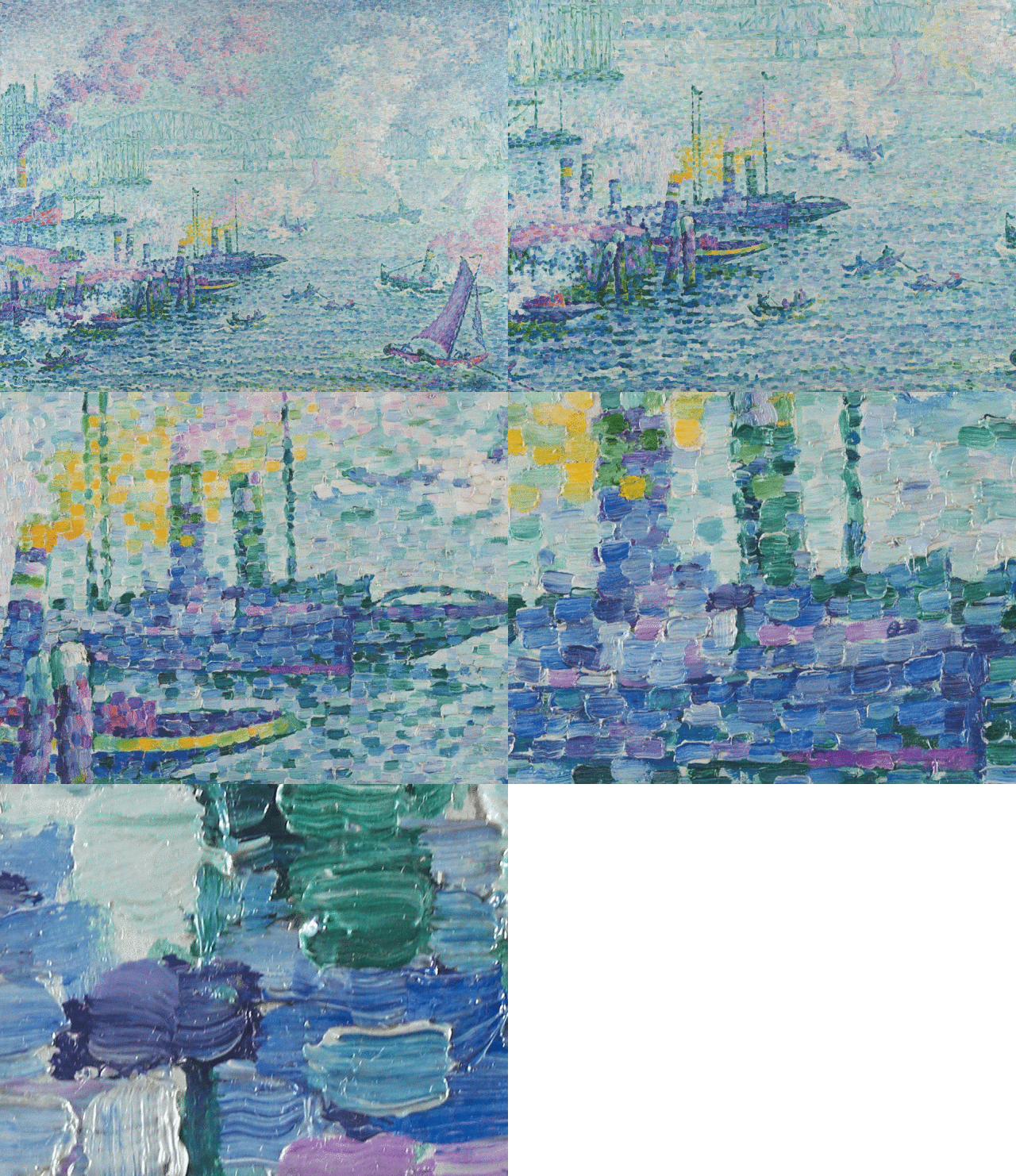
The “Google Cultural Institute” recently announced its initiative to document and provide access to works of art owned by museums from around the world, facilitated by the Google “art camera,” which enables the production of ultra-high resolution “gigapixel” images. As Google explains:
The Art Camera is a robotic camera, custom-built to create gigapixel images faster and more easily. A robotic system steers the camera automatically from detail to detail, taking hundreds of high resolution close-ups of the painting. To make sure the focus is right on each brush stroke, it’s equipped with a laser and a sonar that—much like a bat—uses high frequency sound to measure the distance of the artwork. Once each detail is captured, our software takes the thousands of close-up shots and, like a jigsaw, stitches the pieces together into one single image.
I think this is a very exciting and important development, which reflects a welcome shift in the priorities of many art museums. Many (most?) artworks owned by museums are in the public domain. But many museums have restricted access to those artworks, in order to profit from reproductions of those works. The Google Cultural Institute project reflects a welcome re-alignment of art museum priorities, focused on maximizing access, rather than profits. Art museums are typically charities, with the charitable purpose of preserving and providing access to works of art. Hopefully, the Google Cultural Institute project will encourage more art museums to recognize that their charitable purpose implies an obligation to observe open access principles.
Brian L. Frye