
Friedberg v. Commissioner Revisited—Questionable Appraisal Can Be a “Qualified Appraisal”
Friedberg I
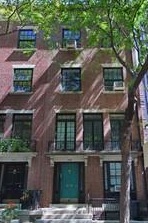
Friedberg involved the donation of both a façade easement and transferable development rights (“TDRs”) to theNational Architectural Trust (NAT) in 2003. In Friedbergv. Commissioner, T.C. Memo. 2011- 238 (FriedbergI), the Tax Court held that the taxpayers were not entitled to a deductionfor the donation of the façade easement because the appraisal of the easementwas not a “qualified appraisal” as defined in section Treasury Regulation §1.170A-13(c)(3). Relying on its opinion in Scheidelmanv. Commissioner, T.C. Memo. 2010-151 (ScheidelmanI), which involved another donation of a façade easement to NAT, the TaxCourt held the mechanical application of a percentage diminution to the fairmarket value of the subject property before the donation of the easement didnot constitute a method of valuation. Accordingly, the appraisal failed to includethe “method of valuation” and “specific basis for the valuation” asrequired by Treasury Regulation §§ 1.170A-13(c)(3)(ii)(J) and (K). With respectto the valuation of the TDRs, however, the court concluded that disputed issuesof material fact remained as to whether the appraisal was a qualifiedappraisal.
Scheidelman
After thedecision in Friedberg I, the SecondCircuit vacated and remanded ScheidelmanI in Scheidelman v. Commissioner,682 F.3d 189 (2nd Cir. 2012) (ScheidelmanII). The Second Circuit held that it was irrelevant that the IRS believedthe percentage diminution method employed by the appraiser in Scheidelman wassloppy, inaccurate, or haphazardly applied. The Treasury Regulation, said the Second Circuit, “requires only that the appraiser identify the valuation method ‘used’; it does notrequire that the method adopted be reliable.” The Second Circuit explained that(i) the IRS’s interpretation—that an unreliable method is no method atall—“goes beyond the wording of the regulation, which imposes only a reportingrequirement,” and (ii) although the IRS may deem the appraiser’s analysis in Scheidelman unconvincing, it was “incontestably there.” The Second Circuit wenton to explain, however, that its conclusion that the appraisal met the minimalrequirements of a qualified appraisal mandated neither that the Tax Court findthe appraisal persuasive nor that the Scheidelmans be entitled to any deductionfor the donated easement.
Onremand, in Scheidelman v. Commissioner, T.C. Memo. 2013-18 (ScheidelmanIII), the Tax Court held that,although the taxpayers’ appraisal constituted a qualified appraisal, thetaxpayers did not provide sufficient credible evidence to meet their burden ofestablishing entitlement to their claimed charitable contribution deduction, and the preponderance of the evidence supported the IRS’s position that theeasement had no value. Accordingly,the Scheidelmans were not entitled to a deduction for their donation of thefaçade easement.
Friedberg II
In lightof the Second Circuit’s holding in ScheidelmanII, the Tax Court reconsidered its opinion in Friedberg I in Friedberg II.
Withregard to the façade easement appraisal, the Tax Court reversed its earlier holdingand found that the appraisal was a qualified appraisal. The court explained,in part, that although it criticized and disagreed with the appraiser’sanalysis in the appraisal report, the analysis was “incontestably there.” Thecourt concluded that it was specifically not opining on the reliability andaccuracy of the methodology or specific basis of valuation in the appraisal,leaving those matters to be decided at trial. However, as part of its determination that the appraisal report providedsufficient information to enable the IRS to evaluable the appraiser’s methodology, the court noted that it “continue[d] to question whether the …appraisal is reliable or properly applied methodology to reach itsconclusions.”
Withregard to the appraisal of the TDRs, the Tax Court noted that the SecondCircuit’s analysis in Scheidelman II appliesas much to a valuation of TDRs as it does to a valuation of a façade easement.Accordingly, despite errors, the appraisal of the TDRs was a qualifiedappraisal because it explained the method of and specific basis for thevaluation. The court explained that the remaining issues of material fact(e.g., the effect of the market demand, the transferability of the developmentrights, and the accuracy and reliability of the appraisal) were relevant to itsanalysis of valuation but irrelevant as to whether the appraisal constituted aqualified appraisal.
The IRS also argued that the Friedbergs’ appraiser was not a “qualified appraiser” of TDRsbecause he had never appraised TDRs before preparing the Friedberg appraisal. The TaxCourt rejected that argument, explaining that “[a]ccording to the plain language of the regulation, an appraiser is a qualified appraiser if he or she makes the requisite declaration [on Form 8283, appraisal summary] that he or she is qualified to appraise the value of the contributed property.” The regulation, said the court, “does not direct the [IRS] to analyze the appraiser’s qualifications to determine whether he or she has sufficient education, experience, or other characteristics.”
The courtconcluded that the Treasury Regulations merely impose “a reporting requirement,i.e., an appraiser is qualified if the declaration is present, regardless ofwhether it is ‘unconvincing.’” The courtalso noted, however, that (i) effective for appraisals prepared with respect toreturns filed after August 17, 2006 (and therefore not relevant in Friedberg), IRC § 170(f)(11)(E) containsa new definition of the term “qualified appraiser,” and (ii) it was specificallynot opining as to whether the appraiser’s qualifications were sufficient toqualify him as an expert witness regarding the value of the TDRs orwhether the appraisal could be admitted as an expert report for that purpose.
* * *
Whetherthe Friedbergs will ultimately suffer the same fate as the Scheidelmans andhave their deduction denied for failing to provide sufficient evidence of valueremains to be seen, although the Tax Court’s statements as to the unreliabilityof the Friedberg appraisal suggest that the court is not inclined to give that appraisalmuch weight.
The Friedberg appraisal wasprepared by Michael Ehrmann of Jefferson & Lee Appraisals, Inc. (JLA). Mr.Ehrmann and JLA were the subject of a January 2013 DOJ suit (discussed here) alleging that Mr.Ehrmann repeatedly and continually made material and substantive errors andomissions, distorted data, and provided misinformation and unsupported personalopinions in his appraisals to significantly inflate the value of façadeeasements for federal deduction purposes. The parties agreed to settle thesuit, and in February 2013 a District Court issued an Agreed Order of PermanentInjunction (discussed here) that, among other things, bars Mr. Ehrmann and JLA fromparticipating in the appraisal process for any property relating to federaltaxes and ordered Ehrmann and JLA to provide to counsel for the United States alist of clients for whom they prepared appraisal reports for tax purposes on orsince November 1, 2009.
Deductionsfor the donation of façade easements to NAT have been denied in a number of other cases on a variety of grounds. See Herman v. Commissioner, T.C. Memo. 2009-2051982 East LLC v. Commissioner, T.C. Memo. 2011-84Dunlap v. Commissioner,T.C. Memo. 2012-126Rothman v. Commissioner, T.C. Memo. 2012-218Graev v. Commissioner, 140 T.C. No. 17(2013). See also Kaufman v. Shulman, 687 F.3d. 21 (1st Cir. 2012) (remanding tothe Tax Court on the issue of valuation and noting that, because of local historicpreservation laws, the Tax Court might well find that the façade easementdonated to NAT was worth little or nothing). NAT also was the subject of a 2011Department of Justice lawsuit (discussed here) alleging that NAT was engaged in abusivepractices. The suit settled with NAT denying the allegations but agreeing to apermanent injunction prohibiting it from engaging in the practices.
Nancy A.McLaughlin, Robert W.Swenson Professor of Law, University ofUtah SJ Quinney College of Law