
Scheidelman v. Commissioner (Again)—Second Circuit Affirms Tax Court’s Holding that Façade Easement Had No Value
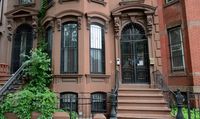
In the first case, Scheidelman v. Comm’r, T.C. Memo. 2010-151, Tax Court sustained the IRS’s complete disallowance of deductions totaling $115,000 that Scheidelman had claimed with regard to the easement donation. The court held that the appraisal obtained to substantiate the deductions was not a “qualified appraisal” because it failed to state the method and basis of valuation as required by Treasury Regulation § 1.170A–13(c)(3)(ii)(J) and (K). The appraiser had mechanically applied a diminution percentage to establish the value of the easement and failed to analyze any qualitative factors relating to the subject property.
Scheidelman appealed, and two years later, in Scheidelman v. Comm’r, 682 F.3d 189 (2d Cir. 2012), the Second Circuit vacated and remanded the case, holding that the appraisal was a qualified appraisal because it sufficiently detailed the method and basis of valuation. The Second Circuit explained
[f]or the purpose of gauging compliance with the reporting requirement, it is irrelevant that the IRS believes the method employed was sloppy or inaccurate, or haphazardly applied—it remains a method, and [the appraiser] described it. The regulation requires only that the appraiser identify the valuation method “used”; it does not require that the method adopted be reliable.
The Second Circuit also noted, however, that its conclusion that the appraisal met the minimal qualified appraisal requirements mandated neither that the Tax Court find the appraisal persuasive nor that Scheidelman be entitled to a deduction for the donation.
On remand, in Scheidelman v. Comm’r, T.C. Memo. 2013-18, the Tax Court found the preponderance of the evidence supported the IRS’s position that the easement had no value. The Tax Court determined that the appraisal Scheidelman obtained to substantiate the deductions was not credible for the same reasons it had determined that the appraisal was not a qualified appraisal—i.e., the appraisal involved the mechanical application of a diminution percentage and failed to analyze any qualitative factors relating to the subject property. The court also found that the valuation expert Scheidelman hired for trial was not credible, explaining
Ehrmann ignored studies suggesting a contrary result and adopted those supporting his client’s desired value. Ehrmann’s testimony had all of the earmarks of overzealous advocacy in support of NAT’s marketing program and, indirectly, [Scheidelman’s] tax reporting….
Expert opinions that disregard relevant facts affecting valuation or exaggerate value to incredible levels are rejected. . . . An expert loses usefulness to the Court and loses credibility when giving testimony tainted by overzealous advocacy.
Indefatigable, Scheidelman appealed again, and in Scheidelman IV the Second Circuit affirmed the Tax Court’s holding that the easement had no value. The Second Circuit first explained
‘[O]rdinarily any encumbrance on real property, howsoever slight, would tend to have some negative effect on that property’s fair market value.’ But neither the Tax Court nor any Circuit Court of Appeals has held that the grant of a conservation easement effects a per se reduction in the fair market value. To the contrary, the regulations provide that an easement that has no material effect on the obligations of the property owner or the uses to which the property may be put “may have no material effect on the value of the property.” And sometimes an easement “may in fact serve to enhance, rather than reduce, the value of property. In such instances no deduction would be allowable.” (citations omitted)
The Second Circuit agreed with the Tax Court that the appraisal Scheidelman used to substantiate her deductions as well as the testimony of the valuation expert she relied on at trial were entitled no weight. The Second Circuit also noted that, in 2013, the U.S. District Court issued a permanent injunction barring Erhmann and his firm from preparing any further appraisals for tax purposes.
In support of its holding that substantial evidence supported the Tax Court’s conclusion that the easement had no value, the Second Circuit quoted the IRS’s valuation expert, who explained that “in highly desirable, sophisticated home markets like historic brownstone Brooklyn, the imposition of an easement, such as the one granted … does not materially affect the value of the subject property.” The Second Circuit also noted that the Tax Court “drew the fair inference that ‘preservation of historic façades is a benefit, not a detriment, to the value of Fort Greene property’” from the testimony of the Chairman of the Fort Greene Association (a witness for Scheidelman), who explained that the Fort Greene Historic District “actually has created Fort Greene to what it is today…. it’s an economic engine for Fort Greene.” Finally, the Second Circuit found persuasive the fact that NAT had assured one of Scheidelman’s mortgagors that
[a]s a practical matter, the easement does not add any new restrictions on the use of the property because the historic preservation laws of the City of New York already require a specific historic review of any proposed changes to the exterior of this property.
Scheidelman is but one in a string of cases in which deductions for donations of façade easements to NAT have been disallowed in full or in substantial part. Those cases include:
- Herman v. Comm’r, T.C. Memo. 2009-205
- 1982 East LLC v. Comm’r, T.C. Memo. 2011-84
- Dunlap v. Comm’r, T.C. Memo. 2012-126
- Graev v. Comm’r, 140 T.C. No. 17 (2013)
- Gorra v. Comm’r, T.C. Memo. 2013-254
- 61 York Acquisition, LLC v. Comm’r, T.C. Memo. 2013-266
- Kaufman v. Comm’r, T.C. Memo. 2014-52
- Chandler v. Comm’r, 142 T.C. No. 16 (2014)
NAT also was the subject of a 2011 Department of Justice lawsuit alleging that NAT engaged in abusive practices. The suit settled with NAT denying the allegations but agreeing to a permanent injunction prohibiting it from engaging in the practices.
Nancy A. McLaughlin, Robert W. Swenson Professor of Law, University of Utah S.J. Quinney College of Law