
Nonprofit Finance Fund Survey
WARNING
This post is about a survey conducted by The Nonprofit Finance Fund, which advocates from a racial justice perspective. The group’s beliefs that racism is systemic might make this post a violation of Florida Law, to wit: The Stop Woke Act. A federal judge enjoined enforcement of the act late last year in a “blistering opinion” comparing Florida to the Netflix Series, Stranger Things. But if the injunction is lifted and Stop Woke yet prevails, your reading of this post shall be at your own risk of legal liability.
I’m just saying . . .

The Nonprofit Finance Fund is out with some informative empirical data regarding the impact of the last two years on the nonprofit sector. You might want to bookmark the report for later reference or cite. The report focuses on that impact as it relates to communities of color: Here are some snippets from The 2022 State of the Nonprofit Sector Survey:
Events of the last two years also accelerated a racial reckoning in this country. The murders of innocent Black Americans like George Floyd and Breonna Taylor sparked widespread calls for racial justice. The anti-Asian attacks in places like Atlanta and San Francisco ignited the Stop Asian Hate movement. As with the COVID-19 response, nonprofits were on the frontlines of these movements for racial justice and equity. We asked survey respondents: Is your organization working toward advancing racial equity? We also asked questions to understand: Is the sector more broadly moving forward on racial equity? Did these racial reckonings translate to more equitable funding for BIPOC-led organizations?
In a sector with such a large power imbalance between who controls the money and who uses it, there are always financial challenges and inequities. We gathered data to compare the experiences of BIPOC-led (Black, Indigenous, and person of color) organizations with those of white-led organizations. Despite the many commitments to racial equity and to diversity, equity and inclusion, long-standing inequities persist in the nonprofit funding system that favor white-led organizations. For example, BIPOC-led organizations had less access to unrestricted funding and corporate donations than their white-led counterparts.
The NFF’s web page has a series of YouTube videos summarizing its findings, one of which is embedded here:
Here are a few samples from a Stanford Social Innovation Review article summarizing the report:
A significantly higher percentage of nonprofits reported receiving funding from foundations in 2021 (51 percent) than in 2017 (38 percent). And, importantly, foundation funding became more flexible during a critical time of need. Flexible funding allowed nonprofits to adapt to the challenges of the COVID-19 pandemic, whether by modifying or starting programs, upgrading Internet speed and buying laptops for staff and clients as they adopted a remote working environment, or providing personal protective equipment to staff. In fact, 56 percent of nonprofits agreed that foundation funding was more flexible after March 2020, with only 12 percent disagreeing.
One survey respondent (who did not take the survey in 2018 but did in 2022) shared that their organization was able to redirect funds originally slated for in-home visits with new mothers to purchase good, quality strollers for families that didn’t have them. Staff and participants were able to meet outside while walking, getting fresh air and exercise along the way. We heard repeatedly how important flexibility was to supporting community needs.
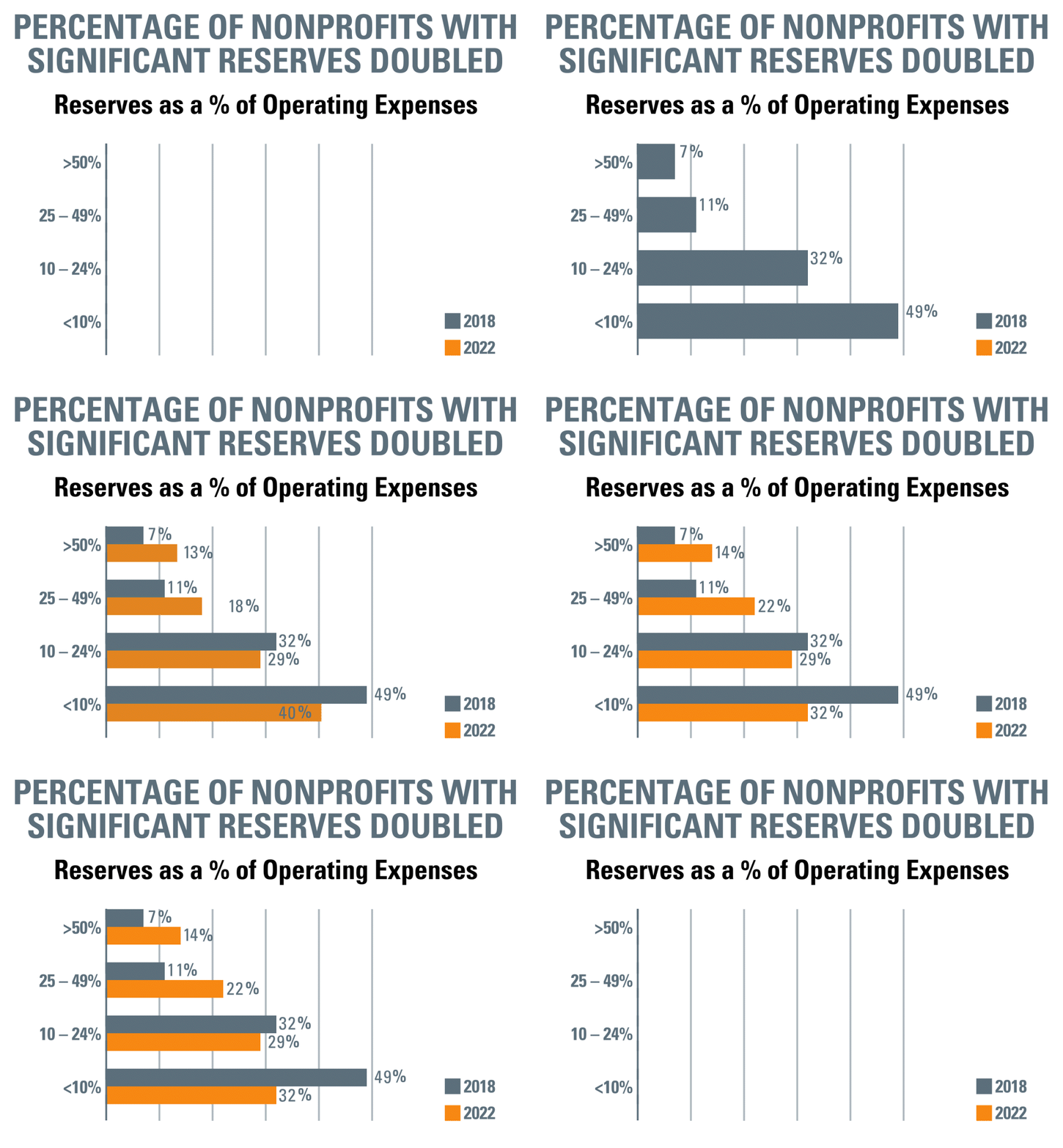
Two-thirds of organizations ended 2021 with a surplus—an uptick from 2017—and fewer had a deficit or break-even financials. By and large, this is good news for nonprofits, although there was also a small jump in organizations with very high deficits, which we defined as 25 percent or more of their operating expenses.
Nonprofit is a tax status, not a directive to break even financially. In the social sector, nonprofits reinvest surpluses to grow, change, and prepare for the future, making surpluses a strong driver of nonprofit resilience. When nonprofits operate from a stronger financial position, funders can help them maintain strong levels of reserves and cash on hand by funding general operating support and not penalizing those that operate with surpluses by withholding or clawing-back grants. Encouraging surpluses allows nonprofits to adapt and grow to meet changing community needs.
darryll jones