
Grand Canyon University’s Long Road Home: Non-Profit to For-Profit and Back Again (Or Not)
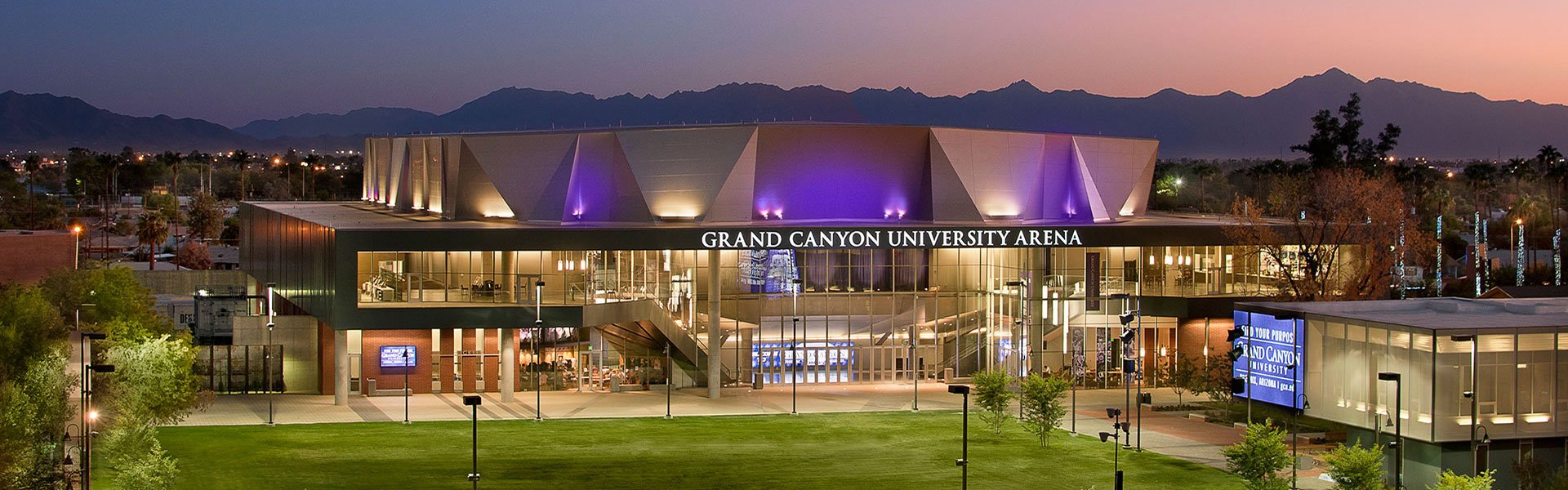
The IRS declared Grand Canyon University a 501(c)(3) organization; the Department of Education, applying the same tax regulations, said “not so fast!”
Grand Canyon University opened in 1949 as a Christian College for preachers, affiliated with the Southern Baptist Convention. For all but 13 years of the school’s history, the school was tax exempt under 501(c)(3). In 2004 when the economy was really heating up almost as if in anticipation of the 2008 crash, GCU was struggling, primarily for lack of enrollment. By 2008, enrollment was less than 1000 students. It needed donors or investors, one or the other. There being few donors around, the GCU Trustees decided to sell the nonprofit (“Old GCU”) to Grand Canyon Education, Inc (GCE) (formerly “Significant Education Group). A Baptist Press report at the time described the transaction in wistful melancholy terms:
One area that needed attention involved the management of the school’s business, Clifford said. “The people that have been running the school have hearts of gold. They are trusting, honest Christian people who have really been taken advantage of by vendors. A lot of things we’ve discovered involved well-meaning people who were more interested in the spiritual and academic quality.” As a result, he said, business contracts are being reviewed to improve the management process.
[Clifford stated that] the integrity of GCU’s Christian mission would be maintained. “As we promised in our last letter, the Grand Canyon University Board of Trustees has been working diligently the last three months to bring GCU into a stronger financial position to provide academic excellence within a Christian liberal arts institution,” he noted.
GCU alumnus Thane Barnes, executive director of the Nevada Baptist Convention and a former trustee of the Arizona college, said he is encouraged to learn of the new ownership of the school. “Michael Clifford and the Significant Education group have proven to be men of integrity and honesty,” Barnes told Baptist Press. “They want to return the university to its historic Christian roots and uniquely Christian mission.”
Clifford reassured Barnes and other Southern Baptists interested in the future of Grand Canyon University. “First and foremost, we are going to honor the heritage. I don’t know all of the history of where Southern Baptists feel the school has gotten away,” he said, “but I have some really good friends that are Southern Baptists and I’m asking them for help.” Clifford said a GCU representative will attend a meeting of the Arizona convention’s historical commission seeking input as to “how the school can honor that heritage and make it a part of our mission.”
By 2017, enrollment jumped to 17,500 students and the Governor declared that the 30 percent increase in home values and 30 percent decrease in crime near the University was all attributable to for-profit GCE’s economic impact. “Phoenix Mayor Greg Stanton agreed, saying the school has transformed what he termed the “Canyon Corridor” into a thriving city neighborhood. “Under President (Brian) Mueller’s leadership, we have seen that this academic institution has revitalized the Canyon Corridor into a thriving neighborhood in our city,” Stanton said.” In some respects, for-profit GCE acted more like a charity than a lot of other charities. GCE sunk $500,000 into a crime suppression effort with the City (which also kicked in $500,000), and partnered with Habitat for Humanity to refurbish 700 homes. In a later SEC filing, GCE boasted an $11 billion economic impact on Phoenix.
For various reasons, one of which was reportedly a desire to eliminate an annual property tax of nearly $10 million, GCE stakeholders desired to return to its nonprofit, tax exempt status it enjoyed for most of its history. Here is what GCU, Inc. [the for-profit] said to explain the proposed transaction to the SEC:
“The Board of Directors of GCE, together with the Board of Trustees of GCU, are again considering the possibility of returning the university to its historical non-profit status, which it held from 1949-2004. We believe this development would be in the best long-term interests of our students, faculty and staff, the community and our investors, in that it would:
|
|
• | Provide faculty and students equitable opportunities to participate in academic and co-curricular opportunities with our peer institutions without being segregated based on tax status. |
| • | Open up the world of non-profit philanthropic giving, grant writing and research opportunities. |
| • | Better enable the University to continue to hold the line on tuition – which has been frozen on the ground campus for 10 years – and keep higher education affordable for all socioeconomic classes of Americans. |
| • | Allow the university to continue to invest in infrastructure and maximize opportunities for faculty/staff growth. |
| • | Maximize opportunities for continued investments in the community. |
| • | Provide the opportunity for the University to become a full voting member of the NCAA. |
| • | Allow GCE to continue as a publicly traded educational services company that has the potential to provide services to other institutions in addition to GCU. |
In short, this return to our historical non-profit status would convey an accurate reflection of who GCU is today and will be in the future, and brings the University full circle as it continues its transition into one of the driving forces in higher education today.
GCU was a small non-profit private university for 55 years, but in 2004 found itself $20 million in debt and about to close its doors. Without a large donor base to turn to or the ability to rely on tax dollars, the University remained afloat by becoming a for-profit institution, securing investor funding and adding an online component to its academic offerings. In 2008, in order to develop a state-of-the-art online learning system, grow out the ground campus and ensure long-term stability, GCU went to the public markets for an infusion of capital to invest into the university. As a result of those investments, GCU today has a strong hybrid campus model that has enabled it to grow enrollment on the ground campus from less than 1,000 in 2004 to approximately 19,000 today, and create an online campus that now has more than 70,000 students, with more than half of those studying at the graduate level.
And here is how GCE, Inc. (referring to itself as “the Company”) described the method by which “New GCU” would return to its 501(c)(3) status:
- The Company would sell to New GCU academic and related operations and assets sufficient for New GCU to achieve status as an HLC-accredited institution. The purchase price for the transferred assets would be determined following receipt of third party appraisals and subsequent negotiation and would be paid in the form of a long-term note between the Company and New GCU subject to customary commercial credit terms. GCU’s current faculty, academic leadership and related staff would become employed by New GCU and New GCU would be governed by the current institutional board of trustees of GCU. The Company would retain all other employees and assets necessary to perform the third-party services contemplated by the sale, including an office complex where most services-related personnel are currently located.
- The Company and New GCU would enter into a long-term master services agreement pursuant to which the Company would provide identified technological, marketing, promotional, financial aid and other support services to New GCU in return for an agreed upon share of New GCU’s tuition and fee revenue. The revenue share between the two entities remains subject to completion of a transfer pricing study and subsequent negotiation, but is expected to be comparable to other shared services arrangements currently in place in the higher education marketplace and to reflect the level of services that the Company would be providing to new GCU. The terms of the master services agreement would comply with the 2017 HLC Guidelines.
In Part II, tomorrow, we will talk about how it came to be that New GCU achieved tax exempt status from the IRS, but was denied that same status by the Department of Education, both agencies having seemingly addressed the exact same private inurement issue.
darryll jones