
Stanford Law Students’ Civil Disobedience
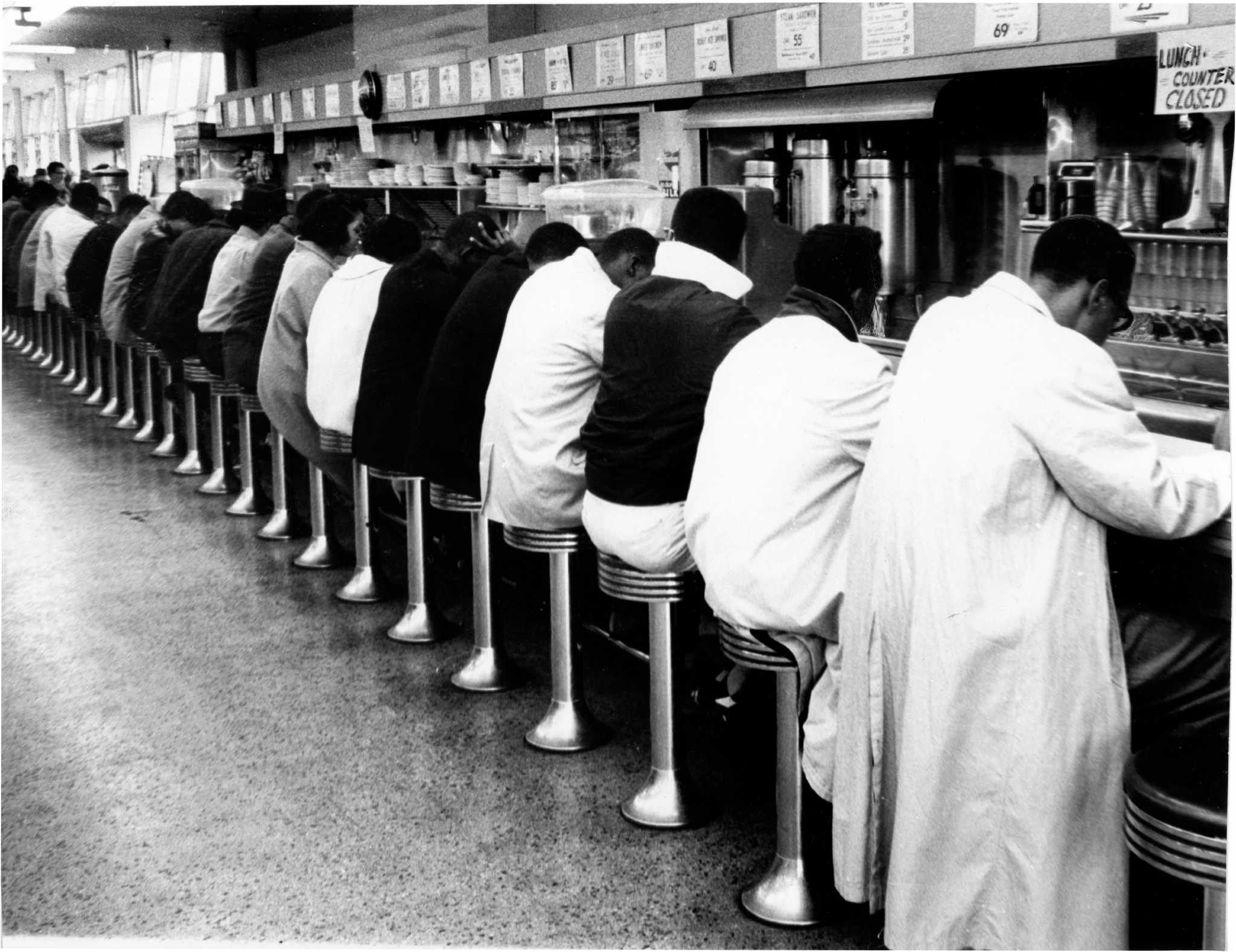
Nonprofit organizations are precluded from tax exemption if their purpose is to engage in civil disobedience. Probably not a huge consequence because nonprofits that rely on civil disobedience — like the Student Nonviolent Coordinating Committee — aren’t selling anything anyway. They are exempt from tax, as a practical matter, because they have no excess revenue.
Stanford law students — primarily those in nonprofits Outlaw and IRATE — risk taxation, of a sort, these days for engaging in civil disobedience. Dean Martinez, a highly regarded constitutional and international law scholar, wrote a beautiful ten page memorandum to Stanford students and stakeholders in response to the whole bruhaha about students shouting down a conservative judge invited to speak by the Federalists. First Amendment purists from left and right are congratulating Stanford and patting themselves on the back. And let’s just get this straight before we go any further. Me debating Dean Martinez on anything free speech would be like a man with a water pistol at a gun fight. Besides, any first year law student knows she is entirely right as far as her memo goes. Its First Amendment orthodoxy. I gotta say, though, that Dean Martinez got this thing all wrong. If you are a tax scholar, every accession to wealth looks like gross income. If you are a hammer, every problem looks like a nail. And I guess every heckler looks like a First Amendment violation to a constitutional scholar.
Here is a recap of what happened from academeblog. A YouTube video of the event is below:
Stanford’s Federalist Society, a conservative law student group, invited Trump-appointee fifth circuit judge Kyle Duncan to speak. In IHE, Scott Jaschik (who has been doing excellent reporting lately on the AP African-American Studies course and other casualties of the right-wing culture wars) explained that Duncan “has a history of anti-LGBT activism. He argued before the U.S. Supreme Court against the constitutionality of same-sex marriage and led efforts to defend state bans on same-sex marriage.” Students who disagreed with giving Duncan space on campus asked FedSoc to move his talk off campus or to put it on Zoom. FedSoc refused. According to the Stanford Daily, a law school student coalition composed of Identity and Rights Affirmers for Trans Equality (IRATE) and organization Outlaw organized people to protest the talk. When the protestors made it impossible for Duncan to begin, he asked for an administrator to intervene. Associate Dean Tirien Steinbach came to the front. “I’d like to help,” she says; “Can I help?” “I have prepared remarks but they are not letting me,” Duncan says. “I want you to be able to give your prepared remarks,” Steinbach says. For the next nine minutes or so, Steinbach does a remarkable job clearing the way for Duncan while– no, in fact, by– addressing the very real concerns the students have and that all of us should have in situations such as the one in question in which it might appear that universities are normalizing a dehumanizing far-right political agenda.
Stanford’s Associate Dean reinforced to the heckling students that they were, in fact, violating the Judge’s right to free speech and indeed everybody else’s because they were not allowing those in attendance to hear the Judge’s odious thoughts. Ok, fine the right to free speech includes the right to hear ideas even I know that and I teach tax, something important and worthwhile, not manners. She was the Associate Dean for DEI, I should add, so what looked like heckling to us looked more like oppression to her. To a hammer every problem looks like a nail. It doesn’t weaken the condemnation of heckling to acknowledge that the Judge’s views do violence, at least in the proverbial sense, to “others” at Stanford. Well things continued to get out of hand, the hecklers succeeded in shutting down the event. The video below captures much of it. Associate Dean Steinbach is “on leave,” according to the Dean’s memo because as representative of “government” (in this case, the governing authority was the United States of Stanford), she appeared to permit or condone the heckler’s veto.
The Dean’s memo concisely analyzes the incident in light of First Amendment jurisprudence — heckler’s veto, limited public forum, and government duty to not impose an orthodoxy of speech or thought. Here’s the thing, if that memo needed to be written, there is a bigger problem. Its Stanford, you would think the students would know these basic marketplace of idea cornerstones. Maybe the Dean knew they knew, but wanted to publicly reiterate Stanford’s fidelity to free speech in response to public outcry. Fine. But she still missed a deeper issue or at least the opportunity to discuss whether there is ever a higher moral duty to act in violation of laws or deeply held social norms.
History shows that oppressed people, those whose speech or ideas — the currency of their lives — are under siege, are more often powerless, or at serious disadvantage to the orthodoxy of oppression, including observing manners and niceties that invariably favor and legitimize the status quo ante. Sometimes the only weapon available to the oppressed is civil disobedience; its the powerful tool of the disenfranchised and its supposed to make those who think themselves innocent of oppression, because they stand by doing nothing or actively support the oppression, uncomfortable. Sure the students knew that they were themselves violating the First Amendment, that’s the whole point. These are smart kids, some of whom have presumably completed Constitutional Law.
So they could have lined up behind the microphone and waited patiently to express their disdain but what good would that have done towards advocacy of their cause? Personally, I would have sat through the Judge’s comments quietly but only because he was discussing LGBTQ rights. I might have been uncomfortable with all the heckler’s yelling. I would have that luxury because of my emotional detachment. Had he been discussing civil rights for African Americans or whether the Supreme Court should strike down diversity, I would not have categorically excluded civil disobedience as a strategy in response. Here is how the Stanford Encyclopedia of Philosophy discusses civil disobedience:
From the Boston Tea Party to Mahatma Gandhi’s Salt March, and from suffragists’ illegally casting their ballots to whites-only lunch counter sit-ins, civil disobedience has often played a crucial role in bending the proverbial arc of the moral universe toward justice. But what, if anything, do these acts, and countless others which we refer to as civil disobedience have in common? What distinguishes them from other forms of conscientious and political action?
On the most widely accepted account, civil disobedience is a public, non-violent and conscientious breach of law undertaken with the aim of bringing about a change in laws or government policies (Rawls 1999, 320). On this account, people who engage in civil disobedience operate at the boundary of fidelity to law, have general respect for their regime, and are willing to accept the legal consequences of their actions, as evidence of their fidelity to the rule of law. Civil disobedience, given its place at the boundary of fidelity to law, is said on this view to fall between legal protest, on the one hand, and conscientious refusal, uncivil disobedience, militant protest, organized forcible resistance, and revolutionary action, on the other hand.
This picture of civil disobedience, and the broader accounts offered in response, will be examined in the first section of this entry, which considers conceptual issues. The second section contrasts civil disobedience, broadly, with other types of protest. The third focuses on the justification of civil disobedience, examining upstream why civil disobedience needs to be justified, and downstream what is its value and role in society. The fourth examines states’ appropriate responses to civil disobedience.
To be civilly disobedient, one must intentionally violate laws, norms or whatever else is relied upon in subtle or explicit perpetuation of oppression and then take whatever punishment is meted out. The Dean deprived the heckler’s the fruition of their plan by decreeing that everybody has to attend mandatory training. Not just the hecklers, everybody, which allows for the avoidance of explicit “punishment.” But by not speaking at all to civil disobedience as a response to speech, Stanford implicitly took a side, legitimizing the speech oppression against which the students were being civilly disobedient. If the students really want to be like Ghandi or MLK, Jr., they should openly refuse to attend mandatory training and let the chips fall. Otherwise, all this incident will teach us is to shut up and follow the rules.
darryll jones