
Indiana Becomes Latest State to Protect Donor Privacy
Would we even care if it were not for politics? Or would we consider freedom of association and NAACP v. Alabama ex rel. Patterson sacrosanct so that of course donors, should have a right to keep their identity secret?
Nonprofits are typically contrarian, against government and business. Regardless of their views, there is bound to be more than a few who don’t like them or their donors. Why does it matter who donates, if the donations are legal? I am sort of a free speech purist, believe it or not, only because their aren’t many non-STEM topics about which I cannot be educated. If some right wing social welfare nut group wants to work to get some right wing nut job elected, its my duty as a citizen to educate myself and vote for or against the candidate. And if I don’t want others to vote for him, I should advocate that position, maybe with my own social welfare organization. What I should not feel entitled to do is get the name of the people who support the right wing nut job organization and then dox or cancel them in the court of public opinion. That’s what Alabama wanted to do with the NAACP years ago but with a lot less talk and a whole lot more violence. I also think we turn the sinister background music up too loud every time we talk about “dark money.” I hate that Leonard Leo has successfully turned the Court into a group of ethically challenged conservative jurists, but the vote is ultimately much stronger than the dollar. Dark money skews the vote, alright, but its the vote of only the minority who turnout. (The 2020 Presidential election was the first in a long long time that more than 50% of the population voted, by the way). If we turned out consistently, come hell or high water and despite the modern day genteel efforts to suppress the vote, dark money’s influence would be dispersed and thereby less effective.
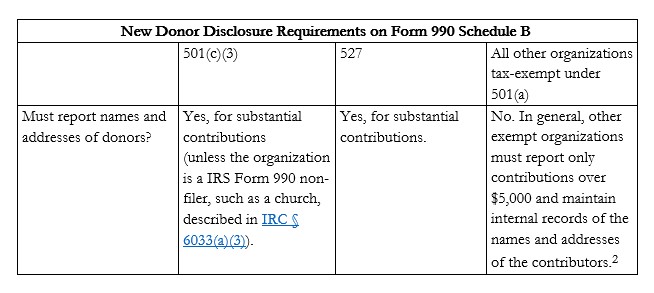

Besides, if there is a problem, it is that social welfare organizations have no enforceable limits on how much they can spend on political activities. If dark money is a problem, lets fix that, instead of compromising people’s rights to participate in right wing nut job organizations. So its a “ho hum” matter to me that Indiana has become the latest state to codify donors’ rights to privacy:
Indiana Gov. Eric Holcomb has signed a law allowing nonprofits to prevent donors’ identities from being publicly disclosed in a move that many believe protects the rights of people to donate to causes without fear of repercussion. Holcomb signed House Enrolled Act No. 1212 into law on Thursday, along with dozens of other bills that touched on a wide variety of issues. Introduced in January, Indiana lawmakers overwhelmingly approved the legislation last month by a vote in the House of 74-20 and a vote of 48-1 in the Senate.
The legislation says that public agencies cannot “compel any person or nonprofit organization to provide the public agency with personal information” or “publicize, or otherwise publicly disclose personal information in the possession of the public agency.”
“To me, anyway, the most critical reason is that sometimes we give to organizations that we feel strongly about and others feel differently about. And in those cases, there’s an opportunity for harassment, intimidation,” said IPA CEO Claudia Cummings, reported Indiana Public Media, an affiliate of PBS, last month.
Alliance Defending Freedom Senior Counsel Zack Pruitt, whose organization has defended in court the right of people to keep their donations anonymous, celebrated the law’s passage.
“Every American should be free to peacefully support causes they believe in without fear of harassment or intimidation. We have seen states irresponsibly mandate disclosures that endanger donors, foster a culture of doxing, and discourage charitable giving,” said Pruitt in a statement released Friday.
“We commend Gov. Holcomb and the Indiana Legislature for taking a stand for the ability of individuals to privately support charities and other nonprofit organizations of their choice without unnecessary government interference and the resulting harassment that can ensue.”
In 2021, the United States Supreme Court ruled 6-3 in the case of Americans for Prosperity Foundation v. Bonta, Attorney General of California that California could not force nonprofits to disclose their private donor information.
“The disclosure requirement ‘creates an unnecessary risk of chilling’ in violation of the First Amendment … indiscriminately sweeping up the information of every major donor with reason to remain anonymous,” read the majority opinion, in part.
“The petitioners here, for example, introduced evidence that they and their supporters have been subjected to bomb threats, protests, stalking, and physical violence.”
darryll jones