
Left and Right Wing Giving Preferences
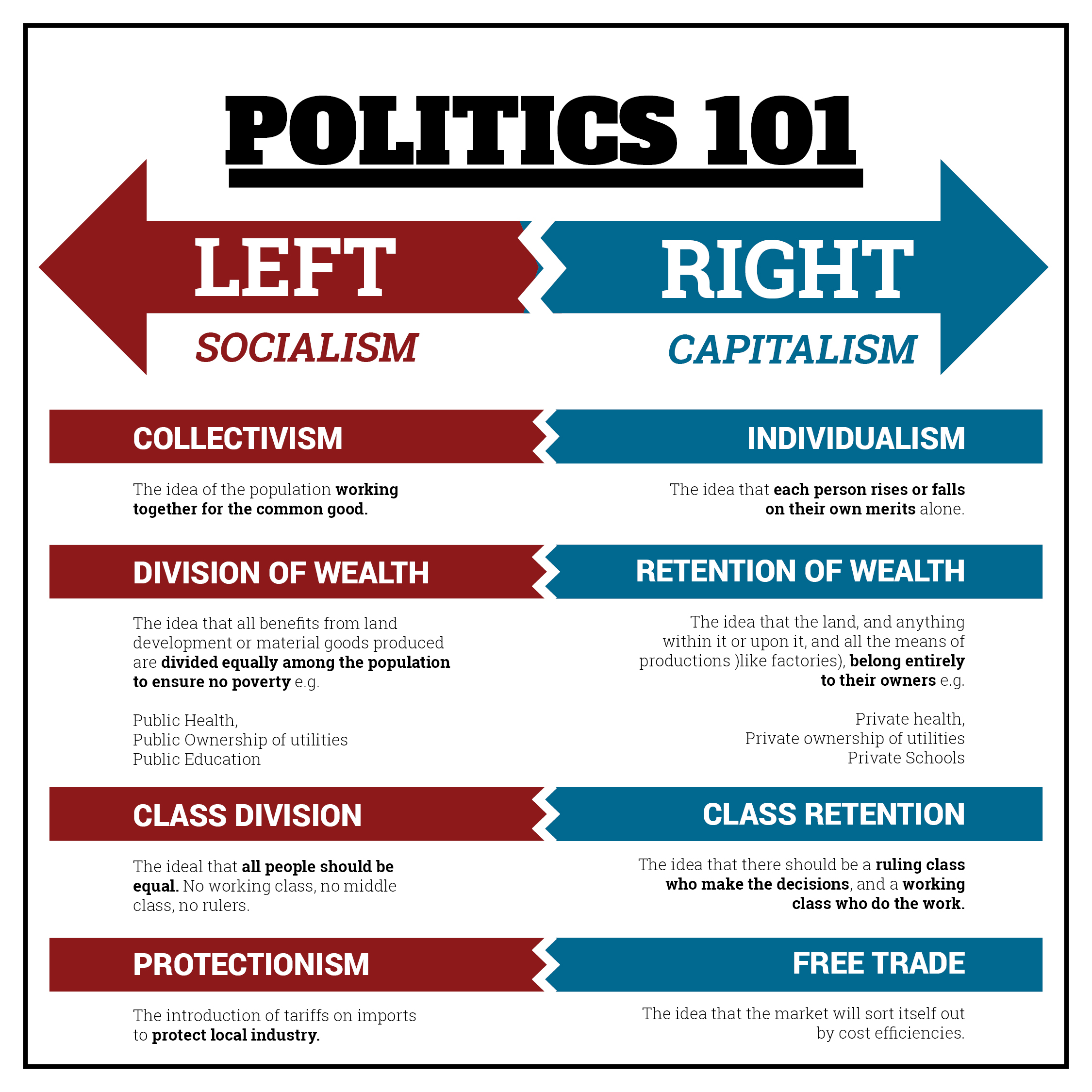 I don’t put too much credence into studies that correlate charitable giving to political orientation. That one group gives more or less than another. For one, the group that gives more in services than capital will always be undercounted. Secondly “conservative” and “liberal” are so relative, subjective and incapable of objective definition any correlation seems spurious. Researchers try anyway. Here is an interesting article doing just that, making a conclusion that has intuitive appeal. “Left-leaning” people give more internationally, “right-leaning” people direct more of their giving domestically. Overall “left-leaners” give more than “right-leaners” perhaps because the latter have more faith in capitalism and ascribe to “winner take all-ism.” Leftists call that plain old greed. Leftists, as the picture suggests, have more faith in socialism and ascribe to equitable division of economic spoils, an outcome capitalist might derisively label “participation trophies.” Anyway, here is the abstract:
Abstract
In a world severely put under stress by COVID-19, generosity becomes increasingly essential both when able to transcend local boundaries, building upon universalistic values, and when directed toward more local contexts, such as the native country. This study aims to investigate an under researched determinant of generosity at these two levels, a factor that captures one’s beliefs, values, and opinions about society: political ideology. We study the donation decisions of more than 46,000 participants from 68 countries in a task with the possibility of donating to a national charity and an international one. We test whether more left-leaning individuals display higher generosity in general (H1) and toward international charities (H2). We also examine the association between political ideology and national generosity without hypothesizing any direction. We find that more left-leaning individuals are more likely to donate in general and more likely to be generous internationally. We also observe that more right-leaning individuals are more likely to donate nationally. These results are robust to the inclusion of several controls. In addition, we address a relevant source of cross-country variation, the quality of governance, which is found to have significant informative power in explaining the relationship between political ideology and the different types of generosity. Potential mechanisms underlying the resulting behaviors are discussed.
darryll jones