
Opinion Page: Putting The Charity Back In Charitable Hospitals — A Bipartisan Agreement?
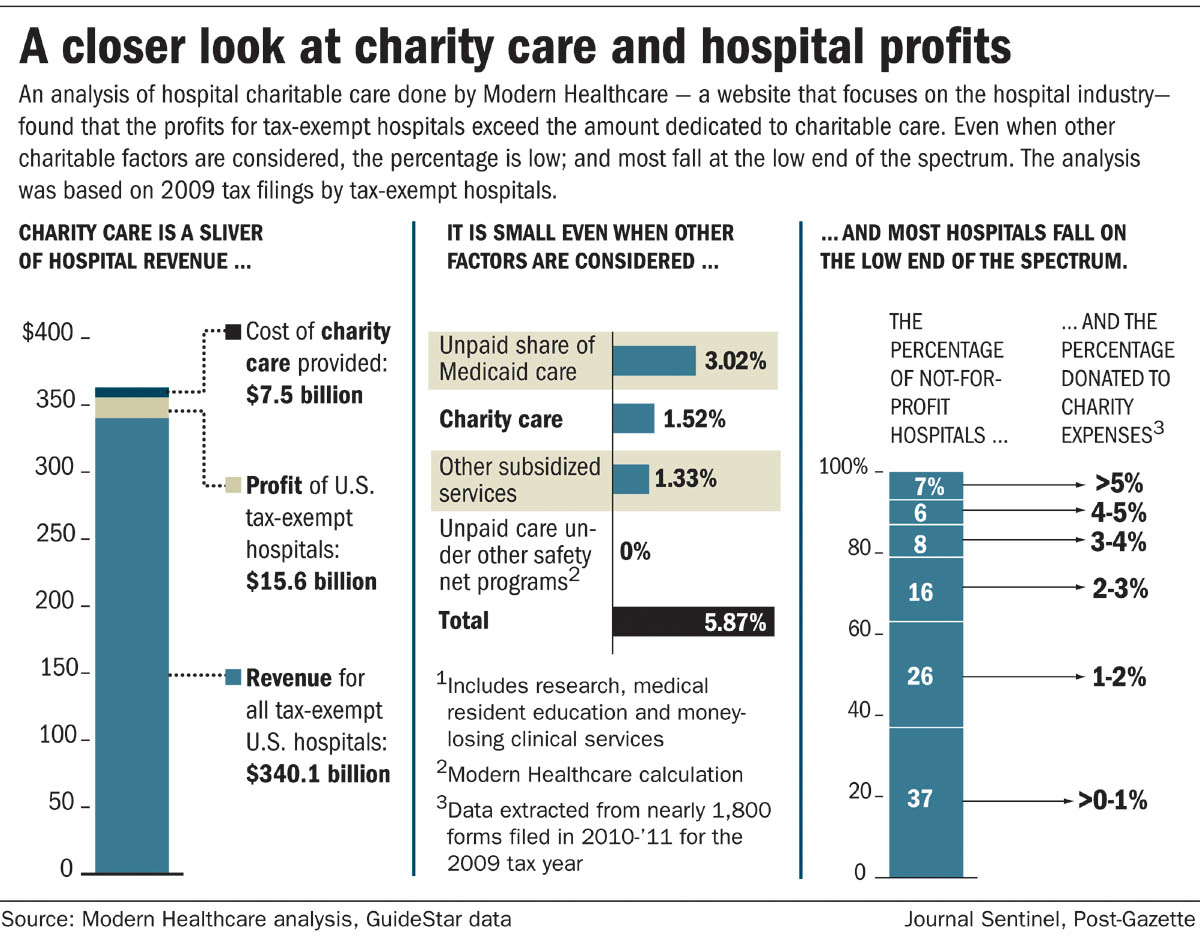
The new Chairman of the House Ways and Means Committee Jason Smith (R-MO) recently held a hearing on charitable hospitals. The hearing continued a long bipartisan/bicameral interest of Congress in considering the substantial tax and spending benefits charitable hospitals receive from federal/state/local government — which unfortunately far outweigh the amount of charity care that these hospitals provide to those in need. As discussed below, requiring charity hospitals to be charitable is something that should attract bipartisan interest – and could also help address concerns about spending as Congress looks at discussions on the debt and debt limit.
Chairman Smith’s statement makes it clear: “Recent studies and articles have raised concerns, however, that the level of community benefit, which includes charity care, provided by tax exempt hospitals has been inadequate compared to the value of their tax exemption. . . The level of executive compensation is particularly alarming. The top 10 nonprofit CEOs average more than $7 million annually. Some as high as $14 million. This further questions whether these facilities are living up to their mission statement. ”This sobering overview by the Chairman is supported by the eye-blinking number of stories in the media about charity hospitals failing to provide basic charity care. A useful overview and cites to many of these stories and studies the Chairman is alluding to are contained in a fine analysis of charitable hospitals in Wayward Samaritans — a recent SSRN article from two DC-based attorneys.
Much-needed reform — requiring charitable hospitals to help those in need (and at a minimum not grind the poor) — is an issue that Chairman Smith I believe can look to bipartisan/bicameral support in the Congress – possibly the Chairman of the Senate Finance Committee, Senator Wyden (D-OR) as well as my old boss Senator Grassley (R-IA). Voices on the left have long-advocated for reform of charitable hospitals. Finally, there is no reason that the Treasury Department and the administration can’t show leadership in this area – and speak to (and support) reform of charitable hospitals.
I would encourage policy makers to revisit the original Finance Committee staff discussion paper on nonprofit hospitals (that was the foundation for the later ACA reforms) that I helped draft which provides a strong analysis and detailed justification for establishing a requirement of a 5% charity care requirement for nonprofit hospitals. A 5% requirement of charity care is a straight-forward test that can be administered – and more importantly, provide real meaningful benefit to those in need. In addition, a focus on charity care takes us out of the morass of “community benefit” that has been a hot mess for the IRS to address according to the GAO testimony at the hearing. An alternative might be to consider having the charity hospital calculate all the federal, state and local taxes that it would owe if it were a for-profit corporation and have its charitable care amount equal that amount of foregone taxes (and tax benefits).
For prior coverage of the hearing on exempt hospitals, see here.
darryll jones