
The Submerged State: Are Direct Appropriations Better than Indirect Charitable Subsidies?
From The Submerged Welfare State
As a daily beneficiary of the U.S. socialist-capitalist system — the U.S. is neither fish nor foul, lets face it — I much prefer my socialist side dish via direct appropriations. I’d rather government just give me a check for my kids’ college expenses, for example, than make me jump through hoops to claim some sort of tax credit for college expenses. Besides, the indirect subsidy in that case doesn’t do anything for poor people unless the credit is refundable maybe. Yesterday, I remarked (entirely without much thought) that maybe direct appropriations would be superior to tax exemptions in the quest to eradicate health care poverty. I was surfing through SSRN later and found this timely and only recently uploaded article entitled, The Inefficiency of Private Support for Public Health: Comparing Nonprofit Biomedical Research Funding with the NIH. Here is the abstract:
The U.S. has two systems of funding research at universities—a public one of Congressional appropriations and a private “submerged state” involving nonprofit funders subsidized by taxpayers. Here we examine the case of biomedical research and demonstrate that the “submerged state” can be costly and markedly less efficient at producing public goods. Using disability-adjusted life years (DALYs), we compare published outputs of biomedical research awards from nonprofit funders to grants from the National Institutes of Health (NIH). We apply a dataset of university funding and create novel linkages between grants and publications addressing diseases. Using this crosswalk, we demonstrate that nonprofit funders inefficiently benefit public health. Publications they fund are associated with fewer DALYs on average and are collectively less representative of the burden of disease than NIH-funded publications. This view implicates the inefficiency of the submerged state in biomedical research for public health, and is consistent with the critique that philanthropic activities represent publicly-sponsored expressions of private good.
Tax exemptions and charitable contributions as the currency of the “submerged state.” I like how that sounds and, honestly, had not heard the phrase before. Turns out its a whole real thing, not just a MAGA sounding conspiracy. Here is how Professor Suzanne Mettler explained the concept in a New York Times op/ed:
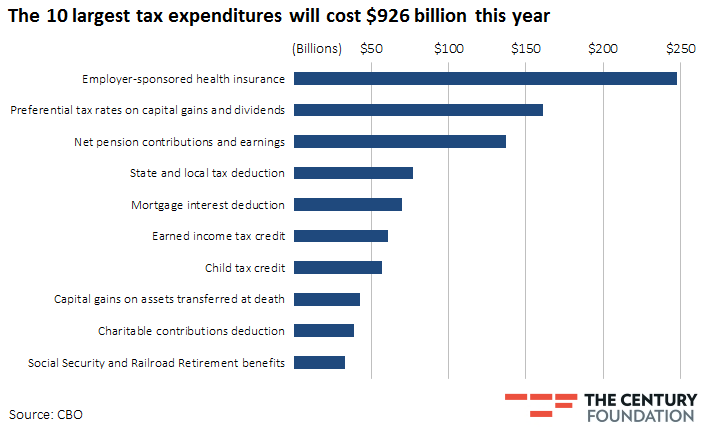
The final group of policies, what I call the “submerged state,” is largely invisible because its benefits are channeled through the tax code and subsidies to private organizations. These include the home-mortgage-interest deduction and the exemption from taxes on employer-provided health and retirement benefits. Using “submerged” benefits is nearly as common as using more visible policies.
Even personal encounters with the submerged state fail to make most people recognize that they have benefited from government. The greater the number of visible policies an individual had used, the more likely he or she was to agree that “government programs have helped me in times of need,” but greater use of policies of the submerged state had no comparable impact.
The submerged state obscures the role of government and exaggerates that of the market. It leaves citizens unaware of the source of programs and unable to form meaningful opinions about them. Until political leaders reveal government benefits for what they are by talking openly about them, we cannot have an honest discussion about spending, taxes or deficits. The stipulation in the new health care reform law that W-2 forms must indicate the value of untaxed employer-provided health care benefits is a step in the right direction. The government should also provide “receipts” that inform people of the size of each benefit they get through the tax code.
The threat to democracy today is not the size of government but rather the hidden form that so much of its growth has taken. If those who assume government has never helped them could see how it has, it might help defuse our polarized political climate and reinvigorate informed citizenship.
darryll k. jones