
Drugs and Church Tax Exemption
 From Drugs and Spirituality
In tiny Lexington, North Carolina there is a small former sanctuary called Southside Baptist Church. It never had very many members even in the best of times. A few years before Covid-19, a smooth talker came to town, a fella named Josh Price. He noticed the Church’s vulnerability to hostile takeover and did just that. Apparently, there was a brief power struggle resulting in a special election. The few congregants voted for the cool new pastor come to town, turning their backs on the patriarch of the Church’s longest attending families. Maybe they thought the FNG’s charisma would reinvigorate things. The incumbent family left the church after the coup and never returned. Those who voted for the incumbent but stayed anyway noticed some strange things almost immediately. They and eventually those who supported the new guy slowly left, until only the pastor and his son remained. It soon became apparent that the new guy was using the church to manufacture and distribute drugs. All rather openly, which attracted law enforcement’s attention. When former church members learned of Reverend Price’s arrest, some lamented that he had stolen a family heirloom, the place where babies were presented to God, people got married, and loved one’s laid to rest. One member said Reverend Price and his son should burn in hell.
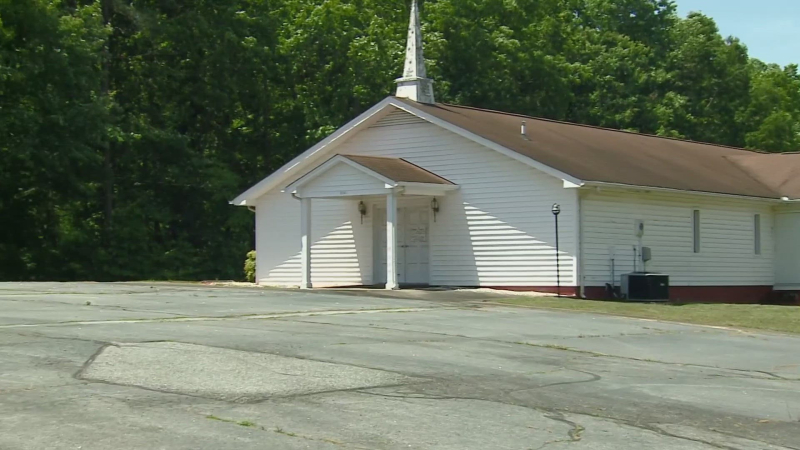
Southside Baptist Church
Last week, the Service released Private_Letter_Ruling_202336025 describing facts remarkably similar to the sad facts of Southside Baptist Church. Either the ruling is about the Southside Baptist Church, or we might have an epidemic of drug dealing churches on our hands The ruling provides a fairly straight forward example of the Church Audit Procedures and an apparently coordinated effort between local law enforcement and IRS CID. Law enforcement raided the church and arrested the Pastor (and his son) on June 2, according to media reports, and the PLR is dated June 5, 2023. That’s a pretty striking coincidence if that is all it is. There are lots of redactions in the PLR but it sure looks like it was a local prosecutor or the Attorney General who dropped the dime by filing a 13909 complaint with the Service, precipitating the audit. Or maybe there wasn’t coordination. Because the Church stupidly filed a 1023. That makes me think Reverend Price saw the walls closing in and, in a last-ditch effort, decided to disguise his activities as a church, openly espousing the use of weed and mushrooms. Whatever the case, Reverend Price explained that his “meetings” are spiritually based and focus on helping the members of the Church achieve a greater appreciation of the Lord based on religious utilization of cannabis. Cannabis provides for greater plasticity of thought . . .”
Well, the PLR concludes that the Church is operated for an illegal purpose and is therefore not tax exempt. Continue reading below the fold for excerpts.
darryll k. jones
Government’s Position:
Issue 1 — Southside Baptist Church should not be recognized as an organization described in IRC section 501(c)(3) because it failed to demonstrate that it qualified for such recognition, the information uncovered by the IRS shows the Church distributes cannabis, and members consume cannabis.
Southside Baptist Church does not satisfy the operational test of Regulations section 1.501(c)(3)-1(c)(1) . Whether an organization operates exclusively in furtherance of an exempt purpose is a question of fact. An organization seeking tax-exempt status under IRC section 501(c)(3) carries the burden of proving that it satisfies the requirements of the statute, see Harding Hospital, 505 F.2dat 1071 . Only an insubstantial portion of the activity of an exempt organization may further a nonexempt purpose. Because the Church is engaged in activities that contravene federal law, the Church serves a substantial nonexempt purpose. As the Supreme Court held in Better Business Bureau of Washington, D.C., Inc. v. United States , the presence of a single nonexempt purpose, if substantial in nature, will destroy the exemption regardless of the number or importance of truly exempt purposes.
The common law of trusts specifies that a charitable trust cannot be created for an illegal purpose. See Restatement (Second)of Trusts, Section 377. Similarly, the Supreme Court noted in Ould v. Washington Hospital for Foundlings , that “[a]charitable use, where neither law nor public policy forbids, may be applied to almost anything that tends to promote the well-doing and well-being of social man.’ Like a trust, an IRC Section 501(c)(3) organization cannot be created for a purpose that is illegal. The literature uncovered by the IRS and the Church’s response to the complaint show the Church’s specific purposes is the consumption and distribution of cannabis supposedly during and after religious services. Because the Church engages in activities that contravene federal law, [redacted data] serves a substantial nonexempt purpose. See Rev. Rul.75-384 , supra; Mysteryboy, Inc. v. Comm’r.
Southside Baptist Church is not described in Regulations section 1.501(c)(3)-1(d)(2) which provides that the term “charitable” as used in IRC section 501(c)(3) in its generally accepted legal sense. Advancement of religion has long been recognized as a charitable purpose. However, a trust is invalid if its purpose is illegal. The common law of trusts specifies that a charitable trust cannot be created for an illegal purpose. Because [redacted data] engages in activities that contravene federal law, [redacted data] serves a substantial nonexempt purpose.