
National Council of Nonprofits Submits Political Activity and Foreign Funding Responses to Ways and Means RFI.
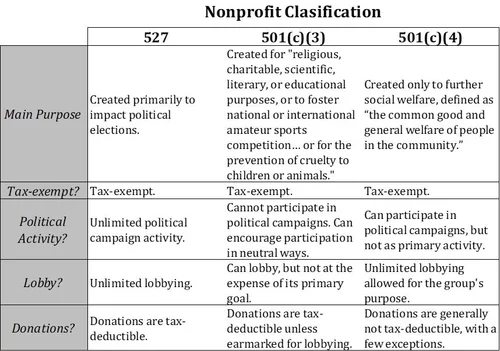
We previously posted about the Ways and Means Request for Information regarding political activity of (c)(3)s and (4)s and the responses some of our bloggers and other exempt org scholars drafted. The National Council of Nonprofits has submitted its own set of responses. Before answering the questions the NCN sets forth four provocative and arguable (at least to my mind) “overarching principles.” Here are some snippets:
The National Council of Nonprofits appreciates this opportunity to respond to the August 14, 2023, Request for Information (“Chairs’ letter”) regarding perceived “political” activities of tax exempt, nonprofit organizations. As the largest network of 501(c)(3) charitable nonprofits in the United States, we embrace this chance to highlight the core beliefs and activities of nonprofit organizations and to correct common misperceptions about the “why” and “how” of charitable operations. The National Council of Nonprofits champions, connects, and informs nonprofits across the country. Our network is committed to, and indeed often pioneered, effective trainings and materials on nonpartisan engagement in communities to promote civic engagement. It is from this deep experience and engagement that we offer this response to the Request for Information. We emphasize up front that as people deeply engaged in America’s charitable nonprofits, we do not see systemic or widespread abuses suggested in the Chairs’ letter. Still, we welcome the scrutiny and all efforts to root out bad actors seeking to politicize or exploit the charitable nonprofit sector.
Overarching Principle #1: Nonpartisan, Now and Forever.
Much of the Chairs’ letter raises questions about the politicization of the charitable nonprofit sector, whether through people’s brazen disregard for the law, surreptitious evasion, or claims of uncertainty about what the law proscribes. There must be no doubt about the position of the charitable nonprofit community. The overwhelming majority of 501(c)(3) organizations – frontline charities, churches, and foundations – are nonpartisan in law, fact, and culture, and are committed to remaining that way to ensure their integrity and impact. Since 1954, section 501(c)(3) of the tax code has protected charitable, faith-based, and philanthropic organizations from partisan, election-related activities. That is when Congress added the third proviso, commonly known as the Johnson Amendment, which now reserves tax-exempt status and the ability to receive tax-deductible charitable donations only to organizations that do “not participate in, or intervene in (including the publishing or distributing of statements), any political campaign on behalf of (or in opposition to) any candidate for public office.” 26 U.S. Code § 501(c)(3). The Johnson Amendment was noncontroversial when originally adopted, when it was signed into law by President Eisenhower, and when it was strengthened later by President Reagan.
Overarching Principle #2: All honest efforts to protect the sector from encroaching partisanship are welcome.
Because nonprofit nonpartisanship is core to charitable organizations, we welcome all efforts to root out corruption, politicization, and self-serving behavior. This help is appreciated whether from the Chairs’ letter, other engagement by and with Congress, federal and state law enforcement officials,5 the news media,6 and/or the public. While the answer to any question of partisan behavior may be in the eye of the beholder (see Overarching Principle #3, below), robust scrutiny must be encouraged because the stakes are so great.
We have no knowledge about whether the allegations in a recent report from the Capital Research Center are true or not. But we do know from media accounts and visible policy actions that the allegation in the CRC report that “there is no conservative equivalent” must be subjected to scrutiny. The gutting of the IRS budget over the past decade, plus the 2019 termination of required donor disclosures to the IRS for some non-charitable nonprofits, and a Supreme Court decision and recent state laws blocking reasonable access to evidence of fraud have significantly hindered the ability of federal and state law enforcement to detect and stop bad actors seeking to funnel hidden “dark money” to influence partisan elections. Charitable nonprofits are deeply disturbed by efforts – whether from the left or the right – to misuse them to abuse public trust, violate the law, and stain the goodwill of charitable organizations for partisan purposes.
Overarching Principle #3: Conflation Breeds Confusion.
In the field of nonprofit law, words matter. By that we mean that when vague, undefined terms are bandied about, like “political advocacy” and “political nonprofits,” the public is justifiably confused. It compounds the confusion when the news media, politicians, and activists mislabel organizations using terms that suggest violations of the law that, if labeled more correctly, would lead to accuracy and understanding. Some people may see issues like abortion, immigration, and climate change as “political,” but at their core these are public policy issues that may or may not happen to align with specific political parties at any given time.11 The distinction between the types of nonprofits also matters. Federal law has long recognized the fundamental distinction for charitable nonprofits between partisan political electioneering (which is expressly forbidden) and permissible nonprofit advocacy, which comes in many forms, including lobbying, engaging in ballot measures (such as initiatives, referenda, and public bonding issues, which the law technically treats as lobbying), and promoting public engagement through nonpartisan election-related activities. While charitable nonprofits can, do, and should advance their missions through advocacy, charitable nonprofits must remain entirely nonpartisan.
Overarching Principle #4: Charitable nonprofits and civic engagement are synonymous.
Charitable nonprofits operate in local communities across America. They feed, heal, shelter, educate, inspire, enlighten, and nurture people of every age, gender, race, and socioeconomic status, and they foster civic engagement and leadership development, drive economic growth, and strengthen the fabric of our communities. Their specific missions may appear divergent when looking at the individual subsectors, such as the arts and culture, education, environment and animals, faith-based, health care, human services, philanthropy, and so much more, but collectively they share common broader missions of improving lives, strengthening communities, and often advancing cherished American values of individual freedoms of expression and beliefs.12 As Alexis de Tocqueville observed in 1840, the American spirit is manifested in “associations,” his term for what today are known as charities.13 As with their work on the census, social services, and community healing, charitable nonprofits have the closest connection to the people in communities, serving as trusted partners. When there is a deficit in democracy, as in large populations of eligible voters remaining unregistered and disengaged, it is logical for the groups in their communities to connect and engage.
The letter goes on for nearly 25 pages and is very well footnoted. Like the responses submitted by our blog colleagues, it probably should be downloaded because it surveys the whole area of political activity by (c)(3)s and (4)s from the perspectives of “boots on the ground.”
darryll k. jones