
Italy and Germany Spar Over NGO Migrant Rescue Boats and Humanitarian Assistance
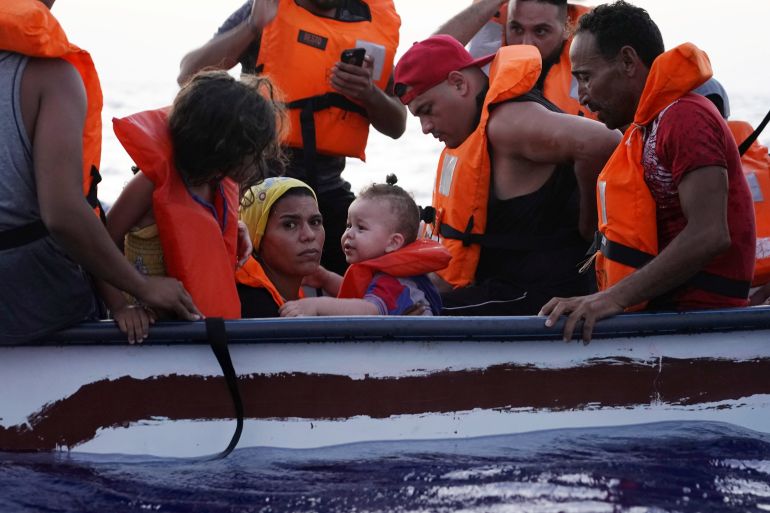
In Berlin, the Bundestag has resolved to provide financial assistance to NGO’s operating migrant rescue boats in the Mediterranean Sea. It also provides federal grants to NGOs providing humanitarian assistance to refugees in foreign countries. And Italy is none too happy about that. It already demands that NGO boats rescue no more than one group of drowning migrants at a time and transport them to the nearest port before rescuing any other migrants. That means an NGO boat that rescues 35 migrants, for example, from a rickety boat must ignore other floundering migrants it passes by even if it has ability to pluck them out of the sea and save them from death. NGOs that ignore that dictate can have their boats impounded the next time they are in an Italian port. Italy is so mad that Germany would provide financial assistance to those NGOs that it is now demanding that NGO rescue boats that pick up migrants in the Mediterranean Sea take those migrants to their home ports.
Migrants picked up at sea by rescue ships must be sent to the countries that support the NGO charities, Italian Foreign Minister Antonio Tajani said on Friday, demanding that an EU migration pact be redrafted. His comments came after Berlin confirmed this week that it was financially supporting three German non-governmental organizations (NGOs) that operate in the Mediterranean and regularly bring migrants to Italy. The news angered Italy’s government, which is struggling to deal with a sharp increase in migrants flows since it took office a year ago and accuses the charities of encouraging people to make the dangerous crossing — something they deny. European Union interior ministers unexpectedly failed to agree a new migration pact on Thursday after Rome said it needed more time to review the text. “We want to make a deal for a new pact. The NGOs flying a German flag or that of another country should pick up the migrants and take them to their countries,” Tajani told state television RAI.
For a German based humanitarian group like SOS Humanity, that would mean a trip anywhere between 2000 and 4000 nautical miles back to Germany depending on where migrants are picked up in the Mediterranean. SOS Humanity was one of the first NGO recipients of Germany’s financial assistance of between half a million to one million dollars.
Meanwhile, the EU is inching closer to adopting a Pact on Migration and Asylum, but the NGO community criticizes the Pact as cutting back on migrant rights and not addressing migrant rescue in the Mediterranean Sea:
Support to search and rescue and actions of solidarity need to be reinforced. The humanitarian tragedy in the Mediterranean Sea still needs to be addressed, including for example through EU-funded and run search and rescue capacity. Search and rescue and disembarkation are included in all relevant proposals, acknowledging that there is an ongoing humanitarian crisis. However, instead of addressing the behaviour and regulations of governments to obstruct sea rescues and enabling the work of human rights defenders, the European Commission suggests that safety standards on ships and communication levels with private actors need to be monitored. It also appears to require private actors to adhere not just to laws, but also policies and practices regarding “migration management” which can potentially interfere with search and rescue obligations. While the issuance of guidance to prevent criminalisation of humanitarian action is welcome, this is limited to acts mandated by law with a specific focus on search and rescue. This risks leaving out humanitarian activities such as the provision of food, shelter or information conducted on land or carried out by organisations not mandated by law which are also subject to criminalisation and restrictions.
So far, 186,000 migrants have arrived in Europe this year, 130,000 of whom landed in Italy, according to the UN. Clearly, that is a burden and provokes the sort of reactionary policies Italy has already adopted. But there have also been more than 2500 deaths this year, an increase of almost 50% from last year. The UN refugee agency says there is “no end in sight” to the number of lives lost in the Mediterranean.
darryll k. jones