
The Ethics of Naming Rights
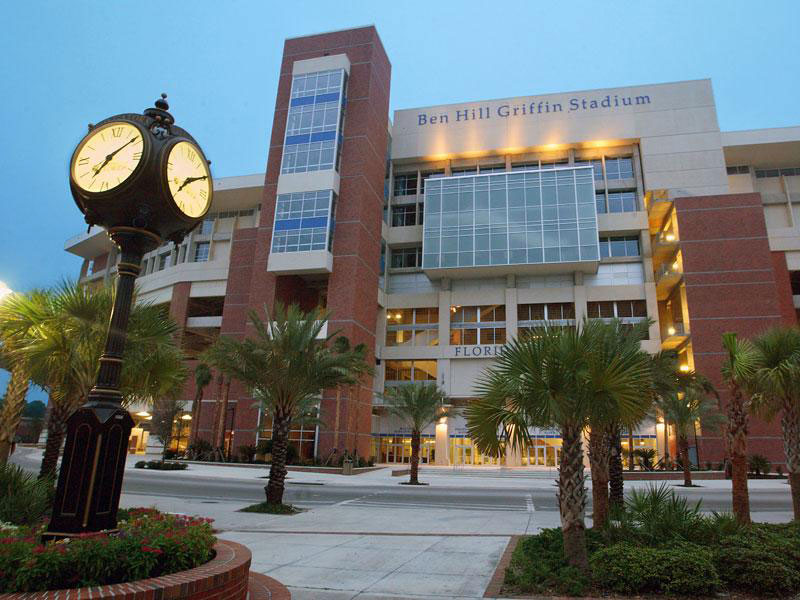
The Ben Hill Griffin Stadium at the University of Florida
Does it really matter that a “high net worth individual” (HNWI) gets immeasurable and sometimes forever benefits from naming gifts? They get a charitable contribution deduction plus perpetual advertisement, not to mention perpetual association with the charity’s halo. Does that reality somehow make the gift unworthy of tax benefits? If a HNWI did the same thing via a payment leading to the naming of a professional sports stadium, presumably the purchaser would get a trade or business expense deduction anyway. Maybe the deduction would have to be capitalized but given the very high amount of most charitable naming gifts, perhaps the difference is small since the HNWI might not have enough income (as opposed to wealth) against which to deduct the charitable gift except over several years. The charitable deduction would have to be amortized over the donor’s income stream anyway. But the trade or business expense deduction would not be viewed as a reward for selfless altruistic behavior.
A gift for which a donor gets his or her name on a university football stadium is hardly different than a for-profit business buying advertisement via a naming rights agreement. The way the owners of the stadium formerly known as Heinz Field sold advertisement when it transferred naming rights to a new company called Acrisure and renamed the stadium Acrisure Field. Yeeesh! Actually, the Steelers and Cowboys stadiums are owned by municipal corporations, so I am not even sure that the revenues from the sale of naming rights are even taxable. But the point is that exempt organizations are selling something, too, when they grant naming rights. We have made the decision that donations for naming rights are not taxable as unrelated income even if a donation looks exactly like a purchase. We might have logically concluded that the “donor” should not get a charitable contribution deduction – an intangibly less valuable trade or business expense deduction instead – and the charity ought to pay taxes since it is really just selling advertisement. But in both cases, the law declines.
An essay in the Stanford Social Innovation Review addresses the “ethics” of naming rights, quite apart from tax consequences. Anne Bergeron summarizes the different philosophies with which to judge the grant of charitable naming rights:
Ethical egoism posits that fulfilling one’s duty to act out of self-interest is the highest moral calling. The late 20th-century Russian-American philosopher and novelist Ayn Rand argues that the ethical egoist values the self above all else and avoids sacrificing herself for the sake of others. For donors, the personal pleasure that results from giving aid to others underscores that the charitable act is not divorced from the ego. . . Charitable contributions driven by ethical egoism may provide the most benefit to the donor, however.
Utilitarian ethics is based on the belief that the ultimate moral purpose of human action is to pursue the best possible outcomes for a majority of people in ways that maximize pleasure over pain. . . Today’s utilitarian donor would ensure that others benefit equally and are not harmed by a naming gift for a building. Yet over time, perpetual naming gifts for facilities may prove detrimental to future generations. Law professor John Eason notes that present-day social justice movements often call for renouncing past namings for slave owners, white supremacists, or anti-Semites. . . . Eason also observes that perpetual naming gifts can constrain opportunities to raise money for future, essential facility renovations, thus inhibiting a nonprofit’s ability to remain responsive to current and future needs.
Deontological ethics highlights respect for individuals—their autonomy, agency, and self-esteem. Recognizing that humans are conscious, rational beings, its tenets follow established societal norms and laws that discourage using people to advance personal agendas in favor of valuing their inherent capacities, rights, and liberties. . . Building naming gifts can certainly fulfill such faith-based obligations, neither compromising sacred principles nor posing moral conflicts. In Judaism, the practice of tzedakah is an ethical duty to give in a just and merciful way to help those in need. Public recognition via a naming offered in exchange for giving is accepted by many as a way to honor donors while inspiring additional gifts. . . The virtuous donor has a clear conscience about building naming gifts and attendant rights if they are offered with principled intentions, exemplify a life marked by honor, and provide balanced benefits both to society and self.
Care ethics, shaped by the women’s movement of the 1960s and 1970s, came of age as a moral theory in the 1980s. It highlights caregiving, empathy, compassion, and relationships with others. Some consider care ethics a feminist expression of morality. . . . The care ethics-inclined donor is predisposed to think about others and herself in relationship to others. She engages in what public administration scholar Margaret Stout calls “radically democratic practice” to ensure that everyone is cared for and heard, not only those in positions of influence, but importantly, community members served by philanthropy.
Gender or feminist ethics recognizes and seeks to remedy traditional moral philosophies understood as predicated on viewpoints, belief systems, and social practices that have historically privileged men while subjugating women. Race ethics is based on a framework of egalitarianism that applies to all humans regardless of race and who are all worthy of the same fundamental rights and respect. The donor concerned about gender and race ethics recognizes that naming rights contravene any sense of social equality, as asserted by philanthropy researcher Benjamin Soskis, and reinforce power imbalances between major donors and those with less or no ability to give financially. Such a donor would embrace the principles of philanthropy as reparative justice championed by theologian Ki Joo Choi and political scientist Roseanne Mirabella, among others, and fundraising as community-centric, opting for no recognition attached to her gift.
From those philosophies, Bergeron makes 7 recommendations for guiding a charitable naming rights policy, citing legal scholars Ann Bartow and Linda Sugin. It’s a pretty good twenty minute read.
darryll k. jones