
Simple Tests for Religion and Religious Activity
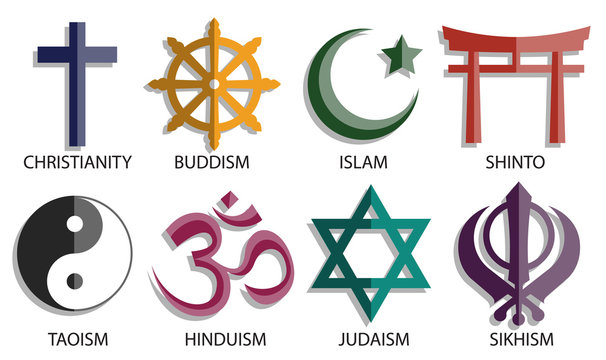
When last we checked, Safehouse, the one-time medical organization, had found religion. You might recall that Safehouse is a Philadelphia 501(c)(3) organization now asserting a religious right to operate an indoor place — a safe injection site — where addicts can use their DOC (drug of choice) under medical supervision. The organization’s members are motivated by genuine shock, horror and concern for the hundreds who use drugs openly every day in Kensington, a Philly neighborhood that rivals or exceeds LA’s Skid Row in terms of hopelessness and despair. A place where people die slowly or suddenly from overdoses while cops and passers-by avert their eyes. DOJ has stifled the effort citing a federal law prohibiting trap houses. Safehouse’s reliance on religious freedom is a fourth quarter strategy. But more than 30 religious organizations filed briefs supporting Safehouse’s assertion that operating a safe consumption house is a religious activity forming the basis of its newly asserted religious tax exemption.
Let’s call the argument a legal Hail Mary. Not because those activities are implausibly religious, but only because of Safehouse’s timing. The assertions are very late, having been made only after Safehouse lost an earlier appeal during which those arguments were never made. And anyway, most Hail Mary’s don’t work. The gambit would have failed even it wasn’t late. Because a federal district court articulated simple tests by which to determine whether an organization is religious, and then another simple test to determine whether an activity is a religious one. Who knew such simplicity existed?! Here is the test for whether a set of beliefs constitute religion:
First, a religion addresses fundamental and ultimate questions having to do with deep and imponderable matters. Second, a religion is comprehensive in nature; it consists of a belief-system as opposed to an isolated teaching. Third, a religion often can be recognized by the presence of certain formal and external signs.
The mystery of life solved! The court found that whatever Safehouse’s beliefs, those beliefs don’t constitute a religion. Here is the court’s test for whether an organization is engages in religious activity:
(1) whether the entity operates for a profit, (2) whether it produces a secular product, (3) whether the entity’s articles of incorporation or other pertinent documents state a religious purpose, (4) whether it is owned, affiliated with or financially supported by a formally religious entity such as a church or synagogue, (5) whether a formally religious entity participates in the management, for instance by having representatives on the board of trustees, (6) whether the entity holds itself out to the public as secular or sectarian, (7) whether the entity regularly includes prayer or other forms of worship in its activities, (8) whether it includes religious instruction in its curriculum, to the extent it is an educational institution, and (9) whether its membership is made up by coreligionists.
The court found that whatever Safehouse is trying to do, it is not engaged in a religious activity. The simple test proves it. All this time, tax exemption jurisprudence has struggled to come up with a definition of religion and religious activity and those definitions have been right under our noses.
darryll k. jones