
A Climate Nonprofit, Private Benefit, and Unrelated Trade or Business Income
I was in Houston last week for two days of meetings. Before I left home, I bought tickets to watch the Astros play the Athletics at Minute Maid Park, but a big huge storm came barreling through downtown about 45 minutes before game time. So my daughter and I waited for the fast-moving storm to pass before ordering an Uber. There were huge tree limbs all over the place, but our driver listened to country and western music and seemed unfazed as he navigated the hazards and dropped us off at the front entrance. We arrived during the second inning. Water leaked through the retractable roof, but Houston’s bats came alive during a six-run fourth inning and the Astros went on to win 8-1.
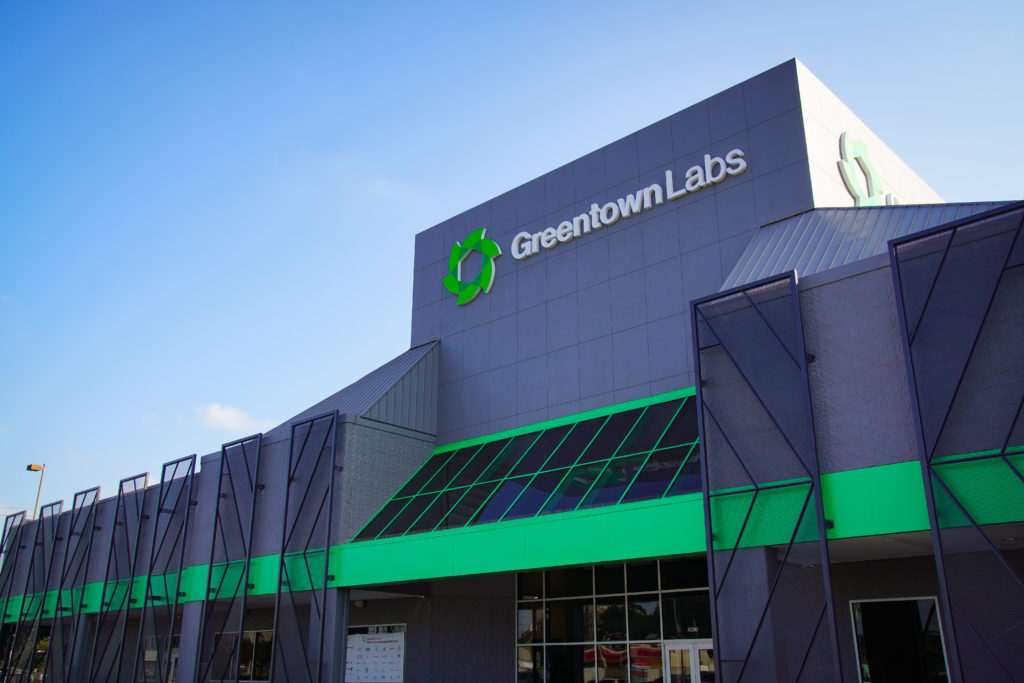
The nonprofit news concerns whether Greentown Labs, a Boston based 501(c)(3) with offices in Houston and a 990 showing over $7 million in what might be oil company funded assets, conveys a private benefit by greenwashing the fossil fuel industry. Greenwashing is this, according to the United Nations:
Greenwashing presents a significant obstacle to tackling climate change. By misleading the public to believe that a company or other entity is doing more to protect the environment than it is, greenwashing promotes false solutions to the climate crisis that distract from and delay concrete and credible action. Greenwashing manifests itself in several ways – some more obvious than others. Tactics include:
- Claiming to be on track to reduce a company’s polluting emissions to net zero when no credible plan is actually in place.
- Being purposely vague or non-specific about a company’s operations or materials used.
- Applying intentionally misleading labels such as “green” or “eco-friendly,” which do not have standard definitions and can be easily misinterpreted.
- Implying that a minor improvement has a major impact or promoting a product that meets the minimum regulatory requirements as if it is significantly better than the standard.
- Emphasizing a single environmental attribute while ignoring other impacts.
- Claiming to avoid illegal or non-standard practices that are irrelevant to a product.
- Communicating the sustainability attributes of a product in isolation of brand activities (and vice versa) – e.g. a garment made from recycled materials that is produced in a high-emitting factory that pollutes the air and nearby waterways.
The Houston Chronicle reports concerns that Greentown Labs is endorsing big oil. For money.
Greentown Labs, a nonprofit incubator for climate solution startups, is wrestling with a key question three years after its launch in Houston: Which oil companies can it partner with without damaging its reputation? The fix it settled on was to judge potential oil and gas industry sponsors based on their commitments to addressing climate change, the organization’s CEO told the Chronicle in a recent interview. It was a decision that chafed some of the world’s biggest oil companies in recent months and sparked friction within the Boston-based nonprofit tasked with boosting “green” technologies in the heart of the nation’s energy capital.
Greentown’s board considered a motion late last year that would have ended its three-year partnership with oil giant Saudi Aramco, sources said, but the motion failed narrowly. The partnership’s term expires in 2026.
Greentown maintains a partnership with Aramco, but has not entered into a similar arrangement with Exxon even though both companies fare poorly on green energy, according to the Houston Chronicle. The Boston Globe discusses in more detail what amounts to private benefit concerns:
Somerville’s Greentown Labs, the largest climate-tech incubator in North America, is a playground for climate idealists, a 100,000-square-foot campus where engineers, mechanics, and entrepreneurs plot, prototype, and launch technologies to pave the way toward a world free of fossil fuels. So when the company recently announced a new partnership with the largest oil company in the world — one that would provide it a close relationship with the startups being fostered at Greentown Labs — it sent shock waves through parts of the climate community.
The partner, Aramco Americas — the US wing of Saudi Aramco — aims to expand its oil production at least through the end of the decade, and is reportedly responsible for 4.4 percent of the world’s carbon dioxide and methane emissions since 1965.
Unlike the past, when oil companies flat-out denied climate change, the industry has shifted its approach, and these kinds of arrangements have become a trend, said Lili Fuhr, director of the Fossil Economy Program at the Center for International Environmental Law. She said they can be deceptive because they allow fossil fuel companies to claim they are working toward climate solutions even as their business models call for more production of fossil fuels.
Aramco has money like the Atlantic Ocean has water, I’m sure. By comparison, Exxon probably has money only like the Great Lakes have water. But in fairness, the Boston Globe article notes that Greentown has in the past entered into partnerships with other fossil fuel companies:
This is not Greentown’s first partnership with a fossil fuel company; it previously forged partnerships with BP, Chevron, Shell, and Equinor, Norway’s state-run oil company. But this latest announcement, previously reported by The Somerville Times, stands out because of the massive scope of Aramco’s plans to expand its oil operations, and because it comes as the influence of fossil fuel companies in climate spaces is garnering extra attention. University students and faculty members are pressuring their institutions to stop taking money from fossil fuel companies; activists are pushing banks to stop financing oil and gas projects; and in international climate negotiations, the host of the next UN Climate Change Conference, the United Arab Emirates, is under harsh criticism after naming oil executive Sultan Al Jaber as president of the talks.
So it’s not worrisome that Greentown is selective in determining fossil fuel partners. Instead, it’s the possibility that Greentown has been captured and is being exploited by its fossil fuel partners. The Chronicle notes that Greentown has suffered some recent financial hardships and worries that those hardships might facilitate industry capture as Greentown seeks or accepts donations from big oil:
While there are more oil companies in Houston that could contribute to Greentown’s cause, accepting oil money inevitably poses an existential dilemma, according to nonprofits working in the climate and environment space. “There’s not a way for climate nonprofits to take money from oil companies that won’t dilute the product or subvert the mission in some way,” said Josh Eisenfeld, Earthworks’ corporate accountability campaign manager.
There is certainly not enough to decide either way. But whenever an exempt organization accepts donations from a for-profit participant in the industry about which organization is concerned, there is the possibility of private benefit. And sometimes the arrangements can raises UBIT concerns if they are analyzed as implicit affinity arrangements. So Greentown makes for an interesting classroom case study.
darryll k. jones