
Treasury Proposes Regs Exempting Tribal-Owned Corporations
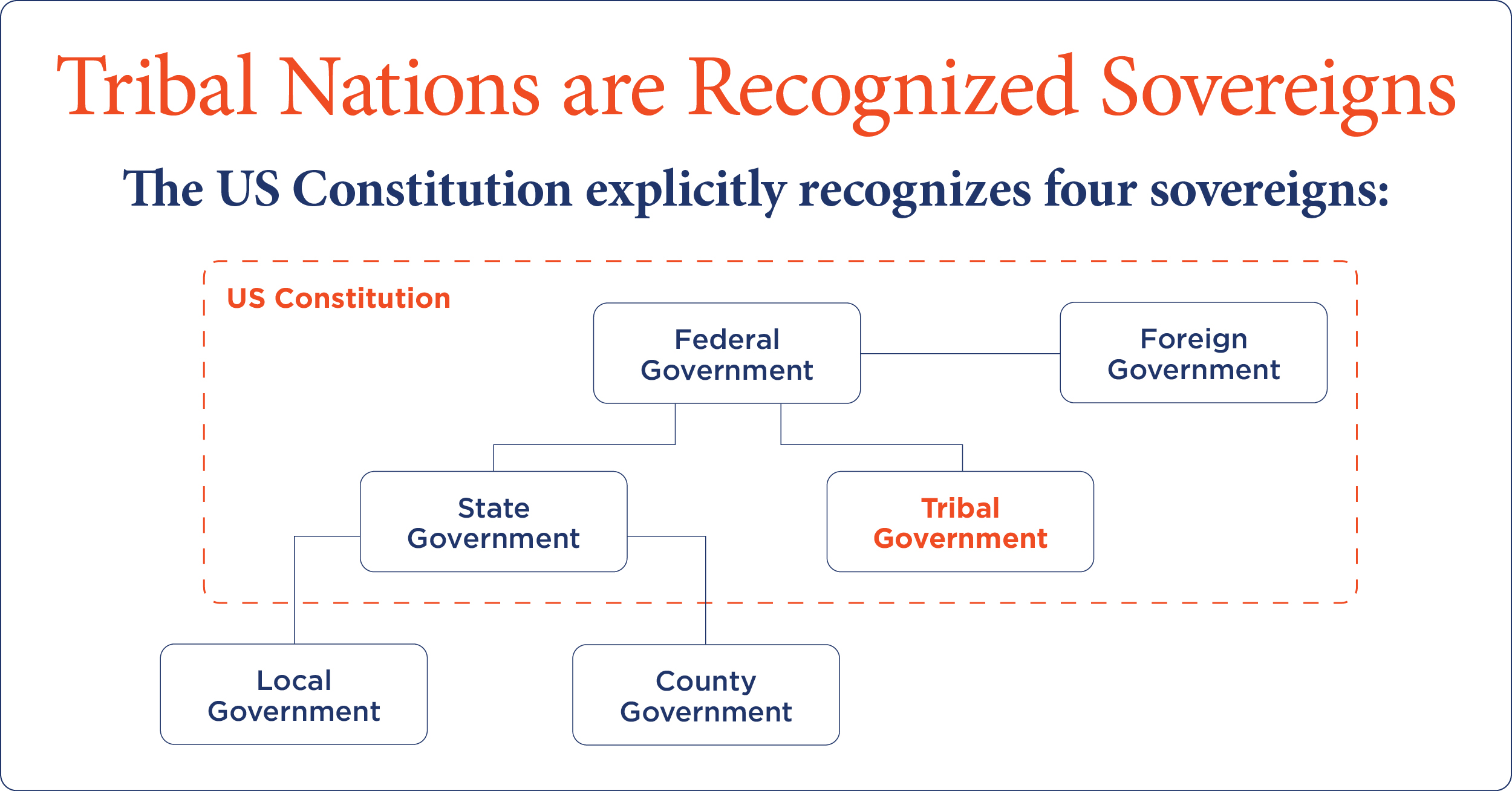
From the Domestic Policy Caucus. See U.S. Constitution, Article 1, Section 8, Clause 3
Government owned corporations should generally be exempt from federal income tax because by definition they exist to pursue public benefit and lessen the burdens of federal government. They fit the same rationale as charitable organizations. And there are murky constitutional reasons as well. The Supremacy Clause for exempting federally owned corporations and the Tenth Amendment for exempting state-owned corporations. What about Indian tribal governments? I am not sure that the Tenth Amendment provides the same justification for exempting Indian Tribal Governments and their corporations from taxation. Still, Tribal Governments are generally exempt, based on historical reasons I’m sure are are too complex for a blog post. A 2007 CRS report summarized federal taxation of Indian Tribal Governments thusly:
The income of an Indian tribe is generally exempt from federal taxation, regardless of the location where the income was earned. The Internal Revenue Service (IRS) appears to base this conclusion on the theory that Congress did not designate Indian tribes as taxable entities within Section 11 of the Internal Revenue Code (IRC). This exemption extends to income generated by tribal corporations federally chartered under Section 17 of the Indian Reorganization Act of 1934 (IRA) or Section 3 of the Oklahoma Indian Welfare Act. Nonetheless, the IRS has indicated that the exemption does not extend to tribal corporations chartered under state law. It should be noted that the tax status of corporations chartered under tribal laws is uncertain, and as the date of this report, the IRS has yet to issue any formal guidance on the issue. Similarly, the tax status of tribal limited liability companies (LLCs) is also uncertain. [emphasis added]
If tribal governments are akin to state governments – the Tax Code says they are for purposes of the charitable contribution deduction, for example – then they should generally be exempt from tax, at least on incomes earned in the exercise of their essential government functions. Similarly, a private corporation chartered under tribal law should be federally taxed just like private corporations chartered under state law are federally taxed.
Kyle Richard has an excellent article about intergovernmental tax immunity, by the way. In the part about federal taxation of states, he concludes that immunity for states is rather narrow compared to federal immunity from state taxation. Still the federal government generally avoids taxing states because of the Tenth Amendment. The unrelated business income tax imposed on state colleges and universities is an oft-cited exception. Even that can be explained. First, “unrelated business income of a state university” is by definition not derived from an essential government function. If it were related to education, it would not be UBTI, it would be income derived from an essential government function (education). Related income is not taxed even if a state college or university never applies for charitable tax exemption. Second, the imposition of UBIT on state universities might not really be an income tax. It could be argued that UBIT is an excise on state universities conducting a business that is not part of an essential government function.
Anyway, the Treasury Department issued proposed regulations Monday regarding tribal-owned corporations. The proposed regulations answer the question posed by the italicized part of the CRS report above. In short, the regulations state that a tribal law-chartered corporation wholly owned by one or more Indian Tribal Governments will be exempt from income taxation. The proposed regs don’t say that exactly. Instead, they say such entities will be disregarded, meaning their incomes will be treated as though derived by their tribal government owners who are themselves generally exempt from taxation just like state governments. By opposite implication, the proposed regulations suggest that a privately owned entity chartered under tribal law will not be disregarded and thus subject to federal income taxation. Here is some of the Preamble:
During Tribal consultations, Tribes have explained that they view Tribally chartered corporations as an exercise of their inherent sovereign authority to generate governmental revenue, self-govern the use of that revenue according to their own laws, and self-determine the use of that revenue for their citizenry. Tribes highlighted that Tribally chartered corporations enable Tribes to create entities that meet their emerging revenue opportunities, establish guidelines for the operation of these entities that are culturally appropriate and protect Tribal assets, and dissolve them when they are unneeded. Tribes also highlighted that Tribally chartered corporations are consistent with recent Federal policy that promotes Tribal sovereignty, self-governance, and self determination in economic development activities.
In light of the considerations of Tribal sovereignty and self-determination described previously, the Treasury Department and the IRS propose to amend the existing section 7701 regulations to make clear that entities wholly owned by Tribes and organized or incorporated under the laws of the Tribes that own them generally are not recognized as separate entities for Federal tax purposes. Accordingly, such entities generally would be viewed as one and the same as the Tribes that own them for Federal tax purposes and would therefore not be subject to Federal income tax.
The notice of proposed rulemaking seeks comments by January 7, 2025 and a public hearing is scheduled for January 17, 2025.
darryll k. jones