
Fifth Circuit Denies Tax-Exempt Status to a Healthcare Nonprofit (and Its Implications for Other Nonprofits)
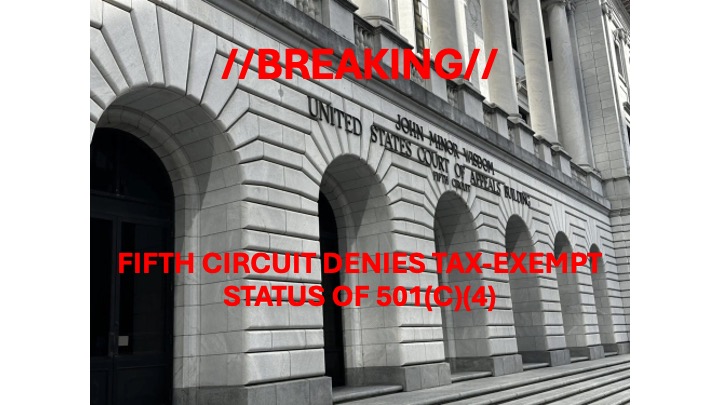
The Fifth Circuit went HAM on a healthcare nonprofit this month. Specifically, it denied tax-exempt status to the Memorial Hermann Accountable Care Organization (MHACO), a healthcare organization under Section 501(c)(4) of the Internal Revenue Code. The decision could have far-reaching consequences for other 501(c)(4) organizations. Maybe unsurprisingly, the Fifth Circuit’s ruling utilized a strict interpretation of the “substantial nonexempt purpose” standard. This standard is traditionally reserved for evaluating 501(c)(3) entities’ exemption, but the court extended it to 501(c)(4) entities as well. Thus, it potentially raises concerns for nonprofits with similar operations and structures. Below, I summarize the key points of the decision and its implications for nonprofits.
The Case
MHACO is a Texas-based nonprofit accountable care organization that coordinates healthcare for Medicare beneficiaries and privately insured patients. Its activities purportedly include improving care coordination and reducing healthcare costs, but 81% of its patient base stemmed from employer-sponsored health plans. Even so, MHACO applied for tax exemption under Section 501(c)(4), which requires organizations to operate “exclusively for the promotion of social welfare.”
The IRS denied MHACO’s application, arguing that its activities primarily benefited private healthcare providers and commercial insurers, rather than the broader community. The Tax Court upheld the IRS’s decision, asserting that MHACO’s non-Medicare activities constituted a substantial nonexempt purpose. MHACO appealed to the Fifth Circuit, which affirmed the lower court’s ruling.
Key Legal Standards in Play
The central question was whether the “substantial nonexempt purpose” test, typically applied to Section 501(c)(3) organizations, also governs Section 501(c)(4) entities. Originating from the SCOTUS decision in Better Business Bureau of Washington DC v. United States, this test holds that a single substantial nonexempt purpose can disqualify an organization from tax-exempt status under Section 501(c)(3). The Fifth Circuit extended this standard to Section 501(c)(4) organizations. But keep in mind that Treasury regulations allow 501(c)(4) organizations to engage in some nonexempt activities, provided their primary purpose is promoting social welfare. However, in another blow to administrative law, the Fifth Circuit declined to defer to this interpretation, citing the Supreme Court’s recent rejection of Chevron deference in statutory interpretation cases. Ouch.
The Fifth Circuit’s Ruling and Its Implications
The Fifth Circuit upheld the denial of MHACO’s tax-exempt status, finding inter alia that: (1) the organization’s private benefits to healthcare providers and commercial insurers were substantial and not incidental to its social welfare mission; and (2) MHACO’s services excluded uninsured individuals, undermining its claim of community benefit.
Obviously, the Fifth Circuit has a certain reputation, but I can’t say that these findings were necessarily wrong. Yet, in extending the substantial nonexempt purpose test to Section 501(c)(4) entities, the court’s decision represents a significant narrowing of the scope for 501(c)(4) tax-exempt status, particularly for organizations with private membership or financial benefit structures. It’s that that I find problematic, as it may force nonprofits with membership requirements or those engaged in public-private partnerships to consider freezing or ceasing operations altogether—to the extent that these activities are not subordinate to their social welfare mission. What’s more (and maybe this isn’t a bad thing), this ruling could be extended to politically active nonprofits, potentially curbing activities like political spending. At any rate, and in the long term, I would expect this decision to have more than a nominal impact on the way nonprofits organize and govern themselves, to say nothing of the services they provide.
Christopher J. Ryan, Jr.