
SFFA and Restricted Gifts
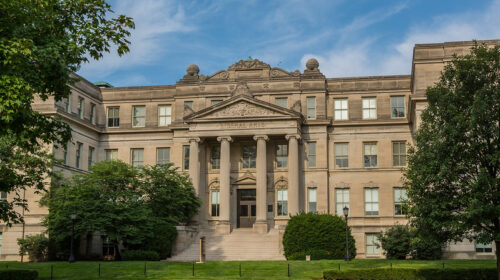
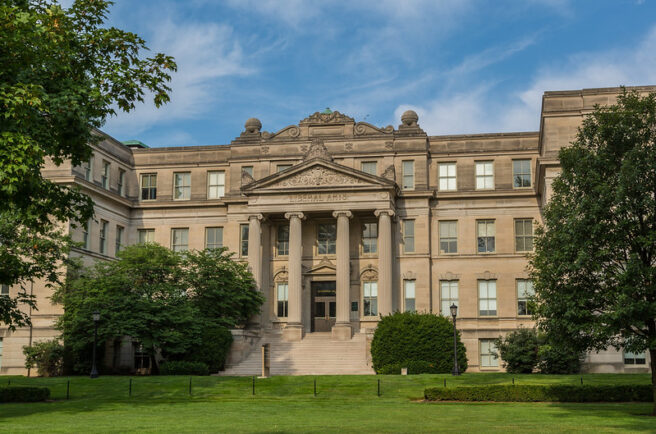
This morning, Susan Gary, Professor Emerita at the University of Oregon School of Law, sent me a fascinating case from the Iowa Supreme Court.
The short facts (you can read the full opinion here): Dr. Ezra Totton was born in 1908. He got his BS in 1935 from Knoxville College, a HBCU. Four years later he applied to a graduate program in chemistry at the University of Tennessee and was rejected because under Tennessee law, allowing Black and white students to attend the same school or class was a misdemeanor.
After three years in a segregated Army unit, the University of Iowa admitted him to a Masters program in Chemistry. He then got his Ph.D. from the University of Wisconsin-Madison and did postdoc work at Stanford. In 1949 he because the chair of chemistry at North Carolina Central University, am HBCU. He was there until he took emeritus status in 1976.
He passed away in 1996; his will left 60% of his estate to his family and divided the other 40% among his five favorite charities: the schools he attended (other than Stanford), the school he taught at, and the White Rock Baptist Church.
Dr. Totton’s bequest to the University of Iowa was to be used to fund a scholarship for “Black students majoring in the physical sciences, preferably chemistry.” And for decades it did.
But in the wake of Students for Fair Admissions, the University of Iowa argued that it would be unlawful to provide the scholarship according to the bequest. It wanted to change the terms, replacing “Black” with “first generation.”
I’m going to skip the procedure. But the Iowa Supreme Court found that, if not unlawful, it was at least impracticable for the school to provide a scholarship designated for Black students. (It’s late and I’m tired and I haven’t done the research, so I don’t know whether I’m legally skeptical of this conclusion, but if it’s right, SFFA has had foreseeable but carelessly unforeseen consequences.)
But, the court said, that’s not enough to alter the terms of the bequest. Based on his history, there’s no reason to think the Dr. Totton was interested in supporting first-generation students. His bequest indicated that the scholarship was for Black students, and if the school could not administer the scholarship, the money was to be returned to his heirs.
So maybe the modification would be okay, the court hinted. But the record was too sparse to support that as an absolute conclusion. So it remanded the case to the lower court to determine the appropriate modification, using extrinsic evidence if necessary.
Photo by Tony Webster. CC BY-SA 2.0