
Supreme Court and Ninth Circuit Support Charity Donor First Amendment Claims
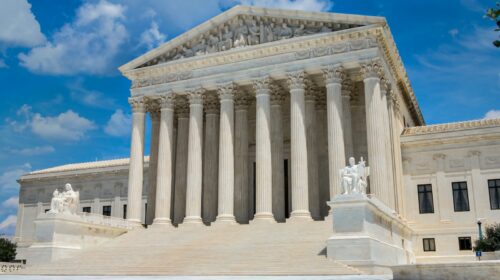
In First Choice Women’s Resource Centers, Inc. v. Davenport, the Supreme Court of the United States on April 29, 2026 concluded that a nonprofit organization had standing to challenge a state attorney general subpoena seeking, among other information, identifying information regarding donors. Relying on the freedom of association protected by the First Amendment, the Court unanimously concluded that the nonprofit had established an actual or imminent injury because of the government’s attempt to obtain private donor information. The Court rejected several counter arguments, including based on the “non-executing” nature of the subpoena, the fact the subpoena did not reach a specific donation website, and the possibility of a future protective order to limit access to the information collected. Coverage: PBS; SCOTUSblog.
Separately, in Fresenius Medical Care Orange County, LLC v. Bonta, the U.S. Court of Appeals for the Ninth Circuit on April 7, 2026 held unconstitutional portions of California Assembly Bill No. 290, including a limit on the insurance reimbursement for certain medical services received by a provider with a financial relationship with a charity that provides financial help to patients. The parties agreed that financial relationship for these purposes included donating to such a charity. The court concluded that the limit burdened the right of providers to donate to one such charity. which is an expressive association, and so triggered exacting scrutiny under the First Amendment’s freedom of association. While the court found that California had a sufficiently important government interest it was seeking to further through the limit, specifically preventing distortion to insurance risk pools, the court also decided that the limit was not narrowly tailored to achieve this interest and so violated the First Amendment.
At the same time, the U.S. Court of Appeals for the Sixth Circuit on April 29, 2026 heard oral arguments in Buckeye Institute v. Internal Revenue Service, a challenge to the statutory requirement that tax-exempt charities disclose to the IRS the identities of major donors (on Schedule B to Form 990). The focus of the interlocutory appeal is what level of scrutiny the federal district court hearing the case should apply to determine whether the requirement is constitutional under the First Amendment. A decision is pending. Coverage: Law.com. Previous blog post: District Court Certifies Interlocutory Appeal in Buckeye Institute Donor Disclosure Challenge.